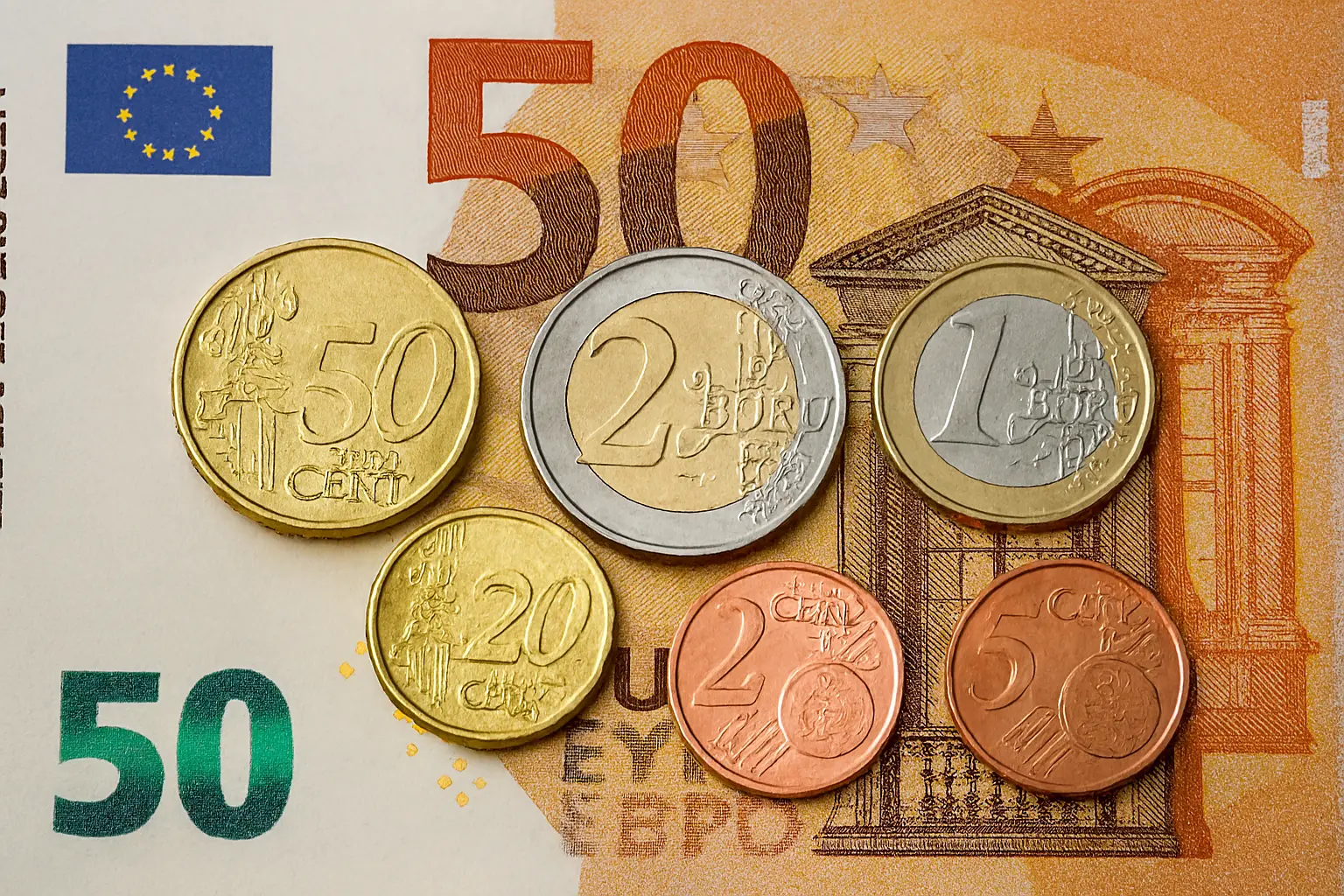
Euro Currency
Few symbols capture the spirit of European unity quite like the Euro. Introduced at the turn of the millennium, this single currency transformed the way millions of people live, trade, and travel across the continent. From its bold debut in 1999 to its role today as one of the world’s most powerful currencies, the Euro is more than just money — it’s a story of cooperation, identity, and resilience. Whether you’re curious about its design, its global influence, or the quirky details that make it unique, these 25 fascinating facts will give you a deeper appreciation of the coin and banknotes that connect over 340 million Europeans every day.
1. Introduction in 1999 (electronic currency) The Euro was officially introduced on January 1, 1999, but at first it existed only in electronic form. This meant that banks, financial institutions, and stock markets began using the Euro for accounting and transactions, while citizens continued to use their national currencies like the Deutsche Mark or French Franc. This transitional phase allowed businesses and governments to adapt to the new system before physical notes and coins were introduced. It was a bold experiment in monetary integration, marking the first time multiple sovereign nations shared a single currency without political union.
2. Circulation in 2002 (cash) On January 1, 2002, Euro banknotes and coins entered circulation, replacing 12 national currencies across Europe. Overnight, millions of people had to exchange their familiar money for new notes and coins, making it the largest currency changeover in history. The logistical challenge was immense: over 14 billion banknotes and 50 billion coins were produced and distributed. Despite initial skepticism, the transition was remarkably smooth, and within weeks the Euro became the everyday currency for hundreds of millions of Europeans.
3. Symbol inspired by Greek epsilon (€) The Euro’s symbol (€) was designed to reflect Europe’s heritage and identity. Inspired by the Greek letter epsilon (Є), it also incorporates two parallel lines to signify stability. The European Commission held a design competition in the 1990s, and the winning symbol was chosen for its simplicity, recognizability, and ability to be easily handwritten. Today, the Euro symbol is one of the most recognized currency signs worldwide, alongside the dollar ($) and yen (¥).
4. ISO currency code EUR Every currency has an international code, and the Euro’s is EUR, with the numeric code 978. These codes are vital for global finance, ensuring clarity in transactions across borders. For example, when trading currencies or booking international flights, EUR distinguishes the Euro from other currencies. The adoption of EUR also symbolized Europe’s unified economic identity, replacing a patchwork of codes like DEM (Deutsche Mark) or FRF (French Franc).
5. Subunit: 100 cents Like the dollar, the Euro is divided into 100 cents. However, the name for “cent” varies across languages — in German it’s “Cent,” in French “centime,” and in Spanish “céntimo.” This linguistic diversity reflects the cultural richness of the eurozone. While cents are used for small transactions, many countries have rounded prices to the nearest five cents, especially where 1c and 2c coins are phased out.
6. Common banknotes (€5–€100) The most frequently used Euro banknotes are €5, €10, €20, €50, and €100. These denominations cover everyday purchases, from groceries to larger expenses. Each note features architectural designs symbolizing different eras of European history, from classical to modern. The €20 and €50 notes are particularly common, as they balance convenience with value.
7. Rare banknotes (€200, €500) The €200 and €500 notes exist but are rarely used in daily life. The €500 note, in particular, was discontinued in most countries due to concerns about money laundering and criminal activity, as its high value made it easy to transport large sums discreetly. Today, while still legal tender, it is seldom seen, and banks often refuse to issue it.
8. Common coins (1c–€2) Euro coins range from 1 cent to €2, with the €1 and €2 coins being the most practical for daily use. Each coin has a common reverse side showing Europe’s map, while the obverse side varies by country. This allows nations to express their identity — for example, Italy features Dante Alighieri, while Ireland uses the harp.
9. Phasing out 1c and 2c coins Countries like Finland, the Netherlands, and Ireland have phased out 1c and 2c coins, rounding transactions to the nearest five cents. This decision was driven by cost efficiency, as producing these coins often cost more than their face value. It also simplified transactions, reducing the clutter of small change.
10. Issuing authority: ECB The European Central Bank (ECB) and the Eurosystem are responsible for issuing the Euro. Unlike national banks, the ECB operates independently, focusing on price stability across the eurozone. Its decisions affect 21 countries, making it one of the most powerful financial institutions in the world.
11. Replacing the ECU The Euro replaced the European Currency Unit (ECU), a basket currency used for accounting within the European Community. The ECU was never a physical currency but served as a precursor to the Euro, preparing markets for monetary union. The transition from ECU to Euro symbolized Europe’s move from cooperation to full integration.
12. Bulgaria’s adoption in 2026 On January 1, 2026, Bulgaria adopted the Euro, becoming the 21st eurozone member. This marked a significant milestone for the country, aligning it more closely with EU economic policies. For Bulgarians, it meant saying goodbye to the lev and joining a currency used by hundreds of millions across Europe.
13. Non-EU users Interestingly, several non-EU countries and territories use the Euro, including Kosovo, Montenegro, Vatican City, Monaco, San Marino, and Andorra. These regions adopted the Euro either through agreements with the EU or unilaterally, reflecting its global appeal and stability.
14. Banknotes have no national side Unlike coins, Euro banknotes are identical across all countries. This decision was made to emphasize unity and avoid favoritism. The designs feature bridges and gateways, symbolizing openness and cooperation, rather than specific national landmarks.
15. Bridges and gateways design Each Euro banknote depicts architectural styles from different eras, such as classical, Romanesque, Gothic, Renaissance, Baroque, and modern. The bridges and gateways are fictional, ensuring no country feels excluded. They represent Europe’s shared heritage and its openness to the world.
16. Coins with national obverse Euro coins have a common reverse side but allow countries to design their own obverse. This provides a balance between unity and national pride. For example, Spain features King Felipe VI, while Greece depicts the owl of Athena.
17. Second most traded currency The Euro is the second most traded currency globally, after the U.S. dollar. It dominates international markets, especially in Europe, Africa, and parts of Asia. Its widespread use makes it a cornerstone of global finance.
18. Second most held reserve currency Central banks worldwide hold Euros as part of their reserves, making it the second most important reserve currency after the dollar. This reflects trust in the Euro’s stability and the economic power of the eurozone.
19. Inflation 2.1% (Nov 2025) As of November 2025, eurozone inflation stood at 2.1%, measured by the Harmonised Index of Consumer Prices (HICP). This figure is close to the ECB’s target of 2%, showing effective monetary management despite global economic challenges.
20. Eurozone crisis (2009–2012) The Euro faced its greatest challenge during the Eurozone debt crisis, when countries like Greece, Portugal, and Ireland struggled with debt. Bailouts and austerity measures were introduced, sparking debates about fiscal policy and solidarity. The crisis reshaped the Euro’s governance, leading to stricter financial rules.
21. €5 note smallest denomination The €5 note is the smallest denomination, often used for small purchases. Its design features classical architecture, symbolizing Europe’s ancient heritage. Despite its low value, it remains essential for daily transactions.
22. Banknotes printed by multiple printers Euro banknotes are printed by national printers across Europe, but under strict ECB oversight. This decentralized system ensures efficiency while maintaining uniform quality and security standards.
23. Security features Euro banknotes include advanced security features like holograms, watermarks, microprinting, and color‑changing ink. These measures make counterfeiting extremely difficult, protecting the currency’s integrity.
24. Mandatory adoption for EU members EU members are required to adopt the Euro once they meet convergence criteria, including stable inflation, sound public finances, and exchange rate stability. However, some countries like Denmark negotiated opt‑outs, while others like Sweden delay adoption despite being obligated.
25. Symbol of European integration Above all, the Euro represents European unity. It is more than just money — it is a political and cultural symbol of shared identity. By using the same currency, Europeans experience a tangible sense of belonging to a larger community.
Frequently Asked Questions about Euro
What is the euro?
The euro is the official currency used by countries in the eurozone, symbolized by € and coded as EUR. It was introduced for electronic transactions in 1999 and became a physical currency with banknotes and coins in 2002. It’s one of the world’s major currencies, shaping global trade and monetary policy.
Which countries use the euro?
The euro is used by EU countries that have joined the eurozone after meeting economic and legal criteria, and by several non-EU microstates through formal agreements. Some territories and countries outside the EU, such as Montenegro and Kosovo, also use the euro in practice. The distinction between EU membership and euro adoption is important—being in the EU does not automatically mean using the euro.
What’s the difference between the EU and the eurozone?
The European Union is a political and economic union of member states, while the eurozone is the subset of those EU states that use the euro as their official currency. Some EU countries have opt-outs or have not yet met the criteria to adopt the euro, so they remain outside the eurozone. Conversely, a few non-EU microstates and territories use the euro via agreements.
When did the euro begin circulating as cash?
Euro banknotes and coins began circulating on January 1, 2002. Prior to that, from January 1, 1999, the euro existed as an electronic and accounting currency used by banks, markets, and institutions. The phased approach allowed financial systems and the public to transition smoothly between national currencies and the euro.
Who issues and manages the euro?
The euro is issued and managed by the European Central Bank (ECB) and the Eurosystem (which includes national central banks of eurozone countries). The ECB sets monetary policy with the primary objective of price stability, and coordinates banknote design, production standards, and anti-counterfeiting measures. Its public resources explain the euro’s history, design, and security features.
How widely is the euro used?
The euro is used daily by hundreds of millions of people across the eurozone and associated territories. Estimates commonly cited place everyday users around 341 million, illustrating its scale in everyday transactions and travel. It’s also one of the most traded currencies globally, reflecting its central role in international finance.
Is the euro a reserve currency and how does it rank globally?
Yes, the euro is a major reserve currency held by central banks worldwide because of the size and stability of the eurozone economy. It is widely recognized as one of the world’s most important currencies and a leading counterpart in international trades and investments. Its influence extends beyond Europe into global markets and financial systems.
What denominations of euro banknotes and coins exist?
Euro banknotes commonly include €5, €10, €20, €50, and €100, with higher denominations like €200 available but less frequently used. Coins span 1c, 2c, 5c, 10c, 20c, 50c, €1, and €2. This range supports everyday purchases from small items to larger transactions without relying solely on electronic payments.
What do euro banknotes look like and why?
Euro banknotes feature architectural styles representing periods of European history, alongside motifs like bridges and gateways to symbolize openness and interconnectedness. Designs are intentionally non-national to avoid favoring any specific country and to reflect a shared European identity. The ECB oversees unified design standards to ensure clarity, accessibility, and security.
Are euro coins the same in all countries?
Euro coins share a common reverse side (showing Europe) but each country designs its own national obverse side, allowing for national symbols, historical figures, or cultural icons. This approach balances unity with national expression. Regardless of the national side, all coins are legal tender across the eurozone.
How can I tell if a euro banknote is genuine?
Genuine euro banknotes incorporate multiple security features such as watermarks, security threads, holograms, microprinting, raised printing, and color-shifting elements. Newer series include advanced features that are easy to check by touch and tilt. The ECB provides public guidance on how to verify these features quickly and confidently.
Why do some countries round prices and reduce use of 1c and 2c coins?
Some eurozone countries have adopted rounding rules in cash transactions, often to the nearest five cents, to reduce handling costs and inefficiencies associated with 1c and 2c coins. Producing and circulating very low-value coins can be costly relative to their purchasing power. Rounding policies are typically limited to cash transactions, with exact pricing maintained in electronic payment contexts.
Why don’t all EU countries use the euro?
Not all EU countries meet the convergence criteria (covering inflation, public finances, exchange rate stability, and interest rates) required to adopt the euro, or they may have formal opt-outs. Others choose to delay adoption while aligning economic policies. As a result, the EU and eurozone are overlapping but distinct groups.
How does the euro affect travel and trade within Europe?
The euro simplifies travel by removing currency exchange within eurozone countries, making prices more transparent and budgeting easier for tourists and business travelers. For trade, it reduces exchange-rate risk and transaction costs, fostering deeper integration of markets and supply chains. These benefits were central goals of monetary union.
What drives euro exchange rates against other currencies?
Exchange rates reflect relative economic performance, interest rate expectations, inflation, and geopolitical developments across the eurozone and its trading partners. ECB monetary policy—aimed at price stability—also influences investor sentiment and capital flows. Market liquidity and the euro’s status as a leading global currency further shape its valuation.
Can non-EU countries legally use the euro?
Yes, several microstates and territories use the euro under formal agreements with the EU, and some economies have unilaterally adopted it due to practical considerations. In these cases, the euro functions as day-to-day money even though the countries are outside the EU’s political institutions. This widespread usage underscores the euro’s reach beyond EU borders.
How did the euro come into existence?
The euro emerged from decades of European monetary cooperation aimed at reducing exchange-rate volatility and deepening economic integration. After establishing the European Currency Unit (ECU) as a basket for accounting, the EU launched the euro in 1999 and later introduced cash in 2002. The ECB highlights this progression and the rationale behind unified monetary policy.