Tucked high in the mountains of Southern Africa, Lesotho is a country unlike any other. Known as the “Kingdom in the Sky,” it’s the only nation in the world entirely above 1,000 meters in elevation. But Lesotho’s uniqueness goes far beyond its altitude. From record-breaking waterfalls and dinosaur discoveries to royal traditions and daring mountain roads, this small landlocked country is packed with surprises. Whether you’re a geography buff, a culture enthusiast, or just curious about the world, these 25 fascinating facts will give you a deeper appreciation for Lesotho’s natural wonders, historical milestones, and cultural treasures.
1. Elevation: Lesotho is the only country in the world that lies entirely above 1,000 meters (3,280 feet) in elevation. This unique geographical feature gives it the nickname ‘The Kingdom in the Sky.’ The high altitude influences the country’s climate, making it cooler than most other African nations. The elevated terrain also contributes to its mountainous landscape, which is a defining characteristic of the country.
2. Highest Low Point: Lesotho holds the world record for the highest lowest point of any country. Its lowest elevation is 1,400 meters (4,593 feet) above sea level. This means that even the lowest areas in Lesotho are higher than many countries’ highest points. This contributes to its alpine climate and makes it a unique case in global geography.
3. Mountain Coverage: Approximately two-thirds of Lesotho is covered by mountains, with elevations ranging from 2,200 to 3,000 meters. These mountains are part of the Drakensberg and Maloti ranges and dominate the eastern and central parts of the country. The rugged terrain makes transportation challenging but also provides stunning natural beauty and opportunities for adventure tourism.
4. Highest Peak: Thabana Ntlenyana, meaning ‘Beautiful Little Mountain’ in Sesotho, is the highest point in Southern Africa. It stands at 3,482 meters (11,423 feet) above sea level. Located in the Maloti Mountains, it is a popular destination for hikers and mountaineers and symbolizes the country’s elevated nature.
5. Area: Lesotho covers a total area of 30,355 square kilometers, making it roughly the size of Belgium or Taiwan. Despite its small size, the country has a diverse topography and climate due to its elevation. Its compact area allows for a relatively unified cultural and linguistic identity.
6. Independence: Lesotho gained independence from British colonial rule on October 4, 1966. Before that, it was known as Basutoland and was a British protectorate. The transition to independence marked a significant milestone in the country’s history and is celebrated annually as a national holiday.
7. Former Name: Prior to gaining independence, Lesotho was called Basutoland. The name was derived from the Basotho people, the predominant ethnic group in the country. The change to Lesotho, meaning ‘land of the Sotho,’ reflected a move toward national identity and self-determination.
8. Monarchy: Lesotho is one of only three remaining monarchies in Africa, alongside Morocco and Eswatini. It operates as a constitutional monarchy, where the king serves as a ceremonial figurehead. This system blends traditional leadership with modern democratic governance.
9. Current King: King Letsie III has been the monarch of Lesotho since 1990, with a brief interruption in the mid-1990s. He plays a largely symbolic role but is highly respected as a unifying figure. His reign has seen efforts to stabilize the country’s political landscape.
10. Katse Dam: The Katse Dam is the highest dam in Africa, with a surface elevation of 2,050 meters and a dam wall height of 185 meters. It is a key component of the Lesotho Highlands Water Project, which supplies water to South Africa and generates hydroelectric power for Lesotho.
11. Afriski Resort: Located at 3,050 meters above sea level, Afriski is the highest ski resort in Africa. It offers skiing and snowboarding during the winter months and mountain biking and hiking in the summer. Its altitude ensures reliable snowfall, making it a unique destination on the continent.
12. Sani Pass Pub: The Sani Mountain Lodge houses the highest pub in Africa, situated at 2,874 meters (9,429 feet). It is a popular stop for travelers crossing the Sani Pass between Lesotho and South Africa. The pub offers stunning views and a sense of achievement for those who reach it.
13. Sani Pass Road: The Sani Pass is a mountain road that climbs from 1,544 meters to 2,876 meters over a distance of 9 kilometers. Known for its steep gradients and hairpin turns, it requires a 4×4 vehicle and is considered one of the most scenic and challenging drives in Africa.
14. Matekane Airstrip: This airstrip is famous for its dramatic location at 2,400 meters (7,874 feet) elevation. It is only 400 meters (1,300 feet) long and ends at a 600-meter (2,000-foot) cliff drop. It is used for medical and emergency flights and is considered one of the most dangerous runways in the world.
15. Maletsunyane Falls: At 192 meters (630 feet), Maletsunyane Falls is the highest single-drop waterfall in Southern Africa. Located near the town of Semonkong, it is a major tourist attraction and a site of natural beauty. The falls are fed by the Maletsunyane River and plunge into a deep gorge.
16. World Record Abseil: The Maletsunyane Falls is also home to the world’s longest commercially operated single-drop abseil, measuring 204 meters (670 feet). Adventure seekers from around the world come to Lesotho to experience this thrilling descent alongside the waterfall.
17. Dinosaur Footprint: In 2016, a 200-million-year-old dinosaur footprint was discovered in Lesotho. It belonged to a species named Kayentapus ambrokholohali, a carnivorous dinosaur estimated to be 2.7 meters tall and 9 meters long. This find highlights Lesotho’s rich paleontological heritage.
18. Lesothosaurus: This dinosaur species, whose name means ‘lizard from Lesotho,’ was discovered in the country and dates back to the early Jurassic period. It was a small, herbivorous dinosaur and is one of the earliest known ornithischians, contributing to our understanding of dinosaur evolution.
19. Basotho Blanket: The Basotho blanket is a traditional wool garment worn by the people of Lesotho. It serves both practical and cultural purposes, providing warmth in the high-altitude climate and symbolizing status and identity. The blankets are often worn during ceremonies and official events.
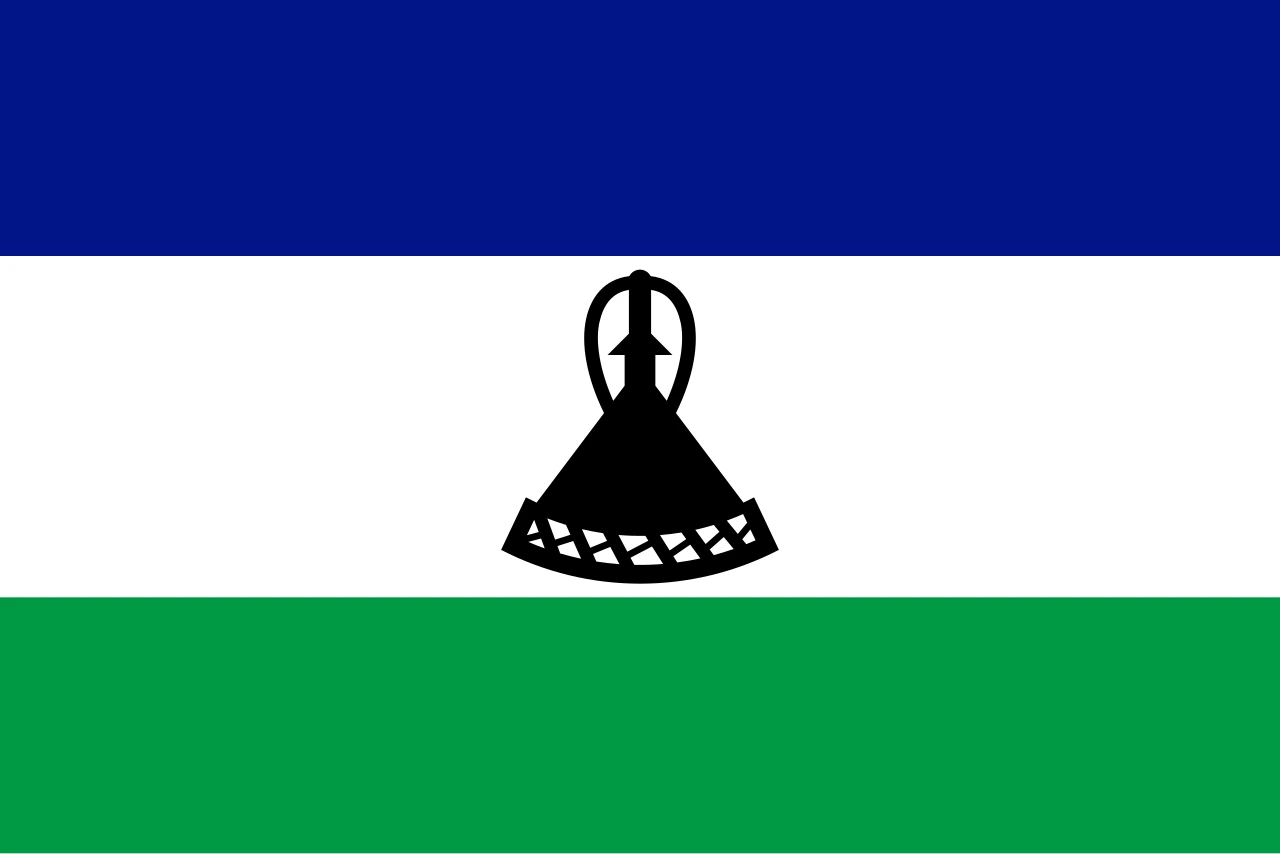
20. Basotho Hat (Mokorotlo): The Mokorotlo is a conical straw hat that is a national symbol of Lesotho. It appears on the country’s flag and is worn by both men and women. The hat represents the cultural heritage and unity of the Basotho people.
21. National Flower: The Spiral Aloe (Aloe Polyphylla) is endemic to the Maluti Mountains of Lesotho and is the country’s national flower. It is known for its unique spiral leaf arrangement and is a protected species due to its limited habitat and ecological importance.
22. Languages: Lesotho has two official languages: Sesotho and English. Sesotho is the national language spoken by the majority of the population, while English is used in government and education. This bilingual policy facilitates both cultural preservation and international communication.
23. Currency: The currency of Lesotho is the Basotho Loti (plural: Maloti), which is pegged at a 1:1 ratio with the South African Rand. This monetary arrangement allows for economic stability and ease of trade with its larger neighbor, South Africa.
24. Horse Riding: Due to the mountainous terrain and limited road infrastructure, horses are a common mode of transport in Lesotho. In many rural areas, they are more efficient than vehicles and are integral to daily life and cultural practices.
25. Road Conditions: Many of Lesotho’s secondary roads are unpaved and require 4×4 vehicles. In mountainous regions, average travel speeds can drop to as low as 10 km/h due to steep gradients and rough surfaces. This makes travel challenging but also preserves the country’s remote charm.
Frequently Asked Questions about Lesotho:
1. Where is Lesotho located?
Lesotho is a landlocked country in Southern Africa, entirely surrounded by South Africa. It is one of only three sovereign enclaves in the world, the others being Vatican City and San Marino.
2. What is Lesotho known for?
Lesotho is famously called the “Kingdom in the Sky” due to its high elevation—the entire country lies above 1,000 meters. It’s known for:
- Majestic mountains and valleys
- Traditional Basotho culture
- Pony trekking and hiking
- Maletsunyane Falls (site of the world’s longest commercial abseil)
- Dinosaur footprints and San rock art
🌍 Geography & Climate
3. What is the terrain like in Lesotho?
Lesotho is predominantly mountainous, with over 80% of its land above 1,800 meters. Its highest peak, Thabana Ntlenyana, reaches 3,482 meters, making it the highest point in Southern Africa.
4. What is the climate in Lesotho?
Lesotho has a temperate climate:
- Summer (Oct–Apr): Warm and wet, ideal for hiking.
- Winter (May–Sep): Cold and dry, with snowfall in highlands—great for skiing at Afriski Resort.
🧭 Travel & Tourism
5. Do I need a visa to visit Lesotho?
Visa requirements vary by nationality. Many countries are visa-exempt for stays up to 14 or 30 days. Check with the nearest Lesotho embassy or Lesotho Immigration for updated info.
6. Is Lesotho safe for tourists?
Yes, Lesotho is generally safe. The Basotho people are known for their hospitality, but like any destination, travelers should take standard precautions, especially in urban areas.
7. What is the best time to visit Lesotho?
Lesotho is a year-round destination:
- Summer: Great for outdoor adventures.
- Winter: Ideal for snow sports. Spring and autumn offer mild weather and scenic beauty.
8. How do I get to Lesotho?
- By road: Through border posts from South Africa.
- By air: Via Moshoeshoe I International Airport near Maseru, with flights mainly from Johannesburg.
9. What are popular tourist activities in Lesotho?
- Pony trekking
- Hiking in national parks
- Visiting cultural villages
- Exploring dinosaur footprints
- Skiing and snowboarding in winter
- Attending the Morija Arts & Cultural Festival
🏛️ Culture & Society
10. What language is spoken in Lesotho?
- Sesotho is the national language.
- English is also official and widely used in business and tourism.
11. What is the traditional attire of the Basotho people?
The Basotho blanket (Seanamarena) is iconic and worn as both clothing and a cultural symbol. The Mokorotlo hat, made of straw, is a national symbol featured on the flag.
12. What religion is practiced in Lesotho?
- Christianity is dominant (over 90%)
- Some practice traditional African beliefs
💰 Economy & Currency
13. What currency is used in Lesotho?
Lesotho uses the Loti (LSL), which is pegged to the South African Rand (ZAR). Both currencies are accepted.
14. What are Lesotho’s main industries?
- Textiles and apparel
- Agriculture (corn, wheat, livestock)
- Mining (especially diamonds)
- Tourism
- Water exports via the Lesotho Highlands Water Project
15. Is Lesotho a rich or poor country?
Lesotho is a developing country with a GDP per capita of around $3,234 (PPP). It faces challenges like poverty and inequality but has valuable natural resources and growing tourism.
🏞️ Nature & Environment
16. Does Lesotho have national parks?
Yes, including:
- Sehlabathebe National Park (UNESCO site)
- Ts’ehlanyane National Park
- Maloti-Drakensberg Park
These parks offer hiking, birdwatching, and stunning alpine scenery.
17. Is Lesotho affected by climate change?
Yes. Lesotho is vulnerable to droughts, which impact agriculture and rural livelihoods. However, it is also a key water source for South Africa.
🏘️ Daily Life & Infrastructure
18. What is the population of Lesotho?
As of 2025, Lesotho has about 2.3 million people, with 99.7% being Basotho—making it one of the most ethnically homogeneous countries in the world.
19. What is the capital of Lesotho?
Maseru, located near the western border with South Africa.
20. What is the government system in Lesotho?
Lesotho is a constitutional monarchy with a parliamentary democracy. King Letsie III is the ceremonial monarch.