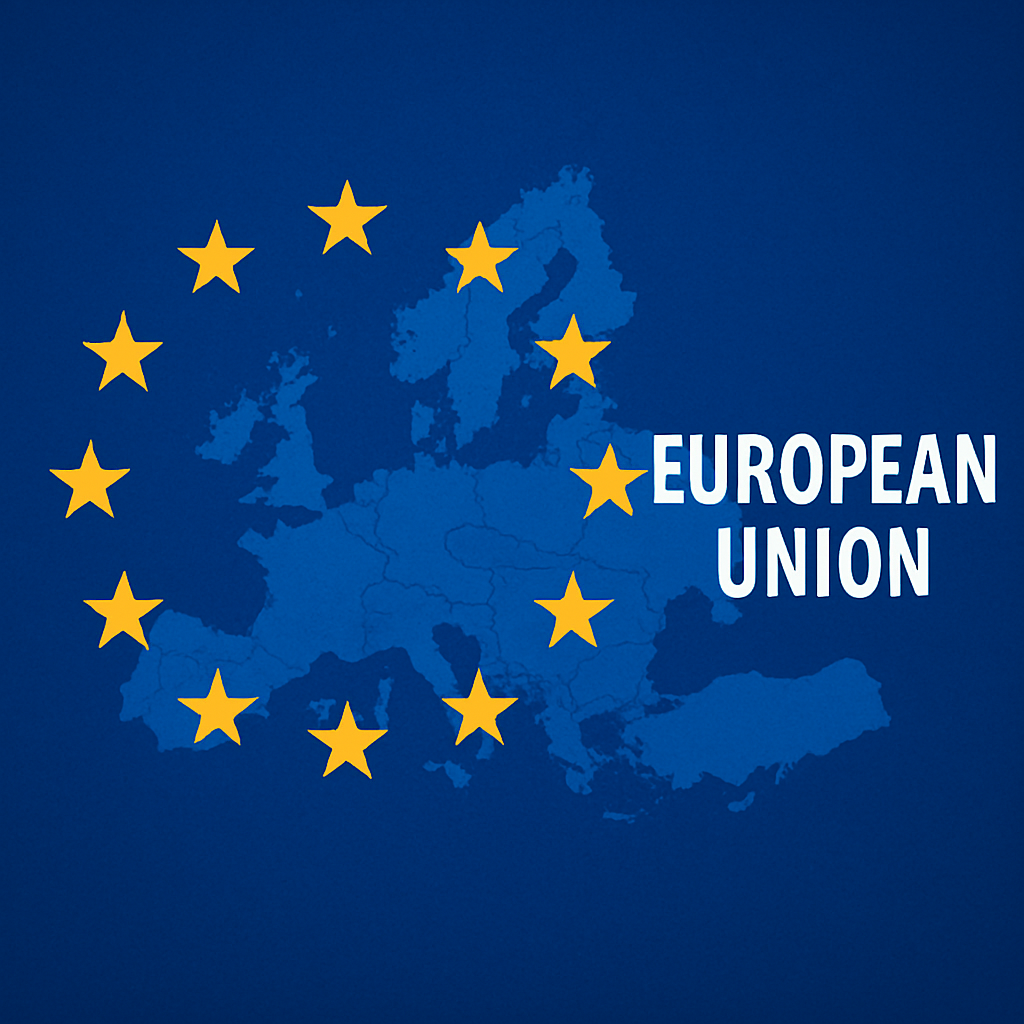
European Union (EU)
The European Union is one of the most ambitious political and economic projects in modern history, bringing together 27 nations under a unique system of shared governance and cooperation. From its origins in the aftermath of World War II to its current role as a global economic powerhouse and diplomatic actor, the EU has shaped the lives of millions and influenced world affairs in profound ways. In this post, we’ll uncover 25 interesting facts about the European Union—spanning its history, institutions, expansions, achievements, and challenges—that reveal why it remains such a fascinating and influential union today.
🧠 Origins & History
1. The EU traces its roots to the European Coal and Steel Community (1952). The European Coal and Steel Community (ECSC) was established by six countries—Belgium, France, Italy, Luxembourg, the Netherlands, and West Germany—as a way to integrate industries critical to war-making capacity. By pooling coal and steel production, the ECSC aimed to make future conflicts between European nations not only undesirable but materially impossible. This was a bold experiment in supranational governance, laying the groundwork for deeper cooperation and eventually the European Union itself.
2. The Treaty of Rome (1957) created the European Economic Community and Euratom. Signed by the same six founding members, the Treaty of Rome established the European Economic Community (EEC) and the European Atomic Energy Community (Euratom). The EEC sought to create a common market, while Euratom promoted peaceful nuclear energy cooperation. These treaties marked a significant step toward economic integration, setting the stage for the EU’s single market decades later.
3. The EU was formally established in 1993 with the Treaty of Maastricht. The Maastricht Treaty transformed the EEC into the European Union, introducing EU citizenship and expanding cooperation beyond economics into areas like foreign policy and security. It also laid the foundation for the euro currency. Maastricht represented a leap toward political union, sparking debates about sovereignty and integration that continue today.
4. The Treaty of Lisbon (2009) gave the EU legal personality and restructured institutions. The Lisbon Treaty streamlined decision-making, strengthened the European Parliament, and created the position of President of the European Council. It also gave the EU legal personality, allowing it to sign treaties and join international organizations as a single entity. Lisbon was crucial in modernizing the EU’s governance for an enlarged membership.
5. The EU was awarded the Nobel Peace Prize in 2012. Recognized for its role in promoting peace, democracy, and human rights, the EU received the Nobel Peace Prize. The award highlighted the EU’s success in transforming a historically war-torn continent into a zone of stability and cooperation. It underscored the EU’s identity not just as an economic bloc but as a peace project.
🌍 Membership & Expansion
6. The EU began with six founding members. Belgium, France, Italy, Luxembourg, the Netherlands, and West Germany were the original signatories of the ECSC and Treaty of Rome. Their cooperation was driven by a desire to rebuild after World War II and prevent future conflicts. These six nations remain central players in EU politics today.
7. It has expanded to 27 member states. Through successive enlargements, the EU grew to include countries from Northern, Southern, and Eastern Europe. Enlargement has been a powerful tool for stabilizing post-communist states and promoting democracy. However, it also introduced challenges in balancing diverse interests across 27 nations.
8. The United Kingdom is the only country to have left the EU. Brexit, finalized in 2020, marked the first time a member state exited the EU. Driven by debates over sovereignty, immigration, and economic independence, Brexit reshaped the EU’s identity and raised questions about the durability of integration. It remains a defining moment in EU history.
9. Greenland withdrew from the EU in 1985. Though part of Denmark, Greenland voted to leave the European Communities in 1985, primarily over fishing rights. This unusual case shows that EU membership is not irreversible and highlights the importance of resource sovereignty for smaller territories.
10. Nine countries are currently recognized as candidates for membership. Countries like Ukraine, Serbia, and Turkey are official candidates, reflecting the EU’s ongoing appeal as a political and economic union. Enlargement remains a strategic tool, but it also raises questions about capacity, cultural diversity, and geopolitical tensions.
🏛️ Institutions & Governance
11. The EU operates through a hybrid system of supranational and intergovernmental decision-making. Unlike traditional federations, the EU blends supranational authority (binding EU-wide laws) with intergovernmental cooperation (member states retaining sovereignty). This hybrid model makes the EU unique, balancing unity with national independence.
12. Its main institutions include the European Commission, European Council, Council of the EU, European Parliament, and Court of Justice. Each institution plays a distinct role: the Commission proposes laws, the Parliament and Council legislate, the European Council sets broad priorities, and the Court ensures compliance. This complex structure reflects the EU’s attempt to balance democratic representation with efficiency.
13. The European Parliament has been directly elected since 1979. Initially appointed by national parliaments, Members of the European Parliament (MEPs) have been directly elected since 1979. This gave EU citizens a stronger voice in policymaking, enhancing democratic legitimacy.
14. The EU follows the principle of subsidiarity. Subsidiarity means the EU acts only when objectives cannot be achieved by member states alone. This principle ensures that power is not centralized unnecessarily, preserving national autonomy while enabling collective action.
15. EU laws take the form of regulations and directives. Regulations apply directly across all member states, while directives set goals that national governments must achieve through their own legislation. This dual system allows flexibility while maintaining unity.
💶 Economy & Integration
16. The EU’s single market guarantees free movement of people, goods, services, and capital. The single market is one of the EU’s greatest achievements, enabling seamless trade and mobility across borders. It boosts economic growth, fosters competition, and strengthens European identity.
17. The eurozone includes 21 EU countries that use the euro. Introduced in 1999, the euro is now used by most EU members, creating one of the world’s largest currency unions. While it facilitates trade and travel, it also poses challenges, as seen during the Eurozone debt crisis.
18. The EU accounts for about one-sixth of global GDP. With over 450 million people, the EU is a major economic power. Its collective GDP rivals that of the United States and China, giving it significant influence in global trade and finance.
19. The EU’s Next Generation EU recovery package (2020) was worth €750 billion. This unprecedented stimulus aimed to counter the economic impact of COVID-19. It marked a historic step toward fiscal solidarity, with the EU collectively borrowing to support recovery.
20. The EU’s Gini coefficient (2024) was 29.3. This relatively low inequality score reflects the EU’s emphasis on social welfare and redistribution. Compared to global averages, the EU maintains a more balanced distribution of wealth.
🌐 Global Role
21. The EU represents itself at major international organizations. The EU has observer or full membership status at bodies like the UN, WTO, G7, and G20. This allows it to act as a unified bloc, amplifying its global influence.
22. It maintains permanent diplomatic missions worldwide. Through the European External Action Service, the EU operates embassies and missions across the globe. This diplomatic presence underscores its role as a global actor.
23. The EU has a Common Foreign and Security Policy (CFSP). The CFSP coordinates member states’ foreign policies, enabling collective responses to global crises. While limited by national sovereignty, it strengthens the EU’s voice in international affairs.
24. The EU abolished passport controls within the Schengen Area. The Schengen Agreement allows free travel across most EU countries without border checks. This fosters mobility, tourism, and cultural exchange, though it also raises challenges in managing migration.
25. The EU’s official motto is “United in Diversity.” Adopted in 2000, the motto reflects the EU’s commitment to unity while respecting cultural, linguistic, and historical differences. It symbolizes the balance between integration and diversity that defines the Union.
🔎 Frequently Asked Questions About the EU
1. What is the European Union? The European Union (EU) is a political and economic union of 27 European countries. It was created to promote peace, stability, and prosperity by pooling sovereignty in certain areas. The EU operates through a unique system that blends supranational decision-making with intergovernmental cooperation, making it unlike any other political entity in the world.
2. When and why was the EU founded? The EU’s origins lie in the aftermath of World War II, when European leaders sought to prevent future conflicts by fostering economic interdependence. The European Coal and Steel Community (1952) and the Treaty of Rome (1957) laid the groundwork. The EU itself was formally established in 1993 with the Maastricht Treaty, expanding cooperation beyond economics into politics, security, and citizenship.
3. How many countries are in the EU? As of 2026, the EU has 27 member states. It began with six founding members—Belgium, France, Italy, Luxembourg, the Netherlands, and West Germany—and expanded through successive enlargements to include most of Central, Eastern, and Southern Europe.
4. What is EU citizenship? EU citizenship, introduced by the Maastricht Treaty, grants citizens of member states rights such as free movement across the EU, the ability to live and work in any member country, and the right to vote in European Parliament elections. It complements national citizenship rather than replacing it.
5. What is the Schengen Area? The Schengen Area allows passport-free travel across most EU countries and some non-EU states like Switzerland and Norway. It fosters mobility, tourism, and cultural exchange, but also requires strong external border controls to manage migration and security.
6. What is the eurozone? The eurozone consists of 21 EU countries that use the euro (€) as their currency. Introduced in 1999, the euro facilitates trade, travel, and financial integration. However, it also requires coordination of fiscal and monetary policies, which has posed challenges during crises like the Eurozone debt crisis.
7. What are the EU’s main institutions? The EU’s governance is shared among several institutions:
- European Commission (proposes laws, enforces treaties)
- European Parliament (directly elected, legislates with the Council)
- Council of the EU (represents member governments)
- European Council (sets overall direction)
- Court of Justice of the EU (ensures compliance with EU law) This structure balances democratic representation with efficiency.
8. What are the four freedoms of the EU single market? The single market guarantees the free movement of people, goods, services, and capital across member states. This integration boosts trade, competition, and economic growth, making the EU one of the largest economic blocs in the world.
9. Has any country ever left the EU? Yes. The United Kingdom left the EU in 2020, an event known as Brexit. Greenland also withdrew in 1985, though it remained part of Denmark. These cases show that membership is reversible, though politically and economically complex.
10. What role does the EU play globally? The EU is a major global actor, representing itself in organizations like the UN, WTO, G7, and G20. It is the world’s largest trading bloc and a leader in climate policy, human rights, and development aid. Its collective voice amplifies the influence of individual member states.
11. What is the EU’s motto? The EU’s official motto is “United in Diversity.” Adopted in 2000, it reflects the union’s commitment to unity while respecting cultural, linguistic, and historical differences among its members.
12. What are the benefits of EU membership? Membership offers access to the single market, funding for infrastructure and development, enhanced security cooperation, and influence in global affairs. Citizens benefit from free travel, study, and work opportunities across the EU.
13. What are the criticisms of the EU? Critics argue that the EU can be bureaucratic, slow to act, and sometimes undermines national sovereignty. Debates over migration, fiscal policy, and democratic accountability remain contentious. Brexit highlighted these tensions.
14. What is the EU’s role in peace and security? The EU was awarded the Nobel Peace Prize in 2012 for its role in promoting peace and stability. It coordinates foreign policy through the Common Foreign and Security Policy (CFSP) and supports peacekeeping missions worldwide.
15. What is the future of the EU? The EU faces challenges such as managing enlargement (e.g., Ukraine’s candidacy), addressing climate change, navigating global competition, and balancing unity with national sovereignty. Its future depends on how it adapts to these pressures while maintaining its core values of democracy, human rights, and cooperation.