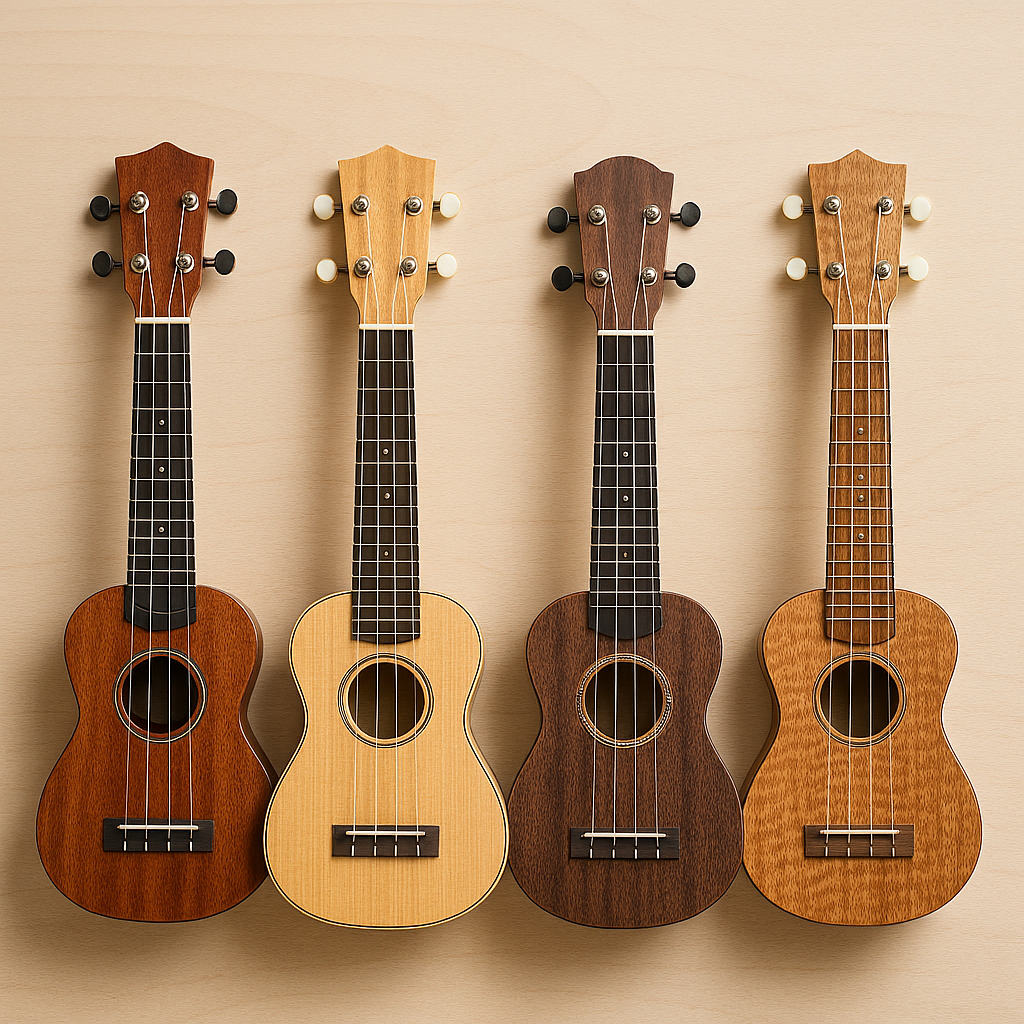
Ukulele
The ukulele is more than just a small, four-stringed instrument—it’s a cultural icon with a fascinating history and a global following. From its humble beginnings in 19th-century Hawaii to its modern-day resurgence fueled by social media and music festivals, the ukulele has captured hearts worldwide with its cheerful tone and approachable design. Whether you’re a seasoned musician or a curious beginner, there’s always something new to learn about this beloved instrument. In this article, we’ll dive into 25 interesting and verified numerical facts about the ukulele, exploring its origins, dimensions, tuning, market trends, and even some quirky world records. Get ready to discover why this little instrument has made such a big impact on music and culture!
1. The first ukulele was crafted in 1879
The ukulele’s origin traces back to 1879 when Portuguese immigrants from Madeira and the Azores arrived in Hawaii, bringing with them small guitar-like instruments such as the machete, cavaquinho, and rajão. These instruments inspired local craftsmen to create what would become the ukulele. The year 1879 marks a turning point in Hawaiian music history because it introduced a sound that would later become synonymous with the islands’ cultural identity. This innovation was not just about music—it reflected the blending of European craftsmanship with Hawaiian creativity, resulting in an instrument that was smaller, lighter, and easier to play than traditional guitars. Its cheerful tone quickly captured the hearts of Hawaiians, setting the stage for its global popularity.
2. Popular in Hawaii during the 1880s
By the 1880s, less than a decade after its introduction, the ukulele had become a staple in Hawaiian music. This rapid adoption was fueled by King David Kalākaua, known as the “Merrie Monarch,” who championed Hawaiian arts and music. He encouraged the use of the ukulele at royal gatherings and cultural events, cementing its role in Hawaiian identity. The instrument’s portability and bright sound made it ideal for traditional hula performances and social gatherings. Its popularity during this decade illustrates how quickly cultural exchange can reshape artistic traditions, turning a foreign concept into a national symbol within a single generation.
3. First printed mention in 1907
The term “ukulele” first appeared in print in 1907 in the Metropolitan Museum of Art’s instrument catalog, signaling its recognition beyond Hawaii. This milestone is significant because it shows how the ukulele transitioned from a regional curiosity to an object of scholarly and artistic interest. By the early 20th century, the instrument was already making its way to mainland America, where it would soon become a craze during the Jazz Age. The printed mention also reflects the growing fascination with Hawaiian culture during this period, which was often romanticized in popular media and tourism campaigns.
4. Soprano ukulele measures 21 inches
The soprano ukulele, considered the original and most traditional size, measures about 21 inches in length with a 13-inch scale. This compact size contributes to its distinctive bright and punchy tone, which is ideal for strumming chords rather than intricate fingerpicking. Its small dimensions make it highly portable, reinforcing its reputation as a fun, accessible instrument for beginners. Historically, the soprano was the first size to gain popularity in Hawaii and later in the United States, becoming the standard during the early 20th-century ukulele boom.
5. Concert ukulele averages 23 inches
The concert ukulele, introduced in the 1920s, measures around 23 inches with a 15-inch scale. This slightly larger size offers a fuller sound and more room on the fretboard, making it a favorite among players who want a balance between portability and tonal richness. The concert ukulele’s development reflects the instrument’s evolution to meet the demands of more serious musicians who sought greater versatility without sacrificing the ukulele’s signature charm.
6. Tenor ukulele is about 26 inches
The tenor ukulele, at approximately 26 inches long with a 17-inch scale, provides a deeper, warmer tone compared to its smaller counterparts. Its size allows for more complex chord shapes and fingerstyle techniques, making it popular among professional performers. The tenor’s rise in popularity during the mid-20th century coincided with the ukulele’s resurgence in jazz and folk music, where musicians required instruments capable of greater dynamic range.
7. Baritone ukulele measures 30 inches
The baritone ukulele, the largest common size at 30 inches with a 19-inch scale, is tuned differently (D-G-B-E) to resemble the top four strings of a guitar. This tuning makes it an excellent transition instrument for guitarists. Its introduction in the 1940s expanded the ukulele family and demonstrated the instrument’s adaptability to various musical genres, including blues and classical arrangements.
8. Smallest playable ukulele was 16 mm
One of the most astonishing ukulele records is the creation of a fully playable instrument measuring only 16 millimeters in length. While this miniature ukulele is more of a novelty than a practical instrument, it showcases the creativity and craftsmanship of luthiers who push the boundaries of design. Such feats often attract attention at exhibitions and highlight the ukulele’s enduring appeal as both a musical tool and an artistic object.
9. Standard tuning G4–C4–E4–A4
The ukulele’s standard tuning of G4–C4–E4–A4 gives it its characteristic bright and cheerful sound. The A4 string vibrates at 440 Hz, the same pitch used as a tuning standard in Western music. This reentrant tuning, where the G string is higher than the C string, creates a unique tonal pattern that distinguishes the ukulele from guitars and other stringed instruments. This tuning system has remained largely unchanged for over a century, underscoring its effectiveness in producing the ukulele’s signature sound.
10. Ukuleles generally have 4 strings
Most ukuleles feature four strings, a design choice that simplifies chord shapes and makes the instrument accessible to beginners. However, variants with six or eight strings exist, offering richer harmonics and fuller sound. These multi-string versions often pair strings in courses, similar to a mandolin, and are favored by advanced players seeking more complex tonal textures.
11. Between 12 and 22 frets
Ukuleles typically have between 12 and 22 frets, depending on size and model. Soprano ukuleles usually have 12 frets, while tenor and baritone models may have up to 22. The number of frets determines the instrument’s range and influences the types of music that can be played. More frets allow for higher notes and greater versatility, appealing to players who perform intricate solos.
12. Four main types of ukuleles
The ukulele family consists of four primary types: soprano, concert, tenor, and baritone. Each type differs in size, scale length, and tonal quality, offering musicians a range of options to suit their playing style. The soprano, at around 21 inches, is the smallest and most traditional, producing a bright, cheerful tone. The concert, slightly larger at 23 inches, offers a fuller sound and more comfortable fret spacing. The tenor, at 26 inches, provides deeper resonance and is favored by professional performers for fingerstyle techniques. Finally, the baritone, at 30 inches, is tuned like the top four strings of a guitar, making it ideal for guitarists transitioning to ukulele. These four types illustrate the instrument’s adaptability and its ability to cater to diverse musical genres and preferences.
13. Sopranino measures under 19 inches
Beyond the four main types, there are specialty sizes like the sopranino, which measures less than 19 inches in length. This ultra-small ukulele produces a high-pitched, almost toy-like sound, making it more of a novelty than a practical instrument for performance. However, its existence demonstrates the creativity of luthiers and the playful spirit of ukulele enthusiasts. Sopraninos are often used for travel or as collector’s items, and their diminutive size challenges craftsmanship standards, requiring precise engineering to maintain playability despite the limited space.
14. Global market valued at $9.43 billion in 2024
The ukulele is not just a cultural icon—it’s a booming industry. In 2024, the global ukulele market was valued at $9.43 billion, and projections indicate it will reach $15.15 billion by 2033, growing at a compound annual growth rate (CAGR) of 9.48%. This growth reflects the instrument’s resurgence in popularity, driven by social media trends, online tutorials, and its reputation as an easy-to-learn instrument for beginners. The ukulele’s affordability compared to guitars and its association with positive, carefree vibes have made it a favorite among hobbyists worldwide, fueling demand across North America, Europe, and Asia.
15. U.S. sales peaked at 1,765,000 units in 2018
In the United States, ukulele sales reached an all-time high in 2018, with 1,765,000 units sold. This surge was largely influenced by viral videos, celebrity endorsements, and the rise of YouTube tutorials that made learning the ukulele accessible to millions. The instrument’s popularity among younger generations, combined with its presence in school music programs, contributed to this record-breaking year. This statistic underscores how digital platforms can revive interest in traditional instruments, transforming them into modern cultural phenomena.
16. $140 million in U.S. sales in 2021
Despite selling fewer units than in 2018, U.S. ukulele sales still generated $140 million in revenue in 2021. This figure highlights the instrument’s sustained popularity and the willingness of consumers to invest in higher-quality models. The trend toward premium ukuleles made from exotic woods and featuring advanced craftsmanship has elevated the instrument from a beginner’s tool to a serious performer’s choice, driving revenue even as unit sales fluctuate.
17. Average retail price $65–$83
Over the past decade, the average retail price of a ukulele has ranged between $65 and $83. This affordability is one of the ukulele’s strongest selling points, making it accessible to beginners and casual players. While entry-level models can cost as little as $30, professional-grade instruments can exceed $1,000, especially those crafted from Hawaiian koa wood. The wide price range ensures that the ukulele appeals to both hobbyists and serious musicians, reinforcing its versatility in the global market.
18. High-end koa ukuleles cost thousands
Hawaiian koa wood is considered the gold standard for ukulele construction, prized for its stunning grain patterns and warm tonal qualities. High-end koa ukuleles can cost anywhere from several hundred dollars to several thousand, depending on craftsmanship and detailing. These instruments are often handmade by master luthiers, making them collectible works of art as well as musical tools. The premium price reflects not only the rarity of koa wood but also the cultural significance of owning an authentic Hawaiian-made ukulele.
19. Entry-level ukuleles weigh less than 1 pound
One of the ukulele’s most appealing features is its lightweight design. Most entry-level models weigh under one pound, making them ideal for travel and casual playing. This portability has contributed to the instrument’s popularity among backpackers, campers, and travelers who want to bring music wherever they go. The lightweight build also makes the ukulele accessible to children and beginners, reducing physical strain compared to heavier instruments like guitars.
20. Largest ukulele ensemble had 8,065 participants
On August 13, 2017, Hong Kong set a world record for the largest ukulele ensemble, with 8,065 participants playing together. This event showcased the ukulele’s ability to unite people across cultures and age groups, turning a simple instrument into a symbol of community and joy. Such gatherings often aim to promote music education and cultural exchange, proving that the ukulele is more than just an instrument—it’s a social phenomenon.
21. Previous record was 2,134 players in 2012
Before Hong Kong’s record-breaking event, Yokohama, Japan, held the title with 2,134 ukulele players performing together in 2012. This earlier record reflects the instrument’s strong presence in Asia, where ukulele clubs and festivals have flourished. These large-scale events highlight the ukulele’s global appeal and its role in fostering musical camaraderie, transcending language and cultural barriers.
22. Longest time balancing a ukulele: 21 minutes 36 seconds
In an unusual feat, Tai Star set a world record by balancing a ukulele on one finger for 21 minutes and 36 seconds. While this achievement is more about physical endurance than musical skill, it underscores the ukulele’s lightweight design and quirky charm. Such records often attract media attention, adding to the instrument’s playful image and inspiring creative challenges among enthusiasts.
23. Most strums in 30 seconds: 294
Another fascinating record involves speed: the most ukulele strums in 30 seconds is 294. This accomplishment requires incredible dexterity and precision, demonstrating that the ukulele, despite its simplicity, can be a tool for impressive technical feats. Speed-strumming contests have become popular in ukulele communities, adding a competitive edge to what is typically seen as a relaxed, easygoing instrument.
24. Festivals attract thousands annually
Ukulele festivals are held worldwide, with some attracting thousands of participants each year. Events like the Ukulele Festival Hawaii and the Cairns Ukulele Festival in Australia celebrate the instrument through workshops, performances, and community jams. These gatherings not only promote music education but also strengthen cultural ties, proving that the ukulele is a global ambassador of joy and creativity.
25. String tension: 6–8 pounds per string
Ukulele strings exert relatively low tension, typically between 6 and 8 pounds per string. This gentle tension makes the instrument easier on the fingers compared to guitars, which often require 15–20 pounds per string. The lower tension contributes to the ukulele’s reputation as a beginner-friendly instrument, reducing discomfort and encouraging longer practice sessions. It also influences the instrument’s tonal qualities, giving it a softer, more melodic sound.
Frequently Asked Questions (FAQs) about Ukulele
1. What is a ukulele and where did it originate?
The ukulele is a small, four-stringed instrument that originated in Hawaii in the late 19th century. It was inspired by Portuguese instruments like the machete and cavaquinho, brought to Hawaii by immigrants. Its name means “jumping flea” in Hawaiian, possibly referring to the lively finger movements of early players. Today, the ukulele is celebrated worldwide for its cheerful tone and portability. [mixingaband.com]
2. What are the different types of ukuleles?
There are four main types:
- Soprano (about 21 inches): Bright, classic tone, ideal for beginners.
- Concert (23 inches): Slightly larger, fuller sound, more fret space.
- Tenor (26 inches): Richer tone, great for fingerpicking and advanced techniques.
- Baritone (30 inches): Deep, guitar-like sound, tuned DGBE.
Each size offers a unique playing experience, so choose based on comfort and sound preference. [terrycarte…cstore.com]
3. Is the ukulele easy to learn?
Yes! The ukulele is considered one of the easiest instruments to learn. Its small size, simple chord shapes, and soft nylon strings make it beginner-friendly. Many players can learn basic chords and strumming patterns within a few days of practice. [ukulelemad.com]
4. How do you tune a ukulele?
The most common tuning is G-C-E-A (called reentrant tuning), where the G string is tuned higher than expected. Baritone ukuleles use D-G-B-E, similar to the top four strings of a guitar. Tuning can be done using clip-on tuners, tuner apps, or by ear using a reference pitch. [flightmusic.com]
5. Do I need a pick to play the ukulele?
No, most players strum with their fingers, but picks can be used for a brighter, louder sound. Felt picks are popular because they produce a softer tone compared to plastic picks. Ultimately, it’s a matter of personal preference. [ukulelemad.com]
6. What is the best ukulele for beginners?
Soprano and concert ukuleles are often recommended for beginners because they are affordable, easy to handle, and produce the classic ukulele sound. Brands like Kala, Cordoba, and Luna offer reliable beginner models in the $50–$100 range. [guitarcenter.com]
7. How much does a ukulele cost?
Prices vary widely:
- Beginner models: $30–$100
- Intermediate: $150–$300
- High-end: $500–$2,000 (especially Hawaiian koa wood models)
Avoid very cheap ukuleles under $30, as they often have poor tuning stability and sound quality. [beginnerukuleles.com]
8. How often should I change ukulele strings?
Strings should be changed every 3–6 months, depending on usage. Signs that it’s time to replace them include dull sound, difficulty staying in tune, or visible wear. Always keep a spare set handy for emergencies. [islandbazaarukes.com]
9. What wood type is best for ukuleles?
Tonewoods affect sound quality:
- Mahogany: Warm, balanced tone.
- Koa: Traditional Hawaiian wood, bright and rich sound.
- Spruce: Loud, clear tone.
Solid wood ukuleles generally sound better than laminate, but they are more expensive. [ukulelego.com]
10. Can children learn to play the ukulele?
Absolutely! The ukulele’s small size and soft strings make it perfect for kids as young as 4 years old. It’s lightweight, easy to hold, and doesn’t require much finger strength, making it an ideal first instrument. [folkstrings.com]
11. How do I hold a ukulele properly?
Hold the ukulele against your chest with your strumming arm supporting it lightly. Your fretting hand should grip the neck comfortably without squeezing too hard. Using a strap can help maintain stability, especially when standing. [flightmusic.com]
12. What accessories do I need for my ukulele?
Essential accessories include:
- Clip-on tuner for accurate tuning.
- Spare strings for replacements.
- Gig bag or hard case for protection.
Optional: strap, capo, felt picks, humidifier for wood care. [sweetwater.com]
13. How do I maintain my ukulele?
Keep your ukulele clean by wiping it after each use. Store it in a case to protect from dust and humidity changes. Maintain humidity around 45–55% to prevent wood cracking. Avoid direct sunlight and extreme temperatures. [todoukulele.com]
14. Can I paint or decorate my ukulele?
Yes, you can paint or add stickers to your ukulele without affecting its sound, as long as you use safe materials and avoid covering the sound hole. Acrylic paint is commonly used for custom designs. [folkstrings.com]
15. What is the quickest way to learn ukulele?
Start with basic chords (C, F, G, Am) and simple strumming patterns. Online tutorials, YouTube videos, and chord charts are great resources. Practice daily for 10–15 minutes to build muscle memory quickly. [flightmusic.com]
16. Can I use guitar strings on a ukulele?
No, guitar strings are too thick and have different tension requirements. Ukuleles use nylon or fluorocarbon strings designed for their size and tuning. Using guitar strings can damage the instrument. [folkstrings.com]
17. What is a banjolele?
A banjolele is a hybrid instrument combining the body of a banjo with the tuning and playability of a ukulele. It produces a bright, percussive tone and is popular in folk and vintage music styles. [musictribez.com]
18. Do I need to sing to play ukulele?
No, singing is optional. Many players enjoy strumming instrumental pieces or fingerpicking melodies without vocals. However, the ukulele’s soft tone complements singing beautifully, which is why it’s often paired with vocals. [folkstrings.com]
19. Why does my ukulele sound out of tune quickly?
New strings stretch and need frequent tuning at first. Poor-quality tuners or loose tuning pegs can also cause instability. Ensure your ukulele has geared tuners and tighten screws if necessary. [ukutabs.com]
20. Can I plug my ukulele into an amplifier?
Yes, if you have an electro-acoustic ukulele equipped with a pickup. These models allow you to amplify your sound for live performances or recording. Standard acoustic ukuleles cannot be plugged in without modification. [ukulelemad.com]