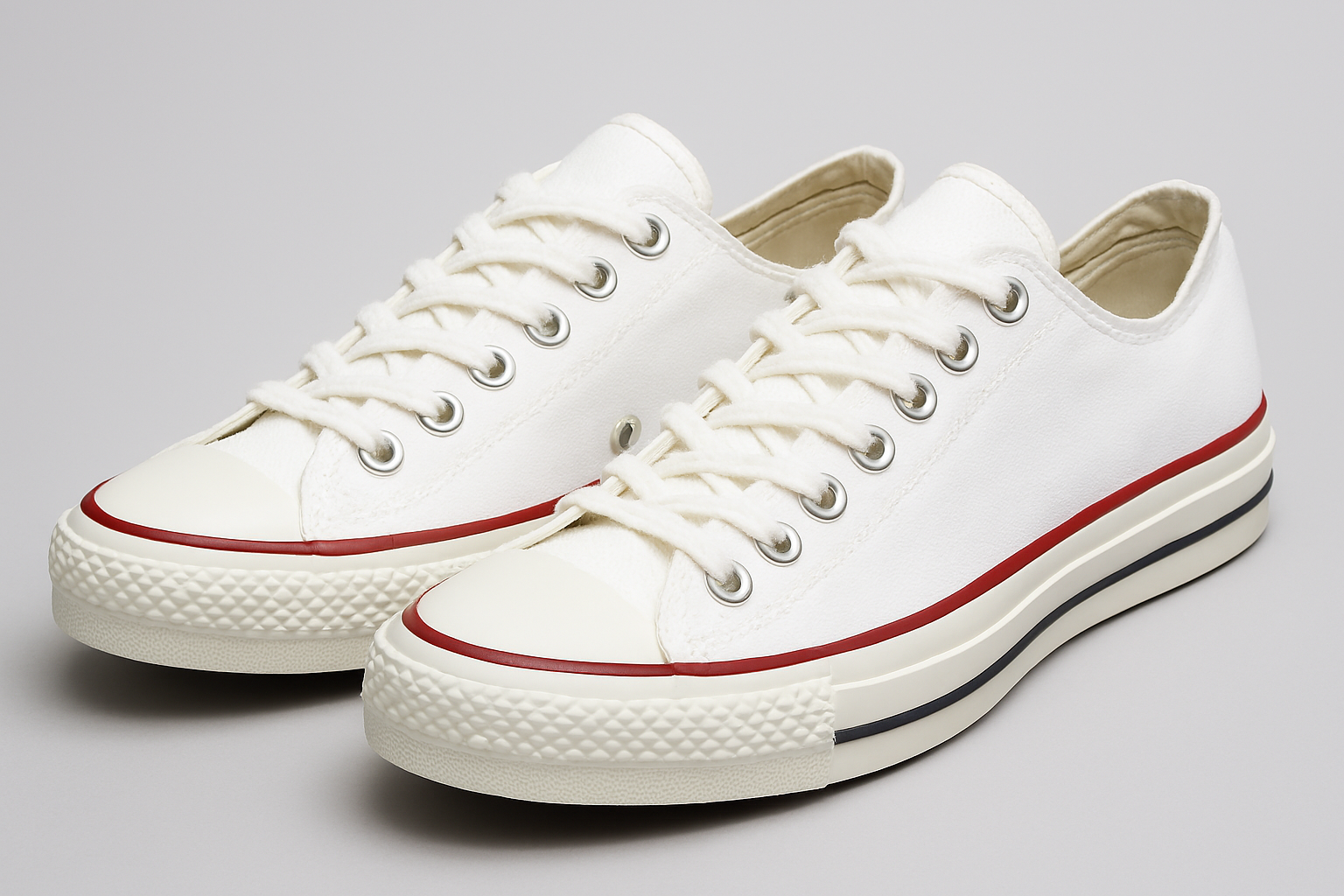
Sneakers
Sneakers are far more than just comfortable shoes — they’re cultural icons, technological innovations, and even environmental talking points. From their humble beginnings as quiet rubber-soled “plimsolls” in the 19th century to their rise as billion-dollar fashion statements endorsed by athletes and musicians, sneakers have shaped the way we move, dress, and express ourselves. They’ve been worn to Olympic victories, celebrated in hip hop anthems, and collected like rare art pieces by devoted sneakerheads. At the same time, they carry a hidden footprint, with most pairs produced in Asia and contributing significantly to global waste. In this post, we’ll explore 25 fascinating facts that trace the sneaker’s journey through history, culture, sports, and sustainability — revealing how these everyday shoes became one of the most powerful symbols of modern life.
1. First recorded use of “sneaker” (1887, Boston Journal)
The earliest known use of the word sneaker appeared in the Boston Journal in 1887, describing the canvas-and-rubber shoes that boys wore for tennis. At the time, most footwear was made of hard leather soles that clattered audibly on pavements. The new rubber-soled shoes were so quiet that they seemed almost stealthy, hence the nickname. This linguistic moment is significant because it marked the beginning of sneakers as a distinct category of footwear, separating them from traditional boots and dress shoes. It also reflects how language evolves alongside technology: a simple innovation in materials gave rise to a new cultural term that would eventually dominate global fashion.
2. Quiet rubber soles allowed wearers to “sneak”
The defining feature of sneakers was their rubber sole, which muffled footsteps compared to the loud clack of leather shoes. This gave rise to the playful idea that one could “sneak” around unnoticed. In the late 19th century, this was more than just a novelty — it symbolized a shift toward comfort and practicality in footwear. The ability to move quietly was especially appealing to children and athletes, who valued agility and discretion. Over time, this characteristic became central to the identity of sneakers, embedding the notion of stealth and freedom of movement into their cultural image.
3. Henry Nelson McKinney popularized the term in 1917
Advertising agent Henry Nelson McKinney is credited with popularizing the word sneaker in 1917. Working in an era when marketing was beginning to shape consumer culture, McKinney recognized the appeal of branding shoes not just as functional items but as lifestyle products. By emphasizing the “sneaky” quality of rubber soles, he helped cement the term in the public imagination. This was a pivotal moment in the commercialization of sneakers: it transformed them from niche athletic gear into mass-market commodities. McKinney’s contribution highlights the power of advertising in shaping everyday language and consumer behavior.
4. Sneakers called “plimsolls” in the UK
In the United Kingdom, sneakers were originally known as plimsolls. The name came from the Plimsoll line on ships — a painted mark indicating the safe loading limit. The horizontal band where the rubber sole met the canvas upper resembled this line, and just as water above the Plimsoll line meant danger for ships, water above the rubber sole meant wet feet for wearers. Introduced in the 1870s, plimsolls were lightweight, affordable, and widely used in schools for physical education. Their cultural significance lies in their role as the precursor to modern sneakers, bridging maritime terminology with everyday fashion.
5. First rubber-soled shoes appeared in the 1870s
The 1870s saw the introduction of rubber-soled shoes, a revolutionary departure from traditional leather footwear. These early versions, often called sandshoes or plimsolls, were designed for sports and leisure activities like tennis and cricket. Their canvas uppers and vulcanized rubber soles provided flexibility, comfort, and grip, making them ideal for athletic use. The innovation was part of a broader wave of industrial progress, as vulcanization allowed rubber to be durable and mass-produced. This development laid the foundation for the sneaker industry, showing how technological advances in materials could reshape fashion and everyday life.
6. U.S. Rubber Company launched sneakers in 1892
In 1892, the U.S. Rubber Company introduced mass-produced sneakers to the American market, marking a turning point in footwear history. These shoes combined canvas uppers with vulcanized rubber soles, making them durable, flexible, and affordable. Unlike handcrafted leather shoes, sneakers could be produced at scale, which democratized access to comfortable footwear. This innovation aligned with the industrial boom of the late 19th century, when factories were increasingly capable of producing consumer goods for a growing middle class. The U.S. Rubber Company’s contribution laid the groundwork for sneakers as everyday items, paving the way for brands like Keds and Converse to dominate the early 20th century.
7. J.W. Foster & Sons supplied spiked running shoes to Olympic athletes in the 1920s
J.W. Foster & Sons, a British company that would later evolve into Reebok, played a pioneering role in athletic footwear by designing spiked running shoes for Olympic athletes in the 1920s. These shoes featured metal spikes embedded in the soles, providing superior traction and speed on track surfaces. Their adoption by elite athletes gave the brand credibility and showcased how specialized footwear could enhance performance. This innovation also highlighted the growing intersection between sports and technology, as footwear design became a critical factor in competitive success. The company’s Olympic presence foreshadowed the modern era, where sponsorships and athlete endorsements drive sneaker culture.
8. Adi Dassler gained fame at the 1936 Berlin Olympics
Adi Dassler, founder of Adidas, cemented his reputation at the 1936 Berlin Olympics by outfitting athletes with his handmade shoes. Most famously, American sprinter Jesse Owens wore Dassler’s footwear when he won four gold medals, a triumph that carried immense political and cultural weight given the Nazi regime’s attempt to use the Games as propaganda. Dassler’s success demonstrated the power of performance-driven design and international visibility. It also marked the beginning of Adidas’s long-standing association with elite sports, positioning the brand as a global leader in athletic footwear. This moment is often cited as the birth of modern sports marketing.
9. Sneakers became mainstream leisurewear in the 1950s–70s
By the mid-20th century, sneakers had transitioned from purely athletic gear to everyday leisurewear. In the 1950s, they became popular among teenagers, symbolizing rebellion and casual style, especially in the United States. Hollywood films like Rebel Without a Cause helped cement sneakers as part of youth culture. In the 1960s and 70s, the rise of physical education programs and recreational sports further normalized sneakers as daily attire. This period also saw the emergence of iconic brands like Converse Chuck Taylors, which became synonymous with basketball and counterculture. The mainstreaming of sneakers reflected broader social changes, including the embrace of comfort, informality, and individuality in fashion.
10. Jogging boom of the 1970s fueled sneaker demand
The jogging craze of the 1970s dramatically increased global demand for sneakers. As recreational running became a popular fitness trend, millions of people sought specialized footwear that could support long-distance activity. Companies like Nike capitalized on this movement by introducing lightweight, cushioned running shoes, such as the Nike Cortez. The boom not only expanded the sneaker market but also reshaped public attitudes toward exercise, making fitness a mainstream lifestyle choice. This era marked the beginning of sneakers as both performance gear and fashion statements, setting the stage for the explosive growth of the industry in the decades to follow.
11. Sneakers in hip hop culture
Sneakers became deeply embedded in hip hop culture during the late 1970s and 1980s, when artists and fans embraced brands like Adidas, Nike, and Puma as symbols of identity and street credibility. A defining moment came in 1986 when Run-D.M.C. released the song My Adidas, celebrating the brand and sparking one of the first major collaborations between musicians and sneaker companies. Sneakers in hip hop were more than fashion — they represented authenticity, community, and rebellion against mainstream norms. This cultural connection transformed sneakers into status symbols, influencing generations of fans and cementing their role as a cornerstone of urban style.
12. Converse and Vans in rock and punk culture
While hip hop gravitated toward Adidas and Nike, rock and punk scenes embraced Converse and Vans. Converse Chuck Taylor All-Stars, originally designed as basketball shoes, became iconic among musicians and fans for their affordability, simplicity, and rebellious aesthetic. Vans, with their durable canvas and rubber soles, were adopted by skateboarders and punk bands in California, symbolizing counterculture and DIY ethos. These shoes became inseparable from the identity of rock and punk movements, worn on stage and in everyday life. Their cultural significance lies in how they bridged music, lifestyle, and fashion, making sneakers a universal badge of belonging across genres.
13. Sneakerheads and collecting culture
The rise of sneakerheads — dedicated collectors of rare and limited-edition sneakers — reflects how footwear evolved into a form of art and investment. Beginning in the 1990s, sneaker enthusiasts sought out exclusive releases, often camping outside stores or entering raffles to secure coveted pairs. Online communities and resale platforms later amplified this culture, turning sneakers into commodities with fluctuating market values. For sneakerheads, collecting is about more than ownership; it’s about storytelling, nostalgia, and cultural pride. This phenomenon illustrates how sneakers transcended their utilitarian origins to become symbols of individuality, creativity, and even financial speculation.
14. Limited-edition sneakers selling for thousands
Limited-edition sneakers, often produced in collaboration with artists, designers, or celebrities, can command resale prices in the thousands. For example, Nike’s Air Yeezy collaborations with Kanye West and Air Jordans tied to Michael Jordan’s legacy have reached astronomical values in secondary markets. These shoes are prized for their scarcity, design innovation, and cultural cachet. The phenomenon mirrors the art world, where rarity and prestige drive demand. It also underscores the fusion of fashion and economics, as sneakers became both wearable items and collectible assets. This trend highlights the power of branding and the emotional connection consumers have with iconic footwear.
15. Celebrity endorsements transforming sneakers
Celebrity endorsements revolutionized the sneaker industry, with Michael Jordan’s partnership with Nike serving as the most influential example. The launch of Air Jordans in 1985 not only boosted Nike’s sales but also redefined sneakers as aspirational products tied to athletic excellence and cultural coolness. Other endorsements, from musicians to athletes, reinforced sneakers as lifestyle symbols rather than mere sports gear. These collaborations blurred the line between performance and fashion, making sneakers central to personal identity. The significance lies in how endorsements shifted consumer perception: buying sneakers became a way to align with the charisma, success, and style of cultural icons.
16. Sneakers designed with flexible soles and impact absorption
One of the defining features of sneakers is their flexible sole, which allows natural foot movement, and their ability to absorb impact during physical activity. This design innovation emerged as sports became more demanding and athletes required footwear that could reduce strain on joints and muscles. Unlike stiff leather shoes, sneakers provided cushioning through rubber and later advanced materials like EVA foam and air pockets. These features not only improved athletic performance but also made sneakers comfortable for everyday wear, contributing to their widespread popularity. The emphasis on flexibility and shock absorption reflects the broader trend of footwear evolving to meet both functional and lifestyle needs.
17. Running shoes categorized by gait: neutral, overpronation, underpronation
Modern running shoes are often classified based on gait analysis, which examines how a runner’s foot strikes the ground. Neutral shoes are designed for runners with balanced foot motion, while stability shoes address overpronation (excessive inward rolling of the foot), and cushioned shoes target underpronation (outward rolling). This categorization became popular in the late 20th century as sports science advanced and companies marketed shoes tailored to biomechanics. While the system gave consumers a sense of personalization, it also reinforced the idea that sneakers were technical equipment rather than just fashion. The significance lies in how sneaker companies leveraged science to differentiate products and appeal to athletes and casual runners alike.
18. Little evidence that prescribing shoes by foot type reduces injuries
Despite the popularity of gait-based shoe categories, research has shown limited evidence that prescribing shoes based on foot type significantly reduces injuries. Studies suggest that factors like training load, running surface, and overall conditioning play a larger role in injury prevention than footwear alone. This finding challenges decades of marketing that positioned specialized shoes as essential for safety. It also highlights the complexity of human biomechanics, reminding consumers that sneakers are tools but not guarantees against injury. The debate underscores the tension between scientific evidence and commercial narratives in the sneaker industry.
19. Specialized sneakers for sports like basketball, tennis, and track
Sneakers have evolved into highly specialized designs tailored to specific sports. Basketball shoes, for example, emphasize ankle support and traction for quick lateral movements, while tennis shoes focus on durability and stability for rapid direction changes. Track shoes often feature spikes to maximize speed and grip. These variations demonstrate how sneakers became integral to athletic performance, with each sport demanding unique engineering solutions. The specialization also fueled brand competition, as companies sought to dominate particular markets by aligning with star athletes. This diversification illustrates how sneakers transitioned from general-purpose footwear to sport-specific technology.
20. High-top sneakers designed for ankle support in basketball
High-top sneakers were originally created to provide extra ankle support for basketball players, who frequently make sharp cuts and jumps that put stress on the joints. Converse Chuck Taylor All-Stars, introduced in the early 20th century, became the archetype of high-top basketball shoes and were worn by professionals for decades. The design was intended to reduce injuries and enhance stability, though later research questioned its effectiveness compared to low-top models. Regardless, high-tops became iconic in both sports and fashion, symbolizing athletic heritage and street style. Their enduring popularity shows how functional innovations can evolve into cultural staples.
21. About 90% of sneakers are manufactured in Asia
The sneaker industry is heavily concentrated in Asia, with countries like China, Vietnam, and Indonesia producing roughly 90% of the world’s supply. This dominance stems from a combination of lower labor costs, established supply chains, and specialized manufacturing expertise. Global brands such as Nike and Adidas rely on these factories to meet massive consumer demand, often outsourcing production while retaining design and marketing in Western headquarters. While this model has enabled affordable mass production, it has also raised concerns about labor conditions, wages, and environmental impact. The reliance on Asia underscores the globalization of sneakers, where design and culture may be Western-driven but production is firmly rooted in the East.
22. Each pair of sneakers produces roughly 14 kg of CO₂ emissions
The environmental footprint of sneakers is significant, with each pair generating about 14 kilograms of carbon dioxide during production. This figure accounts for the energy-intensive processes of manufacturing synthetic materials, molding rubber soles, and transporting goods across continents. Compared to other consumer products, sneakers are particularly impactful because of their reliance on petroleum-based plastics and foams. The statistic highlights the hidden cost of fashion and athletic gear, reminding consumers that even everyday items contribute to climate change. It also challenges brands to innovate with sustainable materials and greener production methods to reduce emissions.
23. Around 90% of sneakers end up in landfills
Despite their popularity, sneakers have a troubling end-of-life cycle: about 90% are discarded in landfills. Their complex construction — combining rubber, plastics, adhesives, and textiles — makes them difficult to recycle. As a result, millions of pairs contribute to global waste each year, persisting for decades without decomposing. This issue reflects the broader problem of fast fashion, where products are consumed quickly and disposed of just as rapidly. The landfill statistic underscores the urgent need for circular economy solutions, such as take-back programs, recycling initiatives, and biodegradable designs. It also raises awareness about consumer responsibility in extending the lifespan of footwear.
24. Brands experimenting with biodegradable and eco-friendly sneakers
In response to environmental concerns, several sneaker companies are experimenting with biodegradable materials and eco-friendly designs. Innovations include plant-based foams, recycled plastics, and natural fibers like hemp and organic cotton. Some brands have introduced sneakers that can be disassembled for easier recycling, while others explore compostable components that break down naturally. These efforts represent a shift toward sustainability in an industry long criticized for waste and pollution. While eco-friendly sneakers remain a niche market, they signal a growing consumer demand for ethical fashion and a willingness among brands to rethink traditional manufacturing practices.
25. Sneakers as a $70+ billion global industry
Today, sneakers represent a global industry worth over $70 billion, blending sports, fashion, and lifestyle into one of the most lucrative sectors of apparel. What began as simple rubber-soled shoes has evolved into a cultural phenomenon, driven by celebrity endorsements, limited-edition releases, and crossovers with music and art. Sneakers are no longer just functional gear; they are symbols of identity, status, and creativity. The industry’s scale reflects both the universality of footwear and the power of branding in shaping consumer desires. From athletic performance to high fashion runways, sneakers embody the convergence of commerce, culture, and innovation.
Frequently Asked Questions about Sneakers:
1. What are sneakers?
Sneakers are shoes originally designed for sports and physical activity, characterized by flexible rubber soles and lightweight uppers. Over time, they evolved into everyday casual footwear and fashion statements. Today, sneakers are worn across contexts — from athletics to streetwear — and are produced by global brands like Nike, Adidas, and Converse.
2. How did sneakers get their name?
The term “sneaker” originated in the late 19th century, referring to the quiet rubber soles that allowed wearers to “sneak” around compared to noisy leather shoes. The word was first recorded in 1887 in the Boston Journal and popularized in 1917 by advertising agent Henry Nelson McKinney.
3. When were the first sneakers made?
The first rubber-soled shoes appeared in the 1870s, known as “plimsolls” in the UK. In 1892, the U.S. Rubber Company mass-produced sneakers in America, making them widely accessible. These early designs laid the foundation for modern athletic footwear.
4. How do I choose the right sneaker size?
Choosing the right size involves measuring your feet in the evening (when they’re slightly swollen), leaving about a thumb’s width between your longest toe and the shoe’s end, and considering both length and width. Since sizing varies by brand, always check brand-specific guides and, if possible, try the shoes on before purchase.
5. What types of sneakers exist?
Sneakers come in many categories:
- Running shoes (lightweight, cushioned for impact).
- Training shoes (support for multidirectional movement).
- Basketball shoes (ankle support and traction).
- Lifestyle sneakers (fashion-oriented).
- Trekking/hiking sneakers (rigid soles, durable materials). Each type is designed for specific activities or style preferences.
6. Why are sneakers important in fashion and culture?
Sneakers symbolize identity, creativity, and cultural belonging. They’ve been embraced by hip hop, punk, and skateboarding communities, and collaborations with celebrities have elevated them into luxury fashion. Collectors, known as sneakerheads, treat them as art and investment pieces, with rare editions selling for thousands.
7. How should sneakers be cleaned and maintained?
Cleaning methods depend on materials. Canvas sneakers can be gently scrubbed with soap and water, while leather sneakers require specialized cleaners. Avoid machine washing unless the brand specifies it. Regular cleaning, proper storage, and rotating pairs extend their lifespan.
8. Are sneakers sustainable?
Traditional sneakers have a large environmental footprint: each pair produces ~14 kg of CO₂, and about 90% end up in landfills. Sustainable sneakers use eco-friendly materials like recycled plastics, organic cotton, or biodegradable components. Brands are experimenting with circular models, including take-back programs and recyclable designs.
9. What makes sneakers different from other shoes?
Sneakers differ from formal or casual shoes primarily in their construction. They use rubber soles for flexibility and cushioning, making them suitable for sports and long wear. Unlike dress shoes, sneakers prioritize comfort and performance, though they’ve also become fashion staples.
10. Why are sneakers so expensive?
Sneaker prices reflect brand reputation, design innovation, marketing, and scarcity. Limited-edition releases and celebrity collaborations drive resale values into the thousands. Even regular models incorporate advanced materials and technology, which adds to production costs.