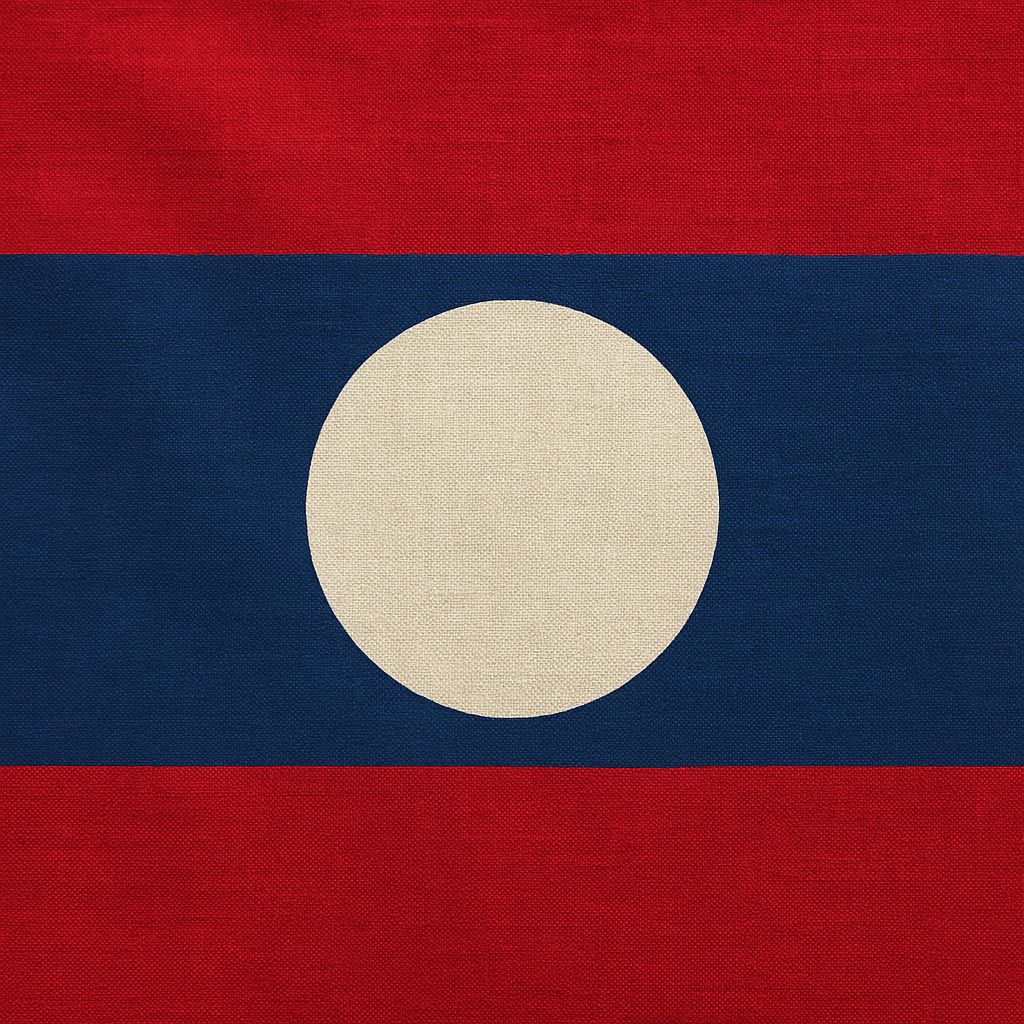
Flag of Laos
Laos, officially known as the Lao People’s Democratic Republic, is a landlocked gem in the heart of Southeast Asia that often flies under the radar compared to its bustling neighbors. Yet, this tranquil nation is brimming with fascinating history, rich cultural traditions, and remarkable natural wonders. From the mighty Mekong River carving its way through lush landscapes to ancient archaeological mysteries like the Plain of Jars, Laos offers a world of intrigue for travelers, historians, and curious minds alike. Beyond its serene temples and vibrant festivals, Laos holds countless numerical and record-breaking facts that reveal its unique identity—from being the most heavily bombed country per capita in history to boasting the widest waterfall on Earth. In this article, we’ll dive into 25 interesting and verified facts about Laos, each packed with surprising details that showcase why this country deserves a spot on your radar. Whether you’re planning a trip or simply love learning about global cultures, these insights will give you a deeper appreciation for Laos and its extraordinary story.
1. Population Size
Laos, officially known as the Lao People’s Democratic Republic, has a population of approximately 7.95 million people as of 2025. This figure places Laos among the least populated nations in Southeast Asia, especially when compared to its neighbors like Thailand and Vietnam, which have populations exceeding 70 million and 100 million respectively. The relatively small population is spread across a vast territory, resulting in a low population density of about 34 people per square kilometer, which is significantly lower than the regional average. This demographic characteristic has shaped Laos into a country where rural life dominates, with nearly 65% of the population living in rural areas. The slow population growth rate, hovering around 1.4% annually, reflects both limited urbanization and a strong reliance on traditional agricultural lifestyles. This demographic reality influences infrastructure development, education systems, and healthcare accessibility, making Laos a fascinating case study in balancing modernization with cultural preservation.
2. Land Area
Covering 236,800 square kilometers, Laos ranks as the 82nd largest country in the world by land area. Despite being landlocked, its size is comparable to the U.S. state of Oregon, yet its population is far smaller, emphasizing its vast stretches of untouched wilderness. The country’s geography is dominated by rugged mountains and dense forests, which account for nearly 70% of its terrain, leaving limited space for agriculture and urban development. This expansive land area also includes the Mekong River basin, which plays a critical role in sustaining life and commerce. The sheer size of Laos relative to its population density means that many regions remain remote and underdeveloped, creating challenges for transportation and communication networks. This geographic isolation has preserved biodiversity, making Laos home to rare species such as the Asiatic black bear and the critically endangered saola, often called the “Asian unicorn.”
3. Longest River
The Mekong River, stretching 4,350 kilometers, is the 12th longest river in the world and the lifeblood of Laos. Approximately 1,865 kilometers of the Mekong flows through or along the borders of Laos, providing vital resources for agriculture, fishing, and transportation. The river supports an estimated 60 million people across six countries, but in Laos, it is particularly significant because it irrigates rice paddies and sustains freshwater fisheries that supply over 70% of the country’s protein intake. The Mekong also serves as a natural highway, enabling trade and travel in regions where road infrastructure is limited. Seasonal flooding of the river enriches the soil, making it ideal for farming, but it also poses risks of displacement and crop loss. The Mekong’s role in Laos cannot be overstated—it is both an economic engine and a cultural symbol, celebrated in festivals and folklore throughout the nation.
4. Four Thousand Islands
Laos may be landlocked, but the Si Phan Don region, meaning “Four Thousand Islands,” offers a unique aquatic landscape. Located in the southern part of the country along the Mekong River, this area spans 14 kilometers in width during the rainy season, creating a maze of islands, sandbars, and waterways. While the name suggests thousands of islands, most are small and seasonal, appearing only when water levels drop. This region is a biodiversity hotspot, home to rare species like the Irrawaddy dolphin, which has become an icon of conservation efforts in Laos. Si Phan Don is also a cultural treasure, with traditional fishing villages and ancient temples dotting the islands. Tourism has grown steadily here, as visitors seek the tranquility of river life and the chance to explore waterfalls, such as the famous Khone Phapheng Falls, located nearby. The Four Thousand Islands exemplify how Laos turns its geographic limitations into unique attractions.
5. Khone Falls Width
Laos boasts Khone Falls, the widest waterfall in the world, stretching approximately 10 kilometers across the Mekong River near the Cambodian border. Unlike towering waterfalls, Khone Falls is a series of rapids and cascades that collectively form an immense natural barrier. This geological marvel has historically prevented navigation along the Mekong, shaping trade routes and settlement patterns in the region. The falls are not only a tourist attraction but also a source of hydroelectric potential, though development projects have sparked debates over environmental impacts. During the rainy season, the water flow at Khone Falls can reach 11,000 cubic meters per second, making it one of the most powerful river features in Southeast Asia. Its sheer size and force underscore the dynamic relationship between Laos and the Mekong River, which continues to influence the country’s economy and ecology.
6. Tallest Treehouse
Laos is home to the tallest treehouse in the world, a remarkable structure that rises over 40 meters (131 feet) above the forest floor. Located in the Nam Kan National Park, this treehouse is part of an eco-tourism project designed to immerse visitors in the pristine jungle environment while promoting conservation. The treehouse offers breathtaking views of the surrounding canopy, where rare wildlife such as gibbons and hornbills thrive. Its height is not just a novelty—it symbolizes Laos’ commitment to sustainable tourism and environmental education. Visitors often reach the treehouse via zip lines, adding an adventurous twist to the experience. This attraction has become a global icon for eco-friendly travel, drawing attention to Laos’ rich biodiversity and the importance of preserving tropical forests in the face of deforestation and climate change.
7. Sticky Rice Consumption
Laos holds the distinction of being one of the world’s largest consumers of sticky rice, with an average intake of 171 kilograms (345 pounds) per person annually. Sticky rice, or “khao niao,” is more than just a staple—it is deeply woven into the cultural fabric of Lao society. Unlike regular rice, sticky rice is steamed and eaten by hand, often rolled into small balls and dipped into savory dishes or spicy sauces. This dietary preference has historical roots, as sticky rice thrives in the cooler, mountainous regions of Laos, where other rice varieties struggle. The sheer volume consumed reflects its central role in daily meals, religious ceremonies, and festivals. Sticky rice is even considered a symbol of unity and hospitality, often shared among family and guests during communal gatherings.
8. Plain of Jars
The Plain of Jars is one of Southeast Asia’s most enigmatic archaeological sites, featuring over 2,100 stone jars, some weighing up to 600 kilograms (1,300 pounds) and dating back more than 2,000 years. These massive jars, carved from sandstone and granite, are scattered across the Xieng Khouang Plateau, and their purpose remains a mystery. Archaeologists believe they were used for funerary practices, possibly to store human remains before cremation. The jars vary in size, with some reaching heights of 3 meters (10 feet), and their sheer number suggests a highly organized society capable of monumental craftsmanship. Today, the Plain of Jars is a UNESCO World Heritage Site, attracting scholars and tourists alike, while also serving as a poignant reminder of Laos’ ancient civilizations and their enduring mysteries.
9. Bombing During Vietnam War
Between 1964 and 1973, Laos endured the devastating impact of the Vietnam War, becoming the most heavily bombed country per capita in history. The United States dropped an estimated 2 million tons of bombs on Laos during this period, equivalent to a plane load every eight minutes for nine years. This relentless bombardment targeted the Ho Chi Minh Trail, a critical supply route for North Vietnamese forces, but it left Laos with catastrophic consequences. Entire villages were destroyed, and agricultural lands were rendered unusable. The scale of bombing was so immense that it surpassed the total tonnage dropped on Europe during World War II. Today, the legacy of this conflict continues to shape Laos’ development, as efforts to clear unexploded ordnance remain a national priority.
10. Unexploded Ordnance Casualties
The aftermath of the Vietnam War left Laos littered with millions of unexploded bombs, with 30% of ordnance failing to detonate upon impact. Since the war ended, these deadly remnants have killed or injured over 20,000 people, averaging 500 victims per year in the decades following the conflict. Farmers and children are particularly vulnerable, as bombs often lie hidden in fields and forests. The presence of unexploded ordnance has hindered agricultural expansion and infrastructure development, perpetuating poverty in rural areas. International organizations and NGOs have partnered with the Lao government to conduct clearance operations, but progress is slow due to the sheer volume of contamination. This tragic statistic underscores the long-term human cost of war and the resilience of communities striving to rebuild amidst danger.
11. CIA Airbase Traffic
During the “Secret War,” the CIA operated a covert airbase at Long Cheng in Laos, which became the busiest single-strip airport in the world at its peak. Despite being absent from official maps, Long Cheng handled hundreds of flights daily, supporting clandestine operations against communist forces. The airbase served as a hub for transporting troops, supplies, and refugees, and its existence remained classified for decades. At its height, Long Cheng had a population of over 40,000 people, making it the second-largest city in Laos at the time. This extraordinary statistic highlights the scale of covert involvement in Laos during the Cold War and the strategic importance of the country in regional geopolitics.
12. Khone Phapheng Falls Volume
Khone Phapheng Falls, located in Champasak Province, is often cited as the largest waterfall in Southeast Asia by volume, with water flow reaching 11,000 cubic meters per second during peak rainy season. Unlike towering waterfalls, Khone Phapheng is a sprawling series of rapids and cascades that collectively form a formidable natural barrier on the Mekong River. Its immense power has historically prevented navigation along the river, shaping trade and settlement patterns in southern Laos. Today, the falls are a major tourist attraction and a source of hydroelectric potential, though development projects have sparked debates over environmental sustainability and the impact on local fisheries.
13. Communist State
Laos is one of only five remaining communist countries in the world, alongside China, Cuba, Vietnam, and North Korea. Since the establishment of the Lao People’s Democratic Republic in 1975, the country has maintained a one-party system under the Lao People’s Revolutionary Party. This political structure influences every aspect of governance, from economic planning to media control. While Laos has embraced market reforms and foreign investment in recent decades, its adherence to communist ideology sets it apart in a region dominated by democratic and capitalist systems. This unique political identity shapes Laos’ diplomatic relations and development strategies, making it a fascinating case study in modern governance.
14. Ethnic Diversity
Laos is a mosaic of cultures, with 49 officially recognized ethnic groups spread across its mountainous terrain. The largest group, the Lao Loum, accounts for about 50% of the population, while others, such as the Hmong and Khmu, inhabit remote highland areas. This diversity is reflected in languages, customs, and traditional attire, creating a rich cultural tapestry that defines Lao identity. Ethnic minorities often maintain distinct agricultural practices and spiritual beliefs, contributing to the country’s vibrant cultural heritage. However, this diversity also presents challenges in terms of education and infrastructure, as remote communities struggle with limited access to services.
15. Buddhist Majority
Approximately 65% of Laotians practice Theravada Buddhism, which permeates daily life and national identity. Monasteries, or “wats,” are central to communities, serving as places of worship, education, and social gathering. Buddhist festivals, such as Pi Mai (Lao New Year), involve elaborate rituals and merit-making activities, reinforcing spiritual values. The influence of Buddhism extends to architecture, with iconic structures like Pha That Luang in Vientiane symbolizing both religious devotion and national pride. This widespread adherence to Buddhism shapes Laos’ cultural norms, emphasizing compassion, humility, and harmony with nature.
16. Shortest People Statistic
Laos ranks among the countries with the shortest average height globally, with men averaging 162 cm (5 ft 4 in) and women around 152 cm (5 ft). This statistic reflects a combination of genetic factors and historical nutritional patterns, as Laos has traditionally relied on subsistence farming and diets low in animal protein. While height is often influenced by socioeconomic conditions, Laos’ mountainous terrain and rural lifestyle have limited access to diverse food sources for centuries. Today, improvements in healthcare and nutrition are gradually changing these trends, but the average height remains a distinctive demographic feature. This fact also highlights broader issues of development and health equity in Southeast Asia.
17. Oldest Fossil
Laos is home to the oldest human fossil discovered in Southeast Asia, estimated to be 46,000 years old. Found in Tam Pa Ling cave in the Annamite Mountains, this fossil provides crucial evidence about early human migration patterns. Its age suggests that modern humans reached Southeast Asia far earlier than previously believed, challenging theories about the timing and routes of human dispersal from Africa. The fossil includes skull fragments and teeth, offering insights into physical characteristics and adaptation strategies of early humans in tropical environments. This discovery has placed Laos at the center of paleoanthropological research, underscoring its importance in understanding human evolution.
18. Railway Development
The Laos-China Railway, completed in 2021, spans 414 kilometers, connecting Vientiane to the Chinese border at Boten. This modern infrastructure project has revolutionized transportation in Laos, reducing travel time between the capital and the border from two days to about four hours. The railway is part of China’s Belt and Road Initiative and represents a significant investment in Laos’ economic future. It facilitates trade, tourism, and regional integration, while also raising questions about debt sustainability and environmental impact. For Laos, this railway marks a historic shift from isolation to connectivity, transforming its role in Southeast Asia’s economic landscape.
19. Hydropower Potential
Laos generates over 7,000 megawatts of hydroelectric power annually, earning it the nickname “Battery of Southeast Asia.” With its mountainous terrain and abundant rivers, Laos has capitalized on hydropower as a cornerstone of its economic strategy. The country exports electricity primarily to Thailand and Vietnam, generating substantial revenue. However, this reliance on hydropower has sparked debates over ecological consequences, including fish migration disruption and displacement of communities due to dam construction. Despite these challenges, hydropower remains a vital asset for Laos, positioning it as a key energy supplier in the region.
20. Coffee Production
Laos produces approximately 30,000 metric tons of coffee per year, primarily from the Bolaven Plateau in the southern part of the country. This region’s volcanic soil and cool climate create ideal conditions for growing high-quality Arabica and Robusta beans. Coffee cultivation began during the French colonial era and has since become a major export commodity, contributing significantly to rural livelihoods. Lao coffee is prized for its rich flavor and organic farming practices, attracting specialty markets worldwide. The industry also supports eco-tourism, as visitors flock to plantations to experience traditional coffee-making processes.
21. Papaya Size
In Laos, papayas can grow to astonishing sizes, with some weighing up to 10 kilograms (22 pounds). This agricultural curiosity is attributed to the country’s fertile soil and favorable tropical climate, which allow fruits and vegetables to thrive. Large papayas are commonly found in rural markets and are used in traditional dishes such as “tam mak hoong,” the Lao version of papaya salad. These oversized fruits not only showcase Laos’ agricultural potential but also reflect the importance of homegrown produce in the nation’s culinary heritage. Farmers often take pride in cultivating such impressive specimens, which symbolize abundance and prosperity.
22. Festival Count
Laos celebrates over 20 major festivals annually, with Pi Mai (Lao New Year) being the most prominent. This three-day celebration in April involves water fights, temple visits, and cultural performances, drawing both locals and tourists. Other festivals, such as That Luang Festival and Boat Racing Festival, highlight Laos’ spiritual and communal traditions. These events are deeply rooted in Buddhist beliefs and agricultural cycles, marking seasonal changes and religious milestones. The sheer number of festivals reflects Laos’ vibrant cultural life and its emphasis on community bonding, making the country a lively destination for cultural tourism.
23. Internet Penetration
As of 2025, Laos has an internet penetration rate of about 55%, a dramatic increase from just 10% in 2010. This growth mirrors the country’s rapid digital transformation, driven by mobile technology and affordable data plans. Social media platforms like Facebook and TikTok dominate online activity, influencing everything from commerce to political discourse. While connectivity has improved urban life, rural areas still face challenges due to limited infrastructure. The rise of internet access has also spurred e-commerce and digital banking, signaling a shift toward modernization in a traditionally agrarian society.
24. Currency
The Lao kip (LAK) is one of the least valued currencies globally, with 1 USD ≈ 20,000 LAK. This exchange rate means everyday transactions involve large numerical figures, creating a unique experience for visitors. For example, a simple meal might cost 40,000 LAK, which can be confusing for those unfamiliar with the currency. The kip’s low value reflects Laos’ economic structure and reliance on imports, as well as inflationary pressures. Despite this, the kip remains a symbol of national identity, featuring images of cultural landmarks and historical figures on its banknotes.
25. Tourism Growth
Before the COVID-19 pandemic, Laos welcomed 4.7 million international visitors in 2019, a significant increase from 1.6 million in 2010. This surge in tourism highlights Laos’ growing appeal as a destination for cultural and eco-tourism. Attractions such as Luang Prabang, a UNESCO World Heritage Site, and natural wonders like Kuang Si Falls draw travelers seeking authenticity and tranquility. Tourism has become a vital economic sector, generating jobs and foreign exchange, though it also raises concerns about environmental sustainability and cultural preservation. The steady growth underscores Laos’ potential as a key player in Southeast Asia’s tourism industry.
Frequently Asked Questions about Laos
1. Where is Laos located?
Laos is a landlocked country in Southeast Asia, bordered by China to the north, Vietnam to the east, Cambodia to the southeast, Thailand to the west, and Myanmar to the northwest. Its strategic position along the Mekong River makes it a central hub for regional trade and cultural exchange. [laotravellinks.com]
2. What is the capital of Laos?
The capital city of Laos is Vientiane, located on the banks of the Mekong River near the Thai border. Vientiane is the largest city in the country and serves as its political, economic, and cultural center. [britannica.com]
3. Do I need a visa to visit Laos?
Most travelers require a visa to enter Laos. Visa on Arrival is available at major airports (Vientiane, Luang Prabang, Pakse) and land borders, and is typically valid for 30 days. Citizens of ASEAN countries and a few others enjoy visa-free entry for short stays. An e-Visa option is also available online for convenience. [odynovotours.com]
4. What is the best time to visit Laos?
The ideal time to visit Laos is during the dry season from November to April, when temperatures are cooler and skies are clear. The rainy season (May–October) brings lush green landscapes and fewer tourists, but also occasional flooding and travel delays. [idctravel.com]
5. Is Laos safe for tourists?
Yes, Laos is considered one of the safest countries in Southeast Asia. Violent crime is rare, and locals are known for their hospitality. However, travelers should take standard precautions against petty theft and avoid areas with unexploded ordnance from past conflicts. [odynovotours.com]
6. What language do people speak in Laos?
The official language is Lao, but English is increasingly spoken in tourist areas. French, Thai, and various ethnic languages are also used. Learning basic Lao phrases like “Sabaidee” (hello) and “Khop chai” (thank you) is appreciated by locals. [countryreports.org]
7. What currency is used in Laos?
The official currency is the Lao kip (LAK). While kip is widely used, US dollars and Thai baht are also accepted in many places. Credit cards work in major cities, and ATMs are available, but cash is essential in rural areas. [asiaunmasked.com]
8. How expensive is Laos for travelers?
Laos is generally budget-friendly, with affordable accommodations, food, and transportation. Backpackers can live on $25–$40 per day, while mid-range travelers might spend $60–$100 daily. Luxury options are available but limited compared to neighboring countries. [threeland.com]
9. What is Lao cuisine like?
Lao cuisine is fresh, flavorful, and often spicy. Staples include sticky rice, laap (minced meat salad), tam mak hoong (papaya salad), and mok pa (steamed fish in banana leaves). Street food is popular and generally safe if cooked fresh. [asiakingtravel.com]
10. What cultural etiquette should I follow in Laos?
Dress modestly, especially when visiting temples—cover shoulders and knees. Remove shoes before entering religious sites. Public displays of anger or affection are frowned upon. Always greet with a smile and avoid touching someone’s head, as it is considered sacred. [laosinsider.com]
11. What are the main attractions in Laos?
Top destinations include Luang Prabang (UNESCO World Heritage city), Vientiane (capital with iconic Pha That Luang), Vang Vieng (adventure hub), and Si Phan Don (4,000 Islands) for river life. Natural wonders like Kuang Si Falls and the Plain of Jars are must-sees. [nomadicmatt.com]
12. How do I get around Laos?
Transportation options include buses, minivans, tuk-tuks, and boats along the Mekong. Domestic flights connect major cities. Roads can be rough in rural areas, so allow extra travel time. Renting scooters is common but requires caution. [asiakingtravel.com]
13. Is the internet reliable in Laos?
Internet access is improving, with Wi-Fi available in most hotels and cafes in urban areas. Mobile data is affordable, and local SIM cards are easy to purchase. However, connectivity can be slow or unreliable in remote regions. [asiakingtravel.com]
14. What festivals are celebrated in Laos?
The most famous festival is Pi Mai Lao (Lao New Year) in April, featuring water fights and cultural events. Other notable festivals include That Luang Festival in Vientiane and Boat Racing Festival along the Mekong. [threeland.com]
15. What power plugs and voltage are used in Laos?
Laos uses 230V, 50Hz electricity with plug types A, B, C, E, and F. Travelers should bring a universal adapter and check if their devices need a voltage converter. [adventure-life.com]