Postcards
Postcards may seem like simple pieces of paper, but they carry with them a fascinating history that stretches across centuries, continents, and cultures. From their quirky beginnings in the 19th century to their golden age as collectibles and souvenirs, postcards have served as snapshots of everyday life, tools of communication, and even instruments of propaganda. They’ve captured iconic landmarks, spread humor, connected families, and fueled tourism, all while reflecting the social and technological changes of their time. In this article, we’ll uncover 25 intriguing facts about postcards—stories that reveal how these small cards became big players in global communication and cultural history.
Early History
1. The first known postcard was sent in 1840 by Theodore Hook. Theodore Hook, a British writer and notorious practical joker, is credited with sending the very first known postcard. He hand-painted a card and mailed it to himself, featuring a caricature of postal workers. While intended as a humorous stunt, this card became a historic artifact, foreshadowing the postcard’s role as both a communication tool and collectible. Its later sale at auction in 2002 for £31,750 underscores how something created in jest became a priceless piece of postal history, marking the birth of a new medium of correspondence.
2. The U.S. saw its first postcard in 1848, used for advertising. In America, postcards initially appeared not as personal notes but as advertising tools. Businesses quickly realized that postcards could serve as inexpensive, eye-catching ways to promote products and services. This early use highlights the postcard’s dual identity: both a medium for personal communication and a powerful marketing device.
3. John P. Charlton patented the first U.S. postcard in 1861. Charlton’s design, later sold to Hymen Lipman, introduced “Lipman’s Postal Card,” which featured decorative borders but no images. These cards were simple yet functional, laying the foundation for the postcard industry in the United States. Their existence shows how entrepreneurs recognized the potential of postcards long before they became cultural icons.
4. Austria-Hungary issued the first official postal card in 1869. The Austrian government’s “Korrespondenzkarte” was revolutionary—it was cheap, efficient, and widely adopted. Within three months, 3 million cards had been mailed, proving the format’s practicality. This official endorsement legitimized postcards as a mainstream communication tool, sparking adoption across Europe.
5. The Franco-Prussian War boosted postcard use. During the 1870–71 conflict, postcards became vital for soldiers to send quick, affordable messages home. Their portability and low cost made them indispensable in wartime communication. This period demonstrated how postcards could serve not just as novelties but as lifelines during crises.
Rise of Picture Postcards
6. The first printed picture postcard appeared in France in 1870. Created by Léon Besnardeau for soldiers at Camp Conlie, this postcard combined utility with imagery. It marked the beginning of illustrated postcards, transforming them from plain communication tools into cultural artifacts that carried both messages and art.
7. August Schwartz of Germany mailed the first illustrated postcard in 1870. Schwartz’s card depicted a man with a cannon, symbolizing war. This innovation showed how postcards could convey political and social messages visually, foreshadowing their later use in propaganda and advertising.
8. Advertising postcards appeared in Britain in 1872. Businesses quickly embraced postcards as marketing tools, distributing them to promote goods and services. This commercial use expanded the postcard’s role beyond personal communication, embedding it into everyday consumer culture.
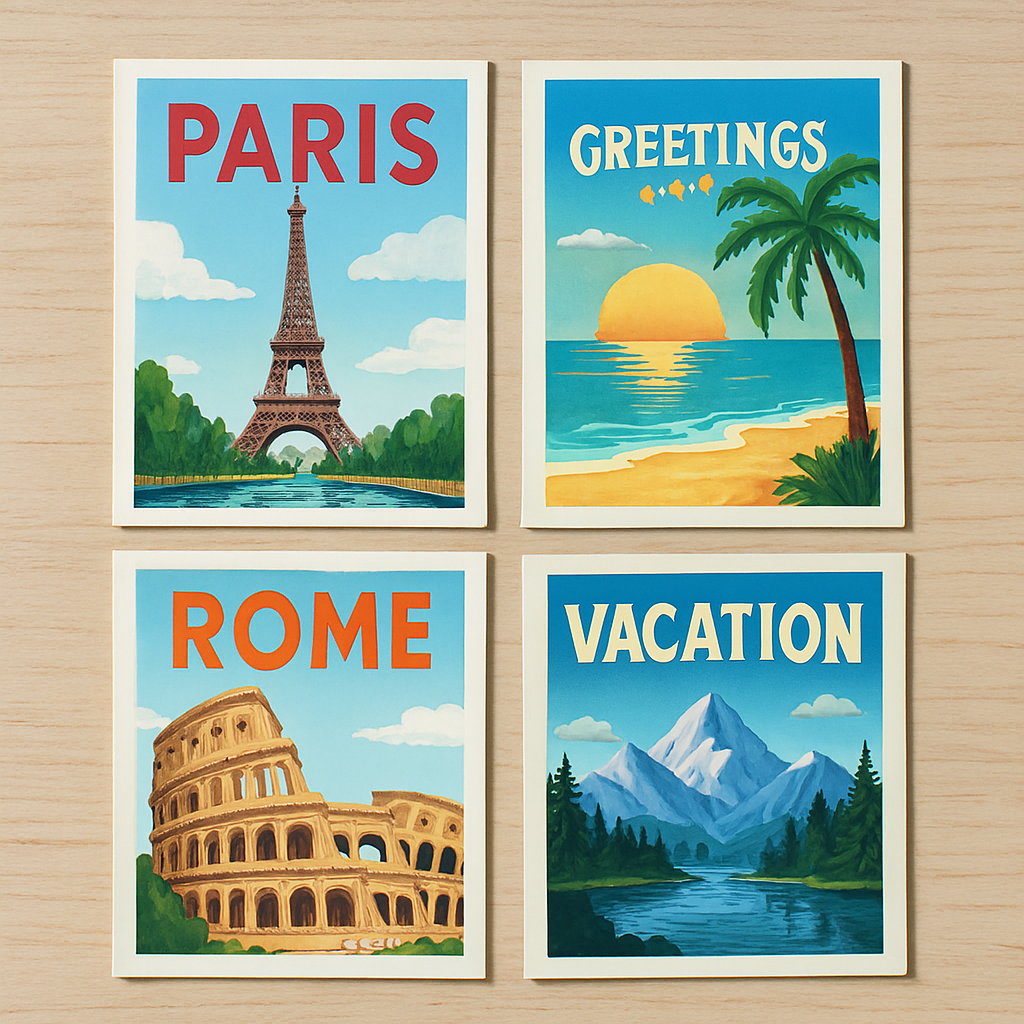
9. Eiffel Tower postcards of 1889–1890 sparked the “golden age.” The Eiffel Tower’s debut at the Paris Exposition Universelle inspired a flood of souvenir postcards. These cards became fashionable collectibles, cementing postcards as essential mementos of travel and tourism.
10. The Chicago World’s Fair in 1893 popularized souvenir postcards in the U.S. Visitors eagerly purchased postcards to commemorate their experience, establishing a tradition of postcards as travel souvenirs. This event marked the postcard’s integration into American tourism culture.
Golden Age (1890–1915)
11. Billions of postcards were mailed worldwide during this era. The sheer volume—7 billion in 1905 alone—illustrates the postcard’s dominance as a communication medium. They were cheap, accessible, and fashionable, making them the social media of their time.
12. The U.S. mailed nearly a billion postcards annually between 1905–1915. This staggering figure highlights how postcards became embedded in daily life. They were used for greetings, updates, and even business correspondence, reflecting their versatility.
13. Collectors drove demand, leading to “postcarditis.” Many postcards were never mailed but collected in albums. This craze, dubbed “postcarditis,” turned postcards into cultural commodities, sparking a global collecting phenomenon.
14. Tariffs in 1909 disrupted imports of German postcards. Germany produced the highest-quality postcards, but U.S. tariffs made them expensive. This disrupted supply and marked the decline of the golden age in America, showing how economics shaped cultural trends.
15. World War I shifted postcards into propaganda tools. Governments used postcards to spread patriotic messages and boost morale. Soldiers sent them home, while civilians collected them, making postcards instruments of national identity and wartime communication.
Post-War Developments
16. Postcards became the “poor man’s telephone” in the 1920s. With phone calls costly and rare, postcards offered affordable communication. This nickname reflects their role as everyday tools for staying connected, especially among working-class families.
17. White border postcards (1915–1930) saved ink and costs. Economic constraints led to simpler designs with white borders. While less visually striking, these cards reflect how practicality influenced postcard aesthetics.
18. Linen postcards of the 1930s–40s introduced textured printing. Curt Teich popularized linen postcards, which featured bright colors and a textured feel. They became iconic representations of mid-century Americana, especially in tourism.
19. Photochrom (chrome) postcards began in 1939. These glossy, colorful cards revolutionized postcard design. Their durability and vivid imagery made them the standard, and they remain popular today.
20. Postcard sales dropped sharply after 2007 due to social media. Digital communication reduced demand for postcards, leading to closures of long-established printers like J Salmon Ltd in 2017. This decline reflects how technology reshaped communication habits.
Country-Specific Highlights
21. India introduced quarter anna postcards in 1879. These were the cheapest postal option, democratizing communication across the vast subcontinent. They became essential for everyday correspondence, especially among the poor.
22. Japan created New Year’s Day postcards (nengajō). This tradition, akin to Western Christmas cards, remains popular. Millions are sent annually, showing how postcards became embedded in cultural rituals.
23. Britain’s seaside postcards became famous for humor and innuendo. In the 1930s, cheeky seaside postcards sold 16 million copies annually. They reflected British humor and became cultural icons, though later censored for risqué content.
24. The U.S. legally defined postcard dimensions. To standardize mailing, the U.S. set rules for postcard size. Yet novelty postcards—shaped like hearts or animals—often bent these rules, showing the tension between regulation and creativity.
25. Russian standards classify postcards by illustration, postage, and destination. Russia formalized postcard categories, reflecting their importance in communication and collecting. This classification system highlights how postcards became institutionalized cultural artifacts.
Frequently Asked Questions about Postcards
1. What is a postcard?
A postcard is a rectangular piece of thick paper or thin cardboard designed for mailing without an envelope. Traditionally, one side features an image—such as a photograph, artwork, or advertisement—while the other side is divided into space for a message and the recipient’s address. Postcards serve both as communication tools and as souvenirs, capturing moments, places, and cultural trends.
2. When were postcards first introduced?
The first official government-issued postcard appeared in Austria-Hungary in 1869, but earlier experimental versions existed in the 1840s. These early cards were plain and functional, used primarily for short messages. Illustrated postcards soon followed, transforming them into collectibles and souvenirs.
3. How do you properly write a postcard?
Traditionally, the recipient’s address goes on the right-hand side of the back, while the left-hand side is reserved for the message. The front usually carries an image. Messages are typically short and personal—greetings, travel updates, or notes of affection. Clear handwriting and full addresses are essential to ensure delivery.
4. Do postcards need stamps?
Yes. Postcards require postage, though rates are often lower than letters. The stamp is placed in the upper right corner of the address side. Different countries have specific postcard rates, and international postcards usually cost more.
5. Why were postcards so popular in the early 20th century?
Postcards were cheap, accessible, and fashionable. They became the “social media” of their time, allowing people to share quick updates, greetings, and travel experiences. Collecting postcards also became a craze, with billions mailed annually during the golden age (1890–1915).
6. What are souvenir postcards?
Souvenir postcards feature images of landmarks, cities, or tourist attractions. They became popular at events like the 1889 Paris Exposition (with Eiffel Tower cards) and the 1893 Chicago World’s Fair. Tourists bought them as keepsakes or mailed them to friends and family as proof of their travels.
7. Are postcards still used today?
Yes, though less frequently due to digital communication. Postcards remain popular among travelers, collectors, and hobbyists. They are also used in niche communities like Postcrossing, where people exchange postcards worldwide for fun and cultural connection.
8. What is Postcrossing?
Postcrossing is an online project that connects postcard enthusiasts globally. Members send postcards to random participants and, in return, receive postcards from others. Each card carries a unique ID for tracking. It’s a modern way to keep postcard culture alive and foster international friendships.
9. What are “linen” and “chrome” postcards?
Linen postcards (1930s–40s) were printed on textured paper with bright inks, giving them a distinctive feel. Chrome postcards (introduced in 1939) used photochrom printing, producing glossy, colorful images. Both styles reflect technological advances in printing and remain collectible today.
10. Why are postcards considered collectibles?
Postcards capture history, art, and culture in miniature form. Collectors value them for their imagery, rarity, and condition. Themes range from landmarks and propaganda to humor and advertising. Some rare postcards, like Theodore Hook’s 1840 card, have sold for tens of thousands of dollars at auction.
11. Can postcards be sent in envelopes?
Yes, though traditionally they are mailed without envelopes. Sending in an envelope protects the card from damage but may reduce its authenticity for collectors. In exchanges like Postcrossing, most prefer cards mailed “naked” with stamps and postmarks visible.
12. What languages are used on postcards?
Postcards can be written in any language. In international exchanges, English is often used as a common language, but many enthusiasts encourage writing in native languages to preserve cultural authenticity.
13. What are expired postcards?
In Postcrossing, a postcard is considered “expired” if it hasn’t been registered by the recipient within 60 days. This doesn’t mean it won’t arrive—it may simply be delayed. Expired cards highlight the unpredictability of international mail.
14. Are postcards environmentally friendly?
Postcards are small and lightweight, reducing paper use compared to letters. Some services, like Deutsche Post’s “GoGreen” program, allow businesses to send postcards with carbon-neutral options, making them more sustainable.
15. Why do postcards often have humor or innuendo?
In places like Britain, seaside postcards became famous for cheeky humor and double entendres. These cards reflected social attitudes and offered lighthearted entertainment, though some were later censored for risqué content.