Toronto
Toronto is more than just Canada’s largest city—it’s a vibrant metropolis filled with history, culture, and record-breaking landmarks. Known for its towering skyline, diverse communities, and world-class attractions, Toronto offers countless stories that make it truly unique. From the 553.3-meter CN Tower to the world’s largest underground shopping network, this city is full of fascinating details that surprise even longtime residents. In this article, we’ll explore 25 remarkable facts about Toronto, each packed with numbers, dates, and milestones that showcase why this city stands out on the global stage. Whether you’re a curious traveler, a proud local, or a trivia enthusiast, these insights will give you a deeper appreciation for the dynamic heart of Canada.
1. Largest City in Canada
Toronto is officially the largest city in Canada, boasting a population of 2.8 million residents within its city limits and approximately 6.5 million people in the Greater Toronto Area (GTA) as of 2023. This makes it not only the most populous city in the country but also a major economic and cultural hub. Its size and diversity have earned Toronto global recognition as one of the most influential metropolitan areas in North America.
2. CN Tower Height
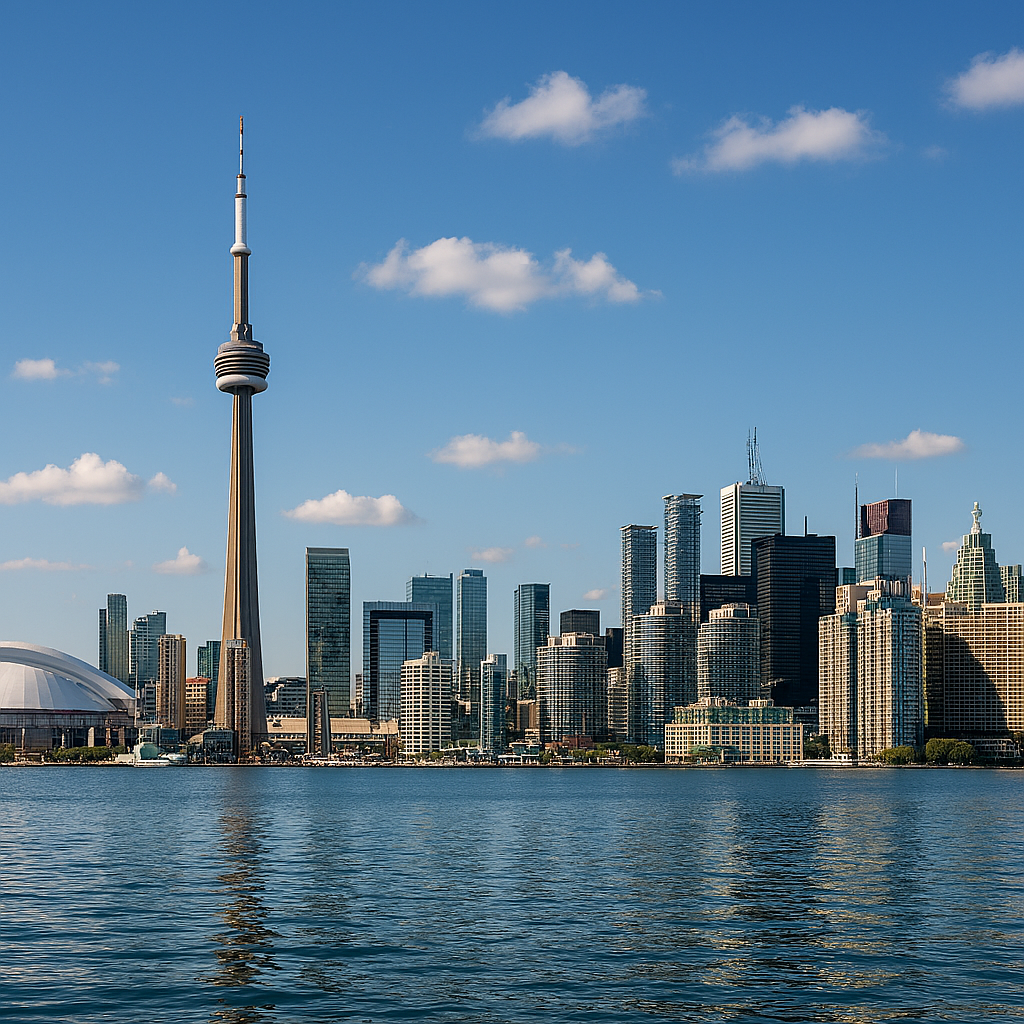
The CN Tower, completed in 1976, stands at an impressive 553.3 meters (1,815 feet), making it the tallest free-standing structure in the Western Hemisphere for over three decades. It held this record until 2007 when surpassed by the Burj Khalifa in Dubai. Today, the CN Tower remains a symbol of Toronto’s skyline and attracts over 1.5 million visitors annually.
3. Area and Density
Toronto spans an area of 649.7 square kilometers, making it one of the largest urban spaces in Canada. With a population density of 4,258 people per square kilometer, it ranks among the densest cities in North America. This density reflects Toronto’s rapid urbanization and its role as a major center for commerce and culture.
4. Yonge Street Length
Yonge Street was once listed in the Guinness World Records as the longest street in the world, stretching 1,896 kilometers (1,178 miles) from Toronto to Rainy River near the Minnesota border. Although this designation has since been revised, Yonge Street remains a historic and vital artery of Toronto’s transportation network. Its length symbolizes the city’s connectivity to the rest of Ontario.
5. PATH Underground Network
Toronto’s PATH system is the world’s largest underground shopping complex, extending 30 kilometers of walkways beneath the downtown core. It connects 70 buildings and houses 1,200 retail stores, making it a vital part of Toronto’s pedestrian infrastructure. This network allows residents and visitors to navigate the city comfortably during harsh winters.
6. Casa Loma
Casa Loma, built in 1914, is North America’s only full-size castle and a major tourist attraction. Constructed by financier Sir Henry Pellatt, the castle features 98 rooms and originally cost $3.5 million, equivalent to over $90 million today. Its Gothic Revival architecture and lavish interiors make it a unique landmark in Toronto’s history.
7. Toronto Islands
The Toronto Islands cover 820 acres and form the largest urban car-free community in North America. Located just 1.5 kilometers offshore from downtown, the islands offer beaches, parks, and recreational spaces. They are a popular destination for both locals and tourists seeking a peaceful escape from the city’s hustle.
8. Multicultural Population
Toronto is widely regarded as the most multicultural city in the world, with residents representing over 200 ethnic origins. Approximately 50% of its population was born outside Canada, creating a rich tapestry of languages, traditions, and cuisines. This diversity is celebrated through numerous cultural festivals and events throughout the year.
9. Tree Coverage
Toronto boasts over 10 million trees, contributing to its reputation as a green city. About 25% of its land area is forested, and 18% is dedicated to parks, providing residents with ample outdoor spaces. This commitment to greenery enhances air quality and supports biodiversity within the urban environment.
10. Toronto Stock Exchange
The Toronto Stock Exchange (TSX) ranks as the third-largest in North America and among the top 10 globally. It hosts over 1,500 companies with a combined market capitalization exceeding $3 trillion CAD. The TSX plays a critical role in Canada’s economy, particularly in sectors like finance, energy, and technology.
11. First Retractable Roof Stadium
The SkyDome, now known as Rogers Centre, opened in 1989 as the first stadium in the world with a fully retractable roof. The roof spans 8 acres and takes approximately 20 minutes to open or close, allowing games to proceed regardless of weather conditions. This innovation set a precedent for stadium design worldwide.
12. Toronto International Film Festival (TIFF)
TIFF is the largest publicly attended film festival in the world, drawing 480,000 attendees annually. It screens over 300 films from more than 80 countries, making Toronto a global center for cinema each September. Many Oscar-winning films have premiered at TIFF, cementing its influence in the film industry.
13. Population Growth
Between 1975 and 2015, Toronto’s population grew by 46.1%, increasing from 1.89 million to 2.76 million. This growth reflects the city’s economic opportunities and its appeal to immigrants worldwide. Today, Toronto continues to experience steady population increases, shaping its urban development.
14. Median Age
The median age in Toronto is 39.2 years, slightly younger than Ontario’s average of 40.5 years. This youthful demographic contributes to the city’s dynamic workforce and vibrant cultural scene. It also influences trends in housing, education, and entertainment.
15. Employment
Toronto employs over 3.5 million people, making it Canada’s leading job market. Key sectors include finance, technology, healthcare, and education. The city’s economic strength attracts talent from across the country and around the world.
16. First Gas-Lit Street Lamps
Toronto introduced Canada’s first gas-lit street lamps in 1841, marking a significant advancement in urban infrastructure. This innovation improved safety and extended commercial activity into the evening hours. It was a milestone in the modernization of Canadian cities.
17. Royal Alexandra Theatre
Built in 1907, the Royal Alexandra Theatre was the first air-conditioned theater in Canada. The cooling system used ice stored in pits beneath the building to regulate temperature during performances. Today, the theater remains a historic venue for live entertainment in Toronto.
18. Toronto Zoo
The Toronto Zoo, opened in 1974, spans 287 hectares (710 acres) and houses over 5,000 animals representing 450 species. It is one of the largest zoos in the world and a leader in conservation efforts. The zoo attracts millions of visitors annually and plays a vital role in education and research.
19. Highest Wine Cellar
Toronto is home to the world’s highest wine cellar, located in the CN Tower at 351 meters (1,151 feet) above ground. This unique feature offers a stunning view alongside an extensive wine collection. It exemplifies Toronto’s blend of luxury and innovation.
20. First Subway Line
Toronto’s first subway line, the Yonge Line, opened in 1954, running 7.4 kilometers from Union Station to Eglinton. This development marked the beginning of modern rapid transit in Canada. Today, Toronto’s subway system spans 76.9 kilometers and continues to expand.
21. Toronto Pearson Airport
Toronto Pearson International Airport handled 50.5 million passengers in 2019, making it the busiest airport in Canada. It serves as a major hub for international travel and cargo transport. Pearson’s size and connectivity reinforce Toronto’s role as a global city.
22. Hockey Hall of Fame
Established in 1943, the Hockey Hall of Fame attracts over 300,000 visitors annually. It houses more than 1,500 artifacts, including the Stanley Cup and memorabilia from legendary players. The Hall celebrates Canada’s deep-rooted passion for hockey.
23. Tallest Residential Building
The SkyTower at Pinnacle One Yonge, currently under construction, will reach 312 meters (1,024 feet) upon completion. This will make it the tallest residential building in Canada, redefining Toronto’s skyline. The project reflects the city’s ongoing vertical growth and demand for luxury living.
24. Toronto’s Nickname
Toronto is popularly known as “The 6ix”, a term coined by rapper Drake. The nickname refers to the city’s six former municipalities and its iconic 416 area code. It has become a cultural identifier embraced by residents and visitors alike.
25. Oldest Standing Building
The Scadding Cabin, built in 1794, is Toronto’s oldest surviving building. Originally constructed by John Scadding for Governor Simcoe, it represents the city’s early colonial history. Today, the cabin is preserved as a heritage site and offers a glimpse into Toronto’s humble beginnings.
Frequently Asked Questions about Toronto
1. Is Toronto the capital of Canada?
No, Toronto is not the capital of Canada. The capital city is Ottawa, which is also located in the province of Ontario. However, Toronto is the capital of Ontario and the largest city in Canada, serving as a major hub for finance, culture, and technology. [canadatourist.com]
2. Where is Toronto located?
Toronto is situated on the northwestern shore of Lake Ontario, in the province of Ontario, Eastern Canada. Its strategic location makes it a gateway to the Great Lakes and a central point for trade and travel. The city lies approximately 130 km (81 miles) from the U.S. border at Niagara Falls. [canadianaffair.com]
3. What is Toronto famous for?
Toronto is famous for its iconic CN Tower, which stands 553.3 meters (1,815 feet) tall, and its multicultural neighborhoods like Chinatown, Little Italy, and Greektown. It’s also known for major attractions such as the Royal Ontario Museum, Ripley’s Aquarium, and the Toronto Islands. Additionally, Toronto is a global financial center and home to the Toronto International Film Festival (TIFF), one of the world’s largest film festivals. [canadianaffair.com]
4. What’s the weather like in Toronto?
Toronto experiences four distinct seasons. Summers (June–August) are warm and humid, with temperatures often above 30°C. Winters (December–February) are cold, with temperatures dropping below -25°C during extreme conditions and frequent snowfall. Spring and fall offer mild, pleasant weather, making them ideal for outdoor activities. [toronto.ca]
5. How do I get to Toronto?
Toronto is easily accessible by air, road, and rail. The city has two major airports: Toronto Pearson International Airport, Canada’s busiest airport, and Billy Bishop Toronto City Airport, located downtown. It’s also connected by major highways and VIA Rail services for travelers coming from other Canadian cities or the U.S. [canadatourist.com]
6. What are the top tourist attractions in Toronto?
Must-see attractions include:
- CN Tower for panoramic views
- Royal Ontario Museum for history and culture
- Ripley’s Aquarium of Canada
- Casa Loma, a Gothic Revival castle
- Toronto Islands for outdoor recreation
- Distillery District for heritage and dining These landmarks showcase Toronto’s mix of modern architecture and historic charm. [theinvisib…mentor.com]
7. When is the best time to visit Toronto?
The best time to visit Toronto is late spring (May–June) or early fall (September–October) when temperatures are mild and outdoor festivals are in full swing. Summer offers vibrant events but can be hot and crowded, while winter is ideal for those who enjoy snow sports and holiday festivities. [theinvisib…mentor.com]
8. How can I get around Toronto?
Toronto has an extensive public transit system operated by the Toronto Transit Commission (TTC), which includes subways, buses, and streetcars. Bike Share Toronto provides eco-friendly options, and rideshare services like Uber and Lyft are widely available. Walking is convenient in the downtown core, and car rentals are an option for exploring beyond city limits. [theinvisib…mentor.com]
9. Is Toronto expensive?
Yes, Toronto is considered one of the most expensive cities in Canada. Housing and rent costs are high, with average monthly rents for a one-bedroom apartment in the downtown area exceeding $2,000 CAD. Dining, transportation, and entertainment also contribute to the city’s high cost of living. [expatarrivals.com]
10. Is Toronto safe for tourists?
Toronto is generally very safe, with low violent crime rates compared to other major cities. However, like any large urban area, visitors should remain cautious in crowded places and avoid poorly lit areas at night. Petty crimes such as pickpocketing can occur, so basic precautions are recommended. [expatarrivals.com]
11. Why is Toronto called “The 6ix”?
Toronto’s nickname “The 6ix” was popularized by rapper Drake and refers to the city’s six former municipalities (Toronto, Scarborough, Etobicoke, North York, York, and East York) and its 416 area code. The term has become a cultural identifier embraced by locals and visitors alike. [canadianaffair.com]
12. How far is Niagara Falls from Toronto?
Niagara Falls is approximately 130 km (81 miles) from Toronto, which is about a 90-minute drive by car. Visitors can also take buses, trains, or guided tours to reach this world-famous natural wonder. [canadianaffair.com]
13. What language is spoken in Toronto?
English is the primary language spoken in Toronto. However, due to its multicultural population, you’ll hear many other languages, including Mandarin, Punjabi, Spanish, and French. This linguistic diversity reflects Toronto’s status as one of the most multicultural cities in the world. [theinvisib…mentor.com]
14. What is Toronto’s culinary scene like?
Toronto’s food scene is incredibly diverse, offering cuisines from around the globe. Popular dishes include poutine, smoked meat sandwiches, and butter tarts, alongside international specialties in neighborhoods like Kensington Market and Chinatown. Food festivals and farmers’ markets further showcase the city’s culinary richness. [theinvisib…mentor.com]
15. Do I need a car in Toronto?
Most visitors do not need a car in Toronto thanks to its comprehensive public transit system and walkable downtown. However, a car may be useful for exploring areas outside the city, such as Niagara Falls or cottage country. Ride-sharing and car rental services are readily available for convenience. [expatarrivals.com]