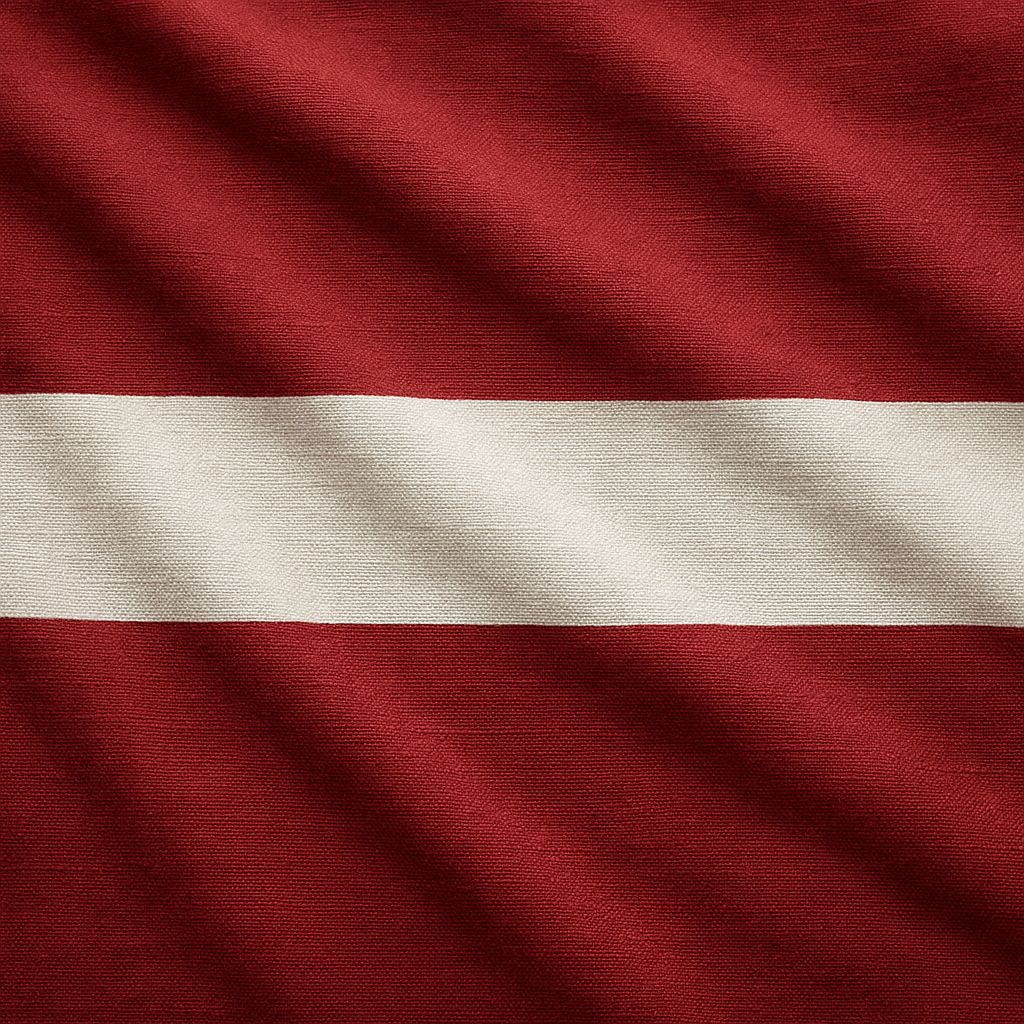
Latvian Flag
Latvia is a hidden gem in Northern Europe, nestled along the Baltic Sea and brimming with history, culture, and natural beauty. While it may not always make the headlines, this small yet fascinating country offers a rich tapestry of traditions, stunning landscapes, and unique quirks that set it apart from its neighbors. From its centuries-old flag to its vibrant capital city of Riga, Latvia is a nation where ancient heritage meets modern progress. Whether you’re a travel enthusiast, a history buff, or simply curious about the world, these 25 interesting facts will give you a deeper appreciation of Latvia’s identity, achievements, and charm. Ready to explore what makes Latvia truly special? Let’s dive in!
1) Where Latvia sits—and why its location matters
Latvia is one of the three Baltic states (with Estonia and Lithuania), on the eastern shores of the Baltic Sea. It borders Estonia to the north, Lithuania to the south, Russia to the east and Belarus to the southeast, and also has a maritime border with Sweden. This position has always made Latvia a crossroads: sea access through the Gulf of Riga, land routes toward Scandinavia, Central Europe, and the vast Eurasian interior. Geography textbooks point out how the region’s glacial history left uplands, lowlands, and water‑rich landscapes that shaped settlement and trade. Culturally and linguistically, Latvians are Balts (Indo‑European), distinct from their Finnic northern neighbors in Estonia—another reminder of the region’s layered history. In modern geopolitics, Latvia is an EU and NATO member (both since 2004), a fact that ties its location to Europe’s security, energy, and transport networks. All of this explains why tiny Latvia routinely punches above its weight in logistics, digital infrastructure, and culture: it sits at a hinge point where north meets east, and sea meets land.
2) Riga—capital on a river, founded in 1201, famed for Art Nouveau
Riga, founded in 1201 at the mouth of the Daugava River, grew into a major Hanseatic port and commercial center. Today, its Historic Centre is a UNESCO World Heritage Site, celebrated for a rare blend of medieval street plans, 19th‑century wooden architecture, and the densest concentration of Art Nouveau/Jugendstil facades in Europe. Walk Alberta iela and Elizabetes iela to see sculptural façades by Mikhail Eisenstein, or visit the Riga Art Nouveau Museum inside architect Konstantīns Pēkšēns’ former apartment for spiraling staircases and period interiors. Beyond architecture, riverside promenades, markets in former Zeppelin hangars, and a thriving cultural scene make Riga both deeply historical and dynamically modern. UNESCO’s listing stresses how prosperity in the late 19th and early 20th centuries expanded the city and etched Art Nouveau into entire neighborhoods—an urban time capsule of modernism’s rise.
3) A forest nation—over half the land under trees
Latvia is one of the EU’s greenest countries: more than half of its territory is forested (around 53–55% depending on the data year). The official statistics portal and the Ministry of Agriculture detail how coniferous stands (pine, spruce) mix with birch, aspen and hardwoods; how standing volume has multiplied over decades; and how certification (PEFC/FSC) is widespread, especially in state‑managed forests. Forests underpin biodiversity and the economy: the sector leads exports, supports rural livelihoods, and supplies the celebrated timber industry. That forest cover has even expanded over the last century, and Latvian silviculture blends economic use with habitat and soil care, keeping large areas in Natura 2000 protection networks. It’s hard to overstate: the national landscape and the national psyche both have roots in trees.
4) Almost 500 km of Baltic coastline, two moods of sea
Latvia’s shore—roughly 490–500 km—faces two water bodies: the open Baltic Sea (wild waves, winds, dune systems) and the calmer Gulf of Riga (shallower waters, family‑friendly beaches like Jūrmala). HELCOM breaks down the length by segment (Baltic coast vs. Gulf), while travel sources highlight sandy beaches, sandstone outcrops, and fishing villages that trace Livonian heritage. Ports at Liepāja, Ventspils, and Riga connect Latvia to global trade, while coastal wetlands and wintering grounds host millions of migratory waterbirds. The coast isn’t just scenery: it’s ecology, shipping, and summer culture rolled into one.
5) Land of many waters—12,000+ rivers, thousands of lakes
Latvia’s post‑glacial terrain is laced with rivers and lakes. Official and tourism sources cite about 12,500 rivers, streams and ditches, and thousands of lakes (often small, eutrophic). The Daugava, Gauja, Lielupe, Venta, and Salaca are the big names; Lake Lubāns is the largest by area. Water tourism pages talk up canoeing, kayaking, and calm canal cruises right in central Riga, while nature guides praise Gauja National Park’s sandstone cliffs and ravines. This watery network is not only leisure—think biodiversity corridors, old trade routes, fisheries, and floodplains that shaped settlement patterns.
6) Gaiziņkalns—Latvia’s highest point, modest but meaningful
At about 312 meters above sea level, Gaiziņkalns in the Vidzeme Upland is Latvia’s roof. No alpine drama here—just rolling hills, ski slopes, and forested views. The summit’s height is reported as 311.5–312 m depending on the measurement source (tourism pages use 311.5 m; geodata and Wikipedia list 312 m). The site has hosted a viewing tower (now gone) and today offers hiking paths over a ridge with slopes nicknamed “Ladies’ Paradise” and “Golgotha.” It’s a reminder of Latvia’s low‑relief charm: soft horizons, seasonal sports, and nature parks rather than sharp peaks.
7) The Nationwide Song and Dance Celebration—Latvia’s heartbeat, now UNESCO‑recognized
Every five years, Latvia’s Song and Dance Celebration gather ~40,000 performers and hundreds of thousands of attendees in Riga for massed choirs, dance spectacles, costume exhibitions, and parades—an amateur arts phenomenon woven into civic identity since 1873. In 2003/2008, the Baltic song and dance traditions of Latvia, Lithuania, and Estonia were inscribed on UNESCO’s intangible heritage lists, acknowledging their role in community cohesion and cultural continuity. The 2023 edition marked 150 years since the first festival, with Mežaparks’ grand stage resounding under chief conductors and kokle ensembles. Organizers emphasize that the magic comes from years of rehearsal in towns and schools—then one luminous week where the country sings itself together.
8) Dainas and the Cabinet of Folksongs—Latvia’s paper memory
Latvia’s folk songs—short, lyrical dainas—are the soul’s archive. During the National Awakening, folklorist Krišjānis Barons collected and systematized them, filing ~218,000 song texts on tiny slips and storing them in a custom wooden cabinet (the Dainu skapis), now inscribed in UNESCO’s Memory of the World Register. The cabinet contains over 350,000 paper slips including songs, proverbs, riddles, and rituals; it moved with the times and now also lives digitally. Beyond the numbers, dainas express everyday wisdom: work, love, seasons, and the moral world of rural Latvians—still sung at festivals and family gatherings today.
9) Jāņi (Midsummer)—bonfires, wreaths, songs, and the longest night
On June 23–24, Latvians celebrate Līgo/Jāņi, an ancient solstice tradition of staying awake by bonfires, wearing oak‑leaf (men) and wildflower (women) wreaths, singing dainas, and welcoming sunrise. Folk customs include leaping over fires (symbolic purification), decorating homesteads with branches to ward off evil, and the playful “fern blossom” legend (said to bloom only this night). The staple foods: caraway‑speckled Jāņu siers (cheese) and beer—making Midsummer arguably Latvia’s biggest, most heartfelt holiday. Even if the weather rains “like Jāņi,” the celebration goes on, in countryside homesteads or open‑air concerts.
10) The Latvian language—East Baltic, ancient, and resilient
Latvian is one of two living Baltic languages (with Lithuanian) in the Indo‑European family. Linguists value Baltic languages for archaic features preserved over millennia, while cultural histories trace Latvian’s standardization and revival through the 19th–20th centuries amid German, Russian, and Soviet influences. Today, Latvian is the sole official language, with Latgalian and Livonian recognized in specific contexts. The language’s identity clings to folk songs, nature metaphors, and everyday courtesy phrases—its grammar inflected, its vocabulary richly seasonal, and its community renewed in schools and diaspora.
11) Name days (Vārda dienas)—a calendar of community
Beyond birthdays, Latvians celebrate name days, printed in most calendars and widely observed at school and work. On your name day, colleagues might bring you a kliņģeris (pretzel‑shaped sweet bread), flowers (often daisies), and coffee; you share snacks with the team. The tradition has church‑calendar roots but a modern, secular feel. Lists are updated periodically; people without a specific date may celebrate on May 25 or participate via expanded calendars. It’s a small ritual of social glue—remembering names, marking the day, and building convivial workplaces.
12) Independence restored (1991)—the Singing Revolution and Baltic Way
After decades of Soviet occupation, Latvians leveraged song, mass demonstrations, and civic organization to restore independence. The Singing Revolution (1987–1991) featured the 1989 Baltic Way, a human chain linking Tallinn, Riga, and Vilnius on August 23 to protest the Molotov–Ribbentrop Pact. Latvia declared the restoration of independence amid the failed August 1991 Moscow coup; the USSR recognized Baltic sovereignty on September 6, 1991. Those years enshrined an ethos: civic courage, nonviolent strategy, and the mobilizing power of culture.
13) Independence proclaimed (1918)—November 18, a living civic ritual
Latvia’s modern statehood began on November 18, 1918, when the People’s Council proclaimed the Republic in today’s National Theatre building. Despite wars and occupations, that date remains the foundation of continuity: wreaths at the Freedom Monument, armed forces parades on 11 November Embankment, torchlight processions, concerts, and a synchronized 21:00 singing of the anthem Dievs, svētī Latviju! Public broadcasters and tourism sites map the day’s rituals and history for visitors and citizens alike.
14) UNESCO World Heritage—Riga’s historic centre
UNESCO’s inscription (1997) recognizes Riga’s historic urban fabric: a medieval core reflecting Hanseatic trade; 19th‑century expansion with wooden neoclassical suburbs; and exceptional Art Nouveau ensembles. The listing isn’t just a badge—it’s a management framework that balances conservation with living city needs, from adaptive reuse to street life and cultural programming. Travelers who stroll from the House of the Blackheads to Mežaparks feel that layered narrative at eye level.
15) Art Nouveau capital—hundreds of façades, one aesthetic city
Riga arguably offers the world’s richest concentration of Art Nouveau architecture—whole districts of 1900–1914 multi‑storey buildings with floral motifs, organic curves, and theatrical sculptural programs. UNESCO calls it “the finest collection” in Europe; guides tally 700–800+ buildings, though counts vary by definition. Alberta iela is the runway where Eisenstein’s exuberant façades meet Pēkšēns’ and Laube’s national romantic interpretations. This isn’t scattershot: modernism reshaped the city at scale during a boom, leaving a coherent urban masterpiece.
16) Digital Latvia—high fiber use, strong speeds, and evolving 5G
Latvia’s connectivity is well above EU averages: widespread fiber‑to‑the‑home/building, competitive pricing, and robust 4G/expanding 5G. EU digital policy pages note national targets and rural coverage; DataReportal tracks 92.9% internet penetration in early 2024. Ookla’s Global Index places Latvia respectably for mobile and fixed speeds (rankings fluctuate monthly), and the Internet Society’s Pulse highlights high 4G/5G coverage, multiple IXPs, and IPv6 adoption. Practically, this means fast home fiber, reliable mobile in cities and countryside, and a culture comfortable with e‑services.
17) Baltic amber (dzintars)—“gold of the north,” science and lore
Amber—fossilized Eocene tree resin—washes up after storms along Baltic shores and is mined chiefly in Kaliningrad, but Latvia has ancient beach finds and a living craft heritage. Gemological sources describe succinite’s chemistry (notably succinic acid), inclusions of prehistoric life, and the “Amber Road” trade that sent Baltic beads to Rome and beyond. Museums and shops in Riga showcase pieces from honey‑clear to cognac‑clouded, with inclusions prized by collectors. For Latvians, amber is both science and symbol: protective talisman, artisan medium, and a memory of ancient forests solidified by time.
18) What Latvia sells to the world—wood leads, food and machinery follow
Trade statistics show Latvia exporting around €18.7–€18.9 billion in goods in 2024, with wood and wood products typically the top category, followed by electrical machinery/equipment, prepared foodstuffs, and mineral products. The state statistics portal and investment agency provide partner breakdowns (Lithuania, Estonia, Germany, Sweden among the largest) and commodity shares; forestry reports note that wood products alone comprise roughly a sixth of exports. This reflects the forest economy, but also a diversified basket—grains, beverages, pharmaceuticals, and metals—aimed at both regional EU markets and wider global buyers.
19) White storks—lots of nests, lots of love
White storks (Ciconia ciconia) are emblematic in Latvia, with ~14,000 occupied nests counted in the 2014 international census and similar tallies continuing—one of Europe’s densest breeding distributions. Ornithologists note shifts from trees to electricity poles for nesting, and long‑term changes in chick success tied to feeding conditions. BirdLife lists the species globally as Least Concern, with increasing populations in many regions, and Latvia’s media and NGOs invite citizens to report nests and watch live streams. In short: big birds, big nests, big national affection.
20) The national flower—oxeye daisy (pīpene)
Latvia’s cherished national flower is the oxeye daisy (Leucanthemum vulgare), associated with purity, summer meadows, and Midsummer wreaths. National symbols listings and cultural essays highlight the daisy’s presence in celebrations, as adornment, and in folk remedies and teas. Botany guides describe its ecology and spread across temperate Europe, including Latvia’s grasslands, roadsides, and cottage gardens. Whether woven into crowns on Jāņi night or simply brightening village lanes, the daisy is a gentle icon of Latvian landscape identity.
21) The national bird—white wagtail (balta cielava)
The white wagtail (Motacilla alba) is Latvia’s national bird, an agile insect hunter seen around riversides, farms, and towns. Recognition dates back to mid‑20th‑century international meetings; Latvian sources note its frequent mention in folk songs as a symbol of diligence. Natural history sites describe its slender profile, tail‑wagging gait, and migratory patterns across Eurasia and Africa. For Latvians, it’s a friendly, familiar neighbor—often spotted in spring, flicking along paths as if urging you forward.
22) How many people?—about 1.82 million (and very online)
Latvia’s population stood around 1.82 million in January 2024, with internet penetration near 93% and social media use around 80%. Demographic structure shows an older median age (about 44) and a majority urban population. These figures are crucial context for culture and economics—small population, dispersed settlement, high digital adoption, and strong diaspora ties. They also frame policy in healthcare, education, and labor markets, as the state aims to balance competitiveness with community.
23) Pirts—Latvian sauna culture of plants, steam, and song
Latvia’s pirts is more than a hot room: it’s a ritual of steam on stones, birch (and oak, juniper, mugwort) whisking, herbal infusions, cold plunges, honey scrubs, and sometimes quiet singing. Historically the cleanest building on the farm, the pirts hosted births and farewells; today, trained pirtnieki guide multi‑hour ceremonies for wellness and life milestones. Cultural features discuss efforts to place the tradition on national intangible heritage lists, underlining specifics like humidity–temperature “points” and the centrality of local flora. If you try it, expect a slow, nature‑driven, deeply restorative experience.
24) Ice hockey—national passion, historic bronze (2023), a spontaneous holiday
Ice hockey is Latvia’s big sporting love, and in May 2023 the men’s national team won its first ever IIHF World Championship medal—bronze—defeating the USA in overtime after a fairy‑tale run. The IIHF chronicled veteran leadership, spectacular goaltending by Artūrs Šilovs, and deafening home‑crowd energy; media recorded how Parliament declared a national holiday and tens of thousands gathered at the Freedom Monument to welcome the team. For a small nation, it was a cathartic, nation‑binding moment—sport translating into civic joy.
25) The Daugava—river of trade, culture, and memory
The Daugava (Western Dvina) has long been Latvia’s “mother river,” flowing from Russia through Belarus and Latvia into the Gulf of Riga. Medieval chronicles speak of trade along its waters; HELCOM even references the famous “route from the Vikings to the Greeks” traversing Latvian territory via the Daugava—connecting Scandinavia to Byzantium. Modern maps and encyclopedias treat the Daugava as both geography and icon: bridges, islands, hydro history, and a riverfront that shapes Riga’s skyline. Stand on the embankment and feel centuries of movement—merchants, raftsmen, singers, and city strollers—still flowing.
Frequently Asked Questions (FAQs) about Latvia
1. Where is Latvia located?
Latvia is in Northern Europe, on the eastern shore of the Baltic Sea, between Estonia to the north and Lithuania to the south. It also shares borders with Russia to the east and Belarus to the southeast, and has a maritime border with Sweden across the Baltic Sea. Its strategic location makes it a cultural and economic bridge between Western and Eastern Europe. [countryreports.org]
2. What is the capital of Latvia?
The capital city of Latvia is Riga, which is also the largest city in the country. Riga is famous for its Art Nouveau architecture, medieval Old Town, and vibrant cultural scene. It’s a UNESCO World Heritage Site and serves as the political, economic, and cultural hub of Latvia. [facts.net]
3. What language do people speak in Latvia?
The official language is Latvian, one of the two surviving Baltic languages in the Indo-European family. Russian is widely spoken, especially among the minority population, and English is increasingly common in business and tourism. Latvian uses the Latin alphabet with diacritical marks. [countryreports.org]
4. What is Latvia famous for?
Latvia is known for its lush forests (covering over 50% of the country), white-sand beaches, and rich cultural traditions like the Song and Dance Festival, a UNESCO-recognized event held every five years. It’s also famous for Art Nouveau architecture in Riga, ancient traditions like Midsummer (Jāņi) celebrations, and Europe’s widest waterfall, Venta Rapid. [latvia.travel], [funworldfacts.com]
5. What type of government does Latvia have?
Latvia is a unitary parliamentary republic. It has a President as head of state and a Prime Minister as head of government. The legislative body is called the Saeima, and the country operates under a democratic constitution restored after independence in 1991. [countryreports.org]
6. What currency is used in Latvia?
Latvia uses the Euro (€) as its official currency. It adopted the euro in 2014, after joining the European Union in 2004. [funworldfacts.com]
7. Is Latvia safe for tourists?
Yes, Latvia is considered safe for travelers, with low crime rates compared to many European countries. Riga and other major cities are well-policed, and rural areas are peaceful. Standard precautions apply, such as safeguarding valuables in crowded places. [latvia.eu]
8. What is the best time to visit Latvia?
The best time to visit Latvia is late spring to early autumn (May–September) when the weather is mild and outdoor activities are plentiful. Summer is ideal for enjoying beaches and festivals like Jāņi (Midsummer), while winter offers snow sports and cozy cultural experiences. [latvia.travel]
9. What are Latvia’s main tourist attractions?
Top attractions include:
- Riga Old Town (UNESCO site)
- Art Nouveau District in Riga
- Gauja National Park (Latvia’s largest national park)
- Jūrmala Beach (famous seaside resort)
- Venta Rapid (Europe’s widest waterfall)
- Latvian Ethnographic Open-Air Museum [facts.net], [funworldfacts.com]
10. What is the population of Latvia?
Latvia has a population of about 1.8–1.9 million people, with roughly one-third living in Riga. The population has been declining slightly due to emigration and low birth rates. [countryreports.org]
11. What is Latvia’s climate like?
Latvia has a temperate climate with four distinct seasons. Winters are cold and snowy, while summers are mild and pleasant. The Baltic Sea moderates temperatures, making coastal areas slightly warmer in winter and cooler in summer. [funworldfacts.com]
12. What is the traditional food in Latvia?
Latvian cuisine is hearty and seasonal, featuring rye bread, potatoes, pork, dairy products, and pickled vegetables. Popular dishes include grey peas with bacon, caraway cheese, and smoked fish. Beer and herbal teas are common beverages. [countryreports.org]
13. What festivals are celebrated in Latvia?
The most famous festival is Jāņi (Midsummer), celebrated on June 23–24 with bonfires, wreath-making, and traditional songs. Another major event is the Latvian Song and Dance Festival, held every five years, attracting tens of thousands of performers. [latvia.travel], [funworldfacts.com]
14. Is Latvia part of the EU and NATO?
Yes, Latvia is a member of both the European Union (since 2004) and NATO (since 2004). These memberships reflect Latvia’s commitment to European integration and security cooperation. [primatespark.com]
15. What is Latvia’s economy like?
Latvia has a high-income economy, driven by services, manufacturing, and IT sectors. It has a GDP per capita (PPP) of around $24,500 and a strong emphasis on exports and technology. [countryreports.org]
16. What is Latvia’s national symbol?
Latvia’s national symbols include:
- Flag: A deep red field with a white horizontal stripe (one of the oldest flags in the world, dating back to 1280)
- Coat of Arms: Featuring a sun, lions, and griffins
- National Flower: Oxeye daisy
- National Bird: White wagtail [funworldfacts.com]
17. What is unique about Latvian culture?
Latvian culture is deeply rooted in folk traditions, music, and nature. It boasts one of the world’s richest collections of folk songs (over 1.2 million recorded). Traditional crafts, pagan-inspired celebrations, and strong ties to forests and rivers define Latvian identity. [facts.net]
18. How do Latvians celebrate Christmas?
Christmas in Latvia blends Christian and pagan traditions. Families decorate trees, exchange gifts, and enjoy festive meals featuring caraway cheese, gingerbread, and grey peas. Ancient customs like fortune-telling and singing carols are still practiced. [latvia.travel]
19. What is Latvia’s internet connectivity like?
Latvia is highly connected, with 99% 4G coverage and thousands of free Wi-Fi hotspots, especially in Riga. This makes it easy for travelers to stay online even in remote areas. [latvia.eu]
20. What are some fun facts about Latvia?
- Latvia has Europe’s widest waterfall (Venta Rapid).
- Over half the country is forested.
- Riga has more than 800 Art Nouveau buildings.
- Latvia has one of the highest literacy rates in the world (99.9%). [facts.net]