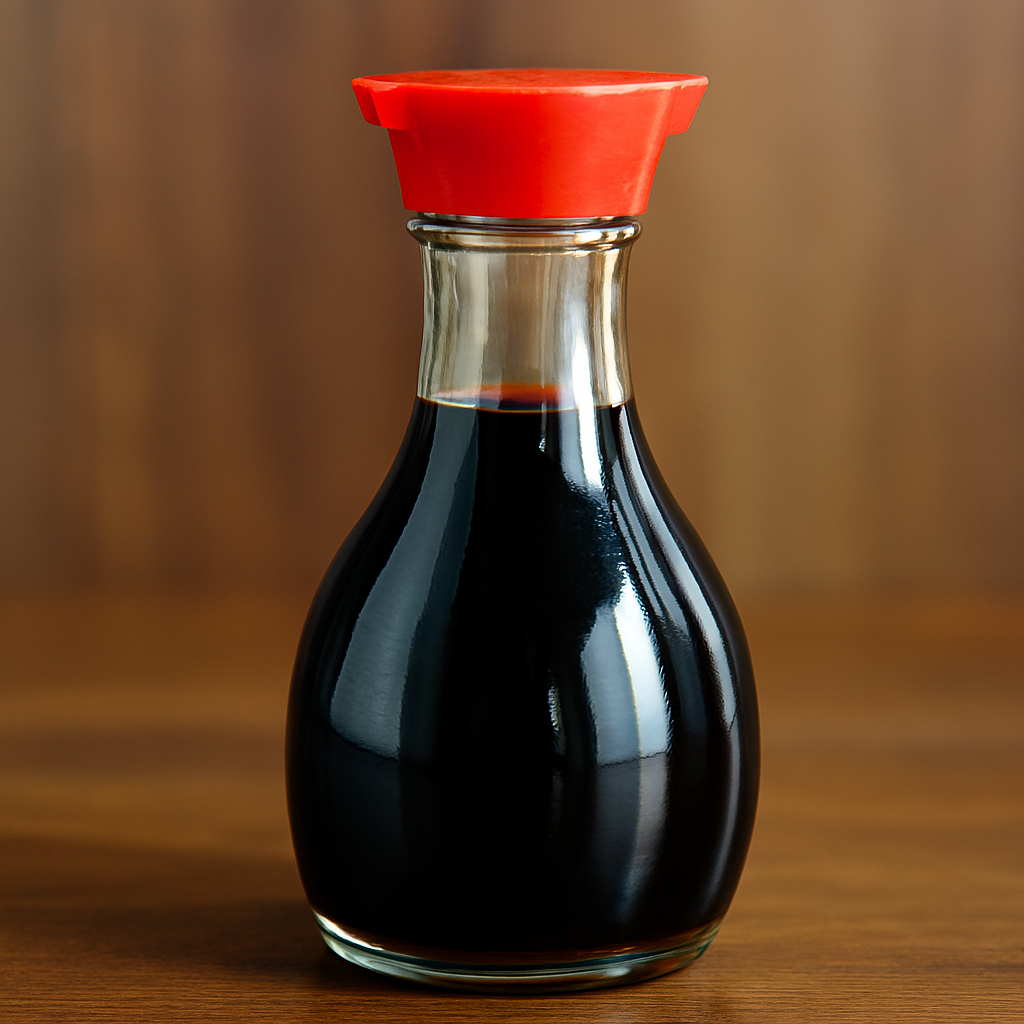
Soy Sauce
Soy sauce is one of those rare ingredients that quietly bridges cultures, kitchens, and centuries. From its ancient origins in China—where early fermentation master’s first discovered the magic hidden in soybeans—to its modern role as a global pantry staple, soy sauce has become far more than a salty dip or seasoning. It’s a rich, complex product shaped by tradition, craftsmanship, and remarkable biochemistry. Whether drizzled over steaming bowls of noodles, paired with sushi, or used to transform everyday dishes with deep umami flavor, soy sauce carries a fascinating history and an even more intriguing story in every drop. In this post, we’ll dive into 25 interesting facts about soy sauce that reveal just how extraordinary this seemingly simple condiment truly is. Get ready to explore the culture, science, and surprising trivia behind this iconic staple of world cuisine.
1) Chinese origin and what soy sauce fundamentally is
Soy sauce is best understood as a cornerstone liquid condiment that arose in China, where culinary traditions around fermented seasonings developed remarkably early and robustly. Unlike spice-based condiments, soy sauce’s depth of flavor comes from microbial fermentation that unlocks amino acids and aromatic compounds from soybeans and grains, creating the dark, savory, and salty liquid associated with the modern product. Its Chinese origin is more than a geographical note—it indicates a lineage within East Asian culinary practice where fermentation was used to stretch and intensify flavors in a world before industrial refrigeration and refined additives, ultimately yielding a versatile seasoning now found in home kitchens and restaurants worldwide. Though today’s bottles look standardized, the idea of a pourable umami-rich sauce evolved from the logic of conserving and transforming foods through fermentation, reinforcing why soy sauce is not just a seasoning but a historic technology of taste. [en.wikipedia.org], [britannica.com]
2) Traditional production: soybeans, roasted grain, brine, and koji molds
Classical soy sauce production begins with soybeans and roasted grain (often wheat), which are inoculated with specific molds and exposed to saltwater brine; over months, proteolytic and amylolytic enzymes generated by the molds and associated microbes break down proteins into amino acids (including glutamate) and carbohydrates into sugars, which then undergo further transformations to produce characteristic color, aroma, and umami intensity. The roasted grain is not incidental: roasting creates Maillard reaction products that contribute both aroma and color once the fermentation proceeds, while brine regulates microbial activity and prevents spoilage by undesirable organisms. The outcome is a biochemical tapestry where koji molds create the enzymatic machinery, and time, salt, and controlled conditions guide the flavor development toward a balanced, shelf-stable condiment. This process explains why soy sauce varies by region and producer—differences in grains, roast level, fermentation length, salinity, and microbial communities all imprint subtle signatures on the final taste. [en.wikipedia.org], [britannica.com]
3) The specific molds: Aspergillus oryzae and Aspergillus sojae
Two closely related filamentous fungi—Aspergillus oryzae and Aspergillus sojae—play starring roles in traditional soy sauce fermentation, with A. oryzae perhaps the most famous due to its wider historical use in Japanese fermentation culture (including miso and sake). These molds produce enzymes such as proteases and amylases that catalyze the decomposition of soybean proteins and grain starches, liberating precursors for umami and sweetness. Their selection is deliberate: they are domesticated, safe organisms with long culinary pedigrees, and their metabolic profiles yield desirable flavor compounds while avoiding mycotoxins produced by other wild molds. Choosing A. oryzae versus A. sojae (or the ratios thereof) can influence the nuance of the resulting sauce, illustrating how soy sauce is a product of microbial terroir—microorganism choice and handling shape the ultimate sensory outcome as much as any single ingredient or step. [en.wikipedia.org], [britannica.com]
4) Hallmark taste: saltiness and pronounced umami
Soy sauce’s signature saltiness comes from the brine central to its method of preservation, but the reason chefs prize it goes beyond salt: fermentation yields a robust umami profile through elevated levels of glutamates and related compounds that deepen savoriness in soups, stir-fries, marinades, and dipping sauces. This dual effect—salinity plus umami—makes soy sauce more efficient than simple salt at heightening flavors, because it rounds out thin or flat tastes and adds complexity with minimal volume. The characteristic aroma and color, generated through oxidative reactions and the presence of melanoidins formed during fermentation, complement the taste, creating the instantly recognizable dark-brown liquid that perfumes dishes with depth. Consequently, soy sauce is used both sparingly for brightness and in larger quantities for braises, where it brings body, color, and a sturdy backbone of savory notes. [en.wikipedia.org], [britannica.com]
5) A timeline reaching back ~2,200 years (Western Han dynasty)
The present form of soy sauce cohered during the Western Han dynasty, roughly 2,200 years ago, anchoring it among the oldest continuously used flavoring agents in East Asia. This impressive timeline reflects how communities refined the technique from earlier pastes into a liquid seasoning adaptable to many dishes, a transition likely driven by evolving culinary practices and the practical benefits of a pourable, blendable sauce. Framed against world food history, soy sauce sits alongside other ancient ferments like fish sauce and vinegar, yet its reliance on plant proteins and grain starches gives it a distinctive identity as a plant-based umami source developed long before modern food science articulated the concept of umami. That longevity also explains why soy sauce has diverse regional variants—centuries of local tinkering and cultural exchange shaped the ingredients, mold strains, and aging regimes used by different producers. [en.wikipedia.org], [britannica.com]
6) Evolution from ancient soybean pastes (jiang, 醬)
Soy sauce emerges historically from jiang—thick fermented pastes rooted in early Chinese culinary tradition—where fermentation transformed soybeans (and sometimes other foods) into concentrated flavoring agents used to season staples and preserve ingredients. Over time, cooks and artisans realized that the liquid fraction of these pastes could be prized as a separate seasoning, paving the way for a distinct product that flowed, mixed, and integrated easily into broths and stir-fries. This lineage matters because it connects liquid soy sauce to a broader family of fermented condiments (bean pastes and other jiang variants) that shared microbial techniques and fermentation vessels, underscoring how culinary innovation often arises from reinterpreting byproducts or fractions of established foods. The shift from paste to liquid also hints at changing culinary preferences and the spread of techniques across regions and social classes, ultimately standardizing soy sauce as a table and kitchen staple. [en.wikipedia.org], [britannica.com]
7) Early precursor “qingjiang” (清醬) recorded around AD 40
Historical texts point to qingjiang (清醬) as one of the earliest recorded liquid derivatives associated with soybean ferments, appearing as early as AD 40. This note is more than antiquarian curiosity—it demonstrates that Chinese culinary literature paid close attention to ferment categories and their applications, distinguishing lighter, clearer sauces from thicker pastes even in antiquity. The documentation suggests that cooks understood the functional differences: lighter liquids could be used as dips or seasoning splashes, while heavier pastes were spread or dissolved slowly into dishes. Such references offer valuable anchors for historians tracing how soy-based condiments diversified, and they show that soy sauce-like products were part of a continuum of fermented seasonings that coexisted and overlapped for centuries before modern names and classifications stabilized. [en.wikipedia.org], [britannica.com]
8) Other documented variants—jiangqing, chizhi, chiqing—by AD 540
By AD 540, texts like Qimin Yaoshu catalogued several variants—jiangqing, chizhi, and chiqing—reflecting a lively tradition of naming and using distinct soybean-based condiments. These names point to differences in clarity, thickness, or method, and they remind us that historical Chinese cuisine featured a spectrum of fermented seasonings where viscosity, salinity, and strength varied depending on intended use and regional habit. The existence of multiple named products indicates both widespread adoption and a level of culinary sophistication: categorization implies that people recognized repeatable production methods and sensory outcomes. For today’s cook, these historical labels serve as clues: they foreshadow modern distinctions between light (usukuchi) and dark (koikuchi) soy sauces in Japan, or between brewing and chemical hydrolysis approaches in some industrial contexts. [en.wikipedia.org], [britannica.com]
9) Roles in the kitchen: seasoning, dip, and cooking ingredient
In daily cooking, soy sauce functions across three common roles: as a seasoning added directly to food for salinity and savoriness; as a dipping sauce that pairs with fried items, dumplings, sushi, or sashimi; and as a cooking ingredient in marinades, braises, and stir-fries where it contributes color and body. These roles arise naturally from its sensory profile—salt and umami make it capable of enhancing bland foods, while its liquid form means it blends readily into sauces and stocks. Because it is concentrated and potent, chefs often layer small amounts at different stages of cooking to build complexity without overwhelming other flavors. The flexibility explains why soy sauce has transcended its original culinary context, appearing in fusion cuisines and contemporary recipes ranging from dressings to barbecue glazes, all benefiting from its instant savory lift. [en.wikipedia.org], [britannica.com]
10) Common pairings: rice, noodles, sushi, sashimi (and beyond)
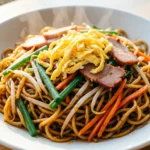
Soy sauce is seen at the table and in kitchens wherever rice and noodles are staples, because its salty umami brightens these relatively neutral carbohydrates without masking their textures. In Japanese dining, its role alongside sushi and sashimi is iconic: diners dip to add salinity and depth, often moderating intensity by mixing a little wasabi or shaking off excess sauce to respect the balance intended by the chef. Beyond these pairings, soy sauce is widely used in stir-fried noodle dishes, fried rice, and steamed vegetables, and it also shows up in unexpected places like Western marinades, where a tablespoon can substitute a portion of salt while providing complexity. Its affinity for proteins—fish, tofu, eggs, poultry—makes it a universal flavor enhancer whose strength can be tailored by choosing light or dark styles and by controlling dilution or cooking time. [en.wikipedia.org], [britannica.com]
11) Ubiquity in restaurants: bottles on tables worldwide
The sight of a glass or plastic soy sauce bottle at restaurant tables has become a global visual shorthand for East Asian cuisine, signaling that diners can adjust seasoning or prepare a quick dipping sauce. This table-side presence speaks to its everyday practicality: it keeps without elaborate handling, and a few drops can transform a plate. In sushi bars, dispensers and small dipping dishes are standard; in pan-Asian eateries, squeeze bottles or branded pourers invite casual use. The phenomenon extends far beyond Asia, reflecting soy sauce’s integration into international dining habits and the way restaurants accommodate varied preferences in salinity and intensity. As a result, soy sauce occupies a dual role in hospitality—both ingredient in the kitchen and self-serve condiment at the table—helping bridge professional preparation with diners’ personal taste adjustments. [en.wikipedia.org], [britannica.com]
12) Storage: room temperature is acceptable, refrigeration preserves flavor
Sources commonly note that soy sauce can be stored at room temperature, which suits its salty, fermented nature and makes it convenient as a table condiment; however, many guides also recommend refrigeration to preserve peak flavor over longer periods, especially after opening, because cooler storage slows oxidative and flavor-degrading reactions. In practical terms, if you use soy sauce frequently, room temperature storage is fine; if a bottle sits for months, the fridge helps keep aroma and taste fresher. Avoiding direct sunlight is also sensible, since light can accelerate changes in color and flavor. These storage recommendations echo broader practices for fermented sauces and condiments—salt and acidity protect them, but cold and darkness help maintain their best sensory qualities over time. [en.wikipedia.org], [simple.wikipedia.org]
13) Centrality in East and Southeast Asian cuisines, and global adoption
From China to Japan, Korea, and across Southeast Asia, soy sauce is a bedrock seasoning used in home cooking and professional kitchens alike, woven into techniques from light seasoning of steamed fish to glossy braises and noodle stir-fries. Each culinary culture interprets soy sauce through its own lens—Japanese kitchens often distinguish sharply between light and dark varieties; Chinese cooks may combine soy sauce with aromatics to build complex sauces; Korean dishes integrate it into jang traditions alongside other ferments. Over the last century, global trade and diaspora communities have further normalized soy sauce in Western cooking, where it readily complements grilled meats, vinaigrettes, and even caramel sauces that benefit from a tiny umami boost. Its spread showcases how a specific fermented foodway can be embraced internationally without losing the regional identities of its primary forms. [en.wikipedia.org], [britannica.com]
14) The Japanese name: shōyu (醤油)
In Japanese, soy sauce is known as shōyu (醤油), and this naming connects directly to Japan’s sophisticated fermentation traditions, where koji culture and seasonal timing helped define characteristic profiles of sauces and pastes. Shōyu is not a monolith; there are multiple styles—koikuchi (dark), usukuchi (light), tamari (often with little to no wheat), and specialty variants like saishikomi (double-brewed)—each designed for specific culinary purposes, from sashimi dipping to simmered dishes requiring deeper color. The Japanese nomenclature underlines how language mirrors culinary taxonomy: a simple ingredient family becomes a set of tools, each named and optimized for use in particular contexts. These distinctions reinforce the idea that soy sauce is as much a craft as an ingredient, and that names like shōyu carry the weight of centuries of practice. [en.wikipedia.org], [britannica.com]
15) The Filipino name: toyo
In the Philippines, soy sauce is called toyo, and it features prominently in everyday dishes and beloved classics such as adobo, where toyo contributes saltiness, color, and a savory backbone that plays against vinegar’s acidity and aromatics like garlic and bay leaf. The widespread availability of toyo in Filipino markets and eateries attests to its embeddedness in local cooking—used for quick pan sauces, grilled meat marinades, and dipping sauces with calamansi. This localization exemplifies the broader journey of soy sauce: as it migrates, it adapts to local palate preferences and culinary structures, maintaining a recognizable core while finding new expressions in regional staples. The Tagalog name helps foreground that soy sauce is not only an East Asian staple but a Southeast Asian one as well, integrated into family recipes and festive dishes alike. [en.wikipedia.org], [britannica.com]
16) The Chinese term: 醬油 (jiàngyóu), literally “sauce oil”
The Chinese term 醬油 (jiàngyóu), often glossed as “sauce oil,” reflects the historical categorization of fermented seasonings (jiang) and oils or liquid flavorings within classical Chinese foodways. While soy sauce is not an oil in the modern culinary sense, the term captures its fluid character and ties it to the broader vocabulary of condiments that accent dishes with a measured pour rather than a spread. This linguistic framing shows how naming conventions preserve historical understandings and relationships among foods—soy sauce was born from the family of jiang ferments, and its name situates it among those traditions even as the product’s modern use spans stir-frying, braising, dipping, and marinating. Language thereby acts as a cultural memory, encoding both the practical and the conceptual role of soy sauce in Chinese cuisine. [en.wikipedia.org], [britannica.com]
17) Vietnamese names: xì dầu, nước tương, tàu vị yểu
In Vietnamese, soy sauce appears under several names—xì dầu, nước tương, and tàu vị yểu—each reflecting regional and historical currents in Vietnamese culinary culture and borrowing patterns from Chinese dialects and trade. These terms speak to the diversity within Vietnam’s foodways, where fermented sauces and pastes are common, and soy sauce plays roles in dipping, stir-frying, and marinating alongside fish sauce (nước mắm). The coexistence of multiple names mirrors how products become embedded in everyday life across different communities, and how multilingual influences shape the pantry. As in other cultures, Vietnamese cooks leverage soy sauce’s umami and color, adjusting amounts to suit dishes that emphasize fresh herbs, balanced sweetness, and savory broths. [en.wikipedia.org], [britannica.com]
18) A rich linguistic map across Asia
Beyond Chinese, Japanese, Filipino, and Vietnamese, soy sauce bears many names in Asian languages—ganjang in Korean, kecap/kicap in Indonesian and Malay, and further terms across Thai, Burmese, Lao, Khmer, and more—demonstrating both its wide dispersal and local integration. This linguistic mosaic is not merely a list; it reveals that soy sauce functions within varied culinary grammars, forming part of dishes as different as Korean jang-based stews, Indonesian kecap-seasoned satays, and Thai stir-fries. The existence of distinct words and styles confirms that soy sauce is woven into daily cooking practices, often with local adaptations in sweetness, salinity, and viscosity. Language thereby becomes a map of culinary adoption, showing not just where soy sauce traveled but how each culture domesticated it to serve regional tastes and methods. [en.wikipedia.org], [britannica.com]
19) Han-era evidence: soy paste listed in Mawangdui bamboo slips
Archaeological references to soy paste in Mawangdui bamboo slips from the Han period provide tangible evidence that soybean-based ferments were already codified and valued in ancient Chinese culinary and medicinal texts. Such finds matter because they anchor culinary narratives in physical artifacts, demonstrating that ferment-based condiments were part of daily life and possibly ritual practice. When scholars connect these slips to later culinary manuals, they trace a lineage of knowledge—techniques transmitted and refined across generations, with soy-based pastes and liquids occupying critical roles in seasoning and preservation. For modern readers, these historical breadcrumbs reinforce that soy sauce did not appear suddenly; it evolved along a well-documented path that blends practical kitchen craft, textual tradition, and the archaeology of food. [en.wikipedia.org], [britannica.com]
20) Controlled microbial activity defines the fermentation
Describing soy sauce fermentation as controlled microbial activity emphasizes that artisans manage mold growth, salt levels, temperature, and time to cultivate a stable ecosystem that reliably transforms raw ingredients into a consistent, tasty product. The salt inhibits harmful microbes, while selected molds and subsequent microbial consortia (including yeasts and bacteria) drive biochemical changes that intensify savory flavors and develop color. The term “controlled” also points to standardization—modern producers use defined starter cultures, calibrated brine concentrations, and monitored aging to achieve the target flavor profile repeatedly. This scientific grounding explains why artisanal and industrial soy sauces can differ: the degree of control, the microbial strains involved, and the length and conditions of fermentation all leave sensory fingerprints, making soy sauce a product where biochemistry and craft converge. [en.wikipedia.org], [britannica.com]
21) Soy paste older than soy sauce, predating the Han dynasty
The assertion that soy paste predates soy sauce and reaches back before the Han dynasty situates liquid soy sauce as a descendant of an older ferment tradition—one that used pastes as seasoning blocks or bases for soups and braises. This chronology sheds light on why many East Asian cuisines maintain both paste and liquid condiments: each has functional advantages, with pastes offering concentrated, slow-release flavor and sauces providing instant, blendable seasoning. Understanding soy sauce as the later liquid branch of the family helps contextualize its role alongside miso, doenjang, and other fermented bean pastes, highlighting a continuity in technique (koji use, salted fermentation) and a divergence in texture and application. The long arc of development underscores how culinary evolution tends to proceed incrementally, adapting existing processes to new forms and needs. [en.wikipedia.org], [britannica.com]
22) Centuries of regional differentiation and style diversity
Across centuries, local producers refined soy sauce into distinct regional styles, each balancing grain choice, fermentation length, salt concentration, and post-processing steps (like pasteurization and filtering). In Japan, the dichotomy of light (usukuchi) versus dark (koikuchi) shōyu reflects differences in salinity and color, with regional preferences (e.g., light in Kansai) shaping restaurant and home cooking. Variants like tamari often contain little or no wheat, appealing to specific dietary needs or flavor preferences, while saishikomi (double-brewed) deepens complexity by re-fermenting in soy sauce rather than brine. In China and elsewhere, similar distinctions appear in thickness, sweetness, and intended use. This diversity illustrates a living tradition where producers adjust variables to satisfy local tastes and culinary practices, ensuring that “soy sauce” is a category, not a single product. [en.wikipedia.org], [britannica.com]
23) A global condiment beyond Asia
Although born in East Asia, soy sauce today is a global condiment, found in supermarkets and kitchens from the Americas to Europe and Africa. Its spread tracks migration, trade, and culinary curiosity, and its functionality—adding umami without animal products—has made it a popular tool in vegetarian and vegan cooking as well. Chefs outside Asia use it to bolster stocks, marinades, and even desserts (a touch of soy sauce can heighten chocolate or caramel), leveraging its ability to round flavors. That globalization has also produced localized innovations, such as blending soy sauce with Western herbs or combining it with olive oil and vinegar for dressings. In this way, soy sauce serves as an ambassador of fermented taste technology, proving adaptable and enduring across culinary boundaries. [en.wikipedia.org], [britannica.com]
24) Mixing with ground wasabi for dipping
In Japanese dining etiquette, mixing ground wasabi with soy sauce to create a dipping blend for sushi or sashimi is a familiar practice, although some purists prefer placing wasabi directly on the fish to avoid overpowering and to maintain the rice’s texture. The combination makes sensory sense: wasabi’s volatile, nasal heat complements soy sauce’s salty umami, yielding a dip that enlivens delicate fish while offering control over intensity. This custom demonstrates how diners tailor soy sauce to circumstance, balancing spice and salt on the fly. Regional and chef-specific preferences vary, with some establishments advising minimal dipping or recommending lighter soy sauces for certain fish to preserve the chef’s intended balance. Regardless of approach, the wasabi-soy synergy epitomizes soy sauce’s role as both a standalone condiment and a component in customizable flavor pairings at the table. [en.wikipedia.org], [britannica.com]
25) Long shelf life and millennia of culinary integration
Soy sauce’s long shelf life—thanks to salt and fermentation—explains its omnipresence in pantries and on tables and helps account for its survival and dominance across millennia. Historically, the ability to preserve and transport a potent seasoning meant it could travel with traders and migrants, seeding new culinary habits as it arrived in different regions. Over time, its role matured from a practical preservative-seasoning to a taste-defining element of countless dishes, deeply integrated into food cultures across East and Southeast Asia and, later, internationally. Even as modern production introduced filtration, pasteurization, and standardized branding, the essence remains a carefully fermented, salt-stable sauce that brings dependable umami and color—qualities that have made it a reliable partner for cooks navigating changing ingredients, technologies, and tastes through the centuries. [en.wikipedia.org], [britannica.com]
Frequently Asked Questions About Soy Sauce
1. What exactly is soy sauce?
Soy sauce is a liquid condiment made from fermented soybeans, roasted grain (typically wheat), salt, and a fermenting mold such as Aspergillus oryzae. It is widely used for its salty, savory, and umami‑rich flavor. Traditional versions are brewed slowly over months or even years, while some modern types are chemically produced using hydrolyzed vegetable protein. [eathealthy365.com], [webmd.com]
2. How is traditional soy sauce made?
Traditional brewing involves several steps:
- Soybeans are soaked and steamed until soft.
- Wheat is roasted and crushed.
- The mixture is inoculated with koji mold (Aspergillus oryzae).
- It is then mixed with brine, allowing fermentation to occur for months to years.
- After fermentation, it is pressed, pasteurized, and bottled.
This long fermentation produces deep, complex flavors compared to chemically-produced soy sauce. [eathealthy365.com], [webmd.com]
3. What does soy sauce taste like?
Soy sauce is known for its salty, savory flavor enhanced by deep umami notes formed during fermentation. Some varieties may taste slightly sweet, sour, or even bitter depending on ingredients and fermentation time. Japanese soy sauces often have a delicate balance of sweetness and umami, while Chinese sauces tend to be saltier and stronger. [bhg.com], [givemeumami.com]
4. Are there different types of soy sauce?
Yes—many. The most common categories include:
Chinese Soy Sauce
- Light soy sauce: bright, salty, thin.
- Dark soy sauce: thicker, darker, slightly sweet; often contains molasses and is used for color.
Japanese Soy Sauce (Shoyu)
- Koikuchi: standard, all‑purpose soy sauce in Japan.
- Usukuchi: lighter in color but saltier.
- Tamari: made with little or no wheat, often gluten‑friendly.
- Shiro (white): made with more wheat, producing a light-colored sauce.
There are also sweet soy sauces, especially in Southeast Asia. [webmd.com], [cookindocs.com]
5. Is soy sauce healthy or unhealthy?
Soy sauce contains antioxidants, beneficial fermentation‑derived compounds, and may even offer mild anti-inflammatory benefits. However, its sodium content is high, so moderation is key. Low‑sodium versions are available, and flavor can often be enhanced without extra salt by balancing with acids or spices. [givemeumami.com], [clockworklemon.com]
6. Does soy sauce go bad? How should I store it?
Unopened soy sauce can last indefinitely due to its high salt content. Once opened, it can last 2–3 years in the refrigerator while maintaining optimal flavor. It can also be stored at room temperature, but refrigeration slows flavor deterioration and is recommended for long-term freshness. Keep it away from direct light. [simple.wikipedia.org], [clockworklemon.com]
7. What’s the difference between brewed soy sauce and chemically produced soy sauce?
- Brewed soy sauce undergoes slow, natural fermentation that produces a rich, complex flavor and aroma.
- Chemically produced soy sauce uses hydrolyzed vegetable protein, acid treatment, caramel coloring, and additives.
The chemical method is much faster (a few days), but results in a harsher, less nuanced taste. [eathealthy365.com], [webmd.com]
8. Is soy sauce gluten-free?
Most soy sauces are not gluten-free because they include wheat.
However:
- Tamari soy sauce typically contains little to no wheat and is commonly used as a gluten-free alternative (though labels should still be checked). [webmd.com]
9. Why is soy sauce dark in color?
The deep color comes from the Maillard reaction, which occurs when amino acids and sugars interact during fermentation, forming dark melanoidins that give soy sauce its characteristic appearance. Longer fermentation and added sweeteners like molasses (in dark soy sauce) can intensify the color. [clockworklemon.com]
10. What are common substitutes for soy sauce?
Substitutes depend on dietary needs and flavor goals:
- Tamari – gluten‑friendly with similar umami.
- Coconut aminos – soy-free, less salty, slightly sweet.
- Liquid aminos – milder flavor but usable in most recipes.
- Fish sauce – much stronger, used sparingly in Southeast Asian dishes.
Many cooking guides emphasize choosing substitutes based on cuisine—for example, using Japanese soy sauce substitutes for Japanese dishes. [hot-thai-kitchen.com]
11. How much salt is in soy sauce?
Salt levels vary by type:
- Japanese Usukuchi: 16–17%
- Japanese Koikuchi: 14–15%
Light soy sauces taste saltier because they lack the strong soy flavor of dark soy sauce, making the saltiness more noticeable. [givemeumami.com], [recipetineats.com]
12. Can soy sauce be used for more than Asian cuisine?
Yes. Globally, chefs use soy sauce to add umami depth in a variety of non-Asian dishes such as marinades, gravies, barbecue sauces, stews, salad dressings, and even certain desserts. Its versatility comes from its ability to enhance flavors without overpowering them when used in moderation. [eathealthy365.com]
13. What is tamari, and how is it different from regular soy sauce?
Tamari is a Japanese soy sauce made with little or no wheat, resulting in a richer, smoother taste that’s often less salty. It originated as a byproduct of miso production. It’s popular among people avoiding gluten and those who prefer a less sharp, more balanced soy flavor. [webmd.com]
14. What makes Japanese soy sauce different from Chinese soy sauce?
- Japanese soy sauces usually use equal parts soybeans and wheat, producing a balanced, slightly sweet profile.
- Chinese soy sauces tend to use more soybeans and less wheat, resulting in stronger, sharper flavors; they are divided into light and dark varieties.
These differences create distinct flavor profiles suited to their respective cuisines. [webmd.com]
15. How long has soy sauce existed?
Soy sauce dates back roughly 2,200 years to the Western Han Dynasty in China. Over time, it evolved from fermented pastes and spread across East and Southeast Asia via trade, Buddhism, and cultural exchange. Today it’s a global pantry staple. [en.wikipedia.org], [cookindocs.com]