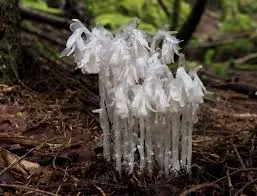
Ghost Plant
Hidden beneath the deep shade of forest canopies lies one of nature’s most mysterious botanical wonders: the Ghost Plant (Monotropa uniflora). With its pale, almost translucent body and otherworldly appearance, this plant has fascinated hikers, botanists, and storytellers for generations. Unlike most plants, the Ghost Plant doesn’t rely on sunlight—its ghost‑white form stands as quiet proof that nature doesn’t always follow its own rules. From its eerie glow on the forest floor to its unusual parasitic lifestyle, every part of this plant’s biology adds to its mythic reputation.
In this post, we’ll uncover 25 intriguing and little‑known facts about this spectral wildflower—facts that reveal just how strange, rare, and utterly enchanting the Ghost Plant truly is. Whether you’re a plant lover, a nature wanderer, or simply someone who enjoys the unusual, prepare to meet a species that seems pulled straight from a fairy tale.
1. Non‑photosynthetic nature
Monotropa uniflora is remarkable because it completely lacks chlorophyll, the green pigment essential for photosynthesis in most plant species. Without chlorophyll, it cannot convert sunlight into energy the way typical plants do, which is why it displays a stark white coloration rather than any shade of green. This absence forces the plant to adopt a completely different nutritional strategy—one that involves depending on other organisms rather than sunlight. This trait sets it apart as an evolutionary outlier among flowering plants, allowing it to thrive in low‑light environments where photosynthetic plants would struggle to survive. [en.wikipedia.org]
2. White and waxy appearance
The plant’s distinctive ghostly appearance comes from its waxy, almost translucent white tissues, which lack any green pigmentation. This coloration gives Monotropa uniflora its common names such as “ghost plant,” “ghost pipe,” or “corpse plant,” reflecting the eerie visual impression it leaves in forest understories. Its pale color helps it blend seamlessly into dark, moist forest floors, and in some cases, this unusual appearance causes hikers to mistake it for a fungus rather than a flowering plant. The combination of waxy texture and pallor serves as an unusual visual adaptation among angiosperms. [en.wikipedia.org]
3. Presence of pink or black flecks
Although the plant is predominantly white, some populations exhibit pale pink hues or speckling with black flecks on the stems or floral structures. These variations occur naturally and contribute subtle diversity to its outward appearance. The pinkish tint likely arises from slight pigment traces or environmental influences, while black flecks may represent aging tissue or mineral deposits. These markings, though minor, add visual variety and sometimes help botanists distinguish between individual stands or developmental stages of the plant in the field. [en.wikipedia.org]
4. Rare deep-red specimens
Although deep‑red forms of Monotropa uniflora are not commonly encountered, they have been documented in several regions, surprising observers who typically associate the species with ghostlike whiteness. These red forms may result from genetic variation or localized environmental pressures that influence pigmentation. Their rarity and striking color have made them an object of fascination among botanists and nature photographers. Despite their distinctive appearance, they function just like their pale counterparts, relying on fungi for nutrition rather than sunlight. [en.wikipedia.org]
5. Mycoheterotrophic nutrition
In lieu of photosynthesis, Monotropa uniflora practices mycoheterotrophy, a specialized nutritional strategy involving the exploitation of fungi for organic carbon. Instead of gathering energy directly, it taps into fungal networks that are already connected to photosynthetic trees. This indirect nutritional chain essentially makes M. uniflora a parasite of both fungi and the trees they support. Mycoheterotrophy is rare among flowering plants, demonstrating a unique ecological niche occupied by the species. [en.wikipedia.org]
6. Dependence on Russulaceae fungi
The plant specifically associates with fungi belonging to the Russulaceae family. These fungi form extensive mycorrhizal relationships with forest trees, creating underground nutrient webs that Monotropa uniflora can tap into. This specific fungal association is essential because without these fungal partners, the plant cannot survive or complete its life cycle. The relationship shows a tightly coevolved dependency, reinforcing how specialized M. uniflora truly is within forest ecosystems. [en.wikipedia.org]
7. Indirect parasitism of forest trees
Because the Russulaceae fungi obtain sugars from tree roots through mutualistic mycorrhizal relationships, Monotropa uniflora indirectly parasitizes forest trees by siphoning off nutrients from the fungi. This multi‑layered interaction illustrates a complex ecological network in which the plant becomes a “third party,” benefiting from photosynthesis without performing it itself. The plant does not contribute resources back to the fungi or trees, making it a nutritional sink in forest ecosystems, rather than a partner. [en.wikipedia.org]
8. Ability to live in deep shade
Since the plant does not require sunlight, it can thrive in forest environments where light availability is minimal. Deep shade areas where photosynthetic plants fail to survive become ideal habitats for Monotropa uniflora. This unique ecological freedom allows the species to colonize forest floors beneath dense canopy layers, taking advantage of damp, nutrient‑rich leaf litter and fungal abundance. The ability to live in such environments is one of the traits that make the species appear unexpectedly in dark, humid areas after rain. [en.wikipedia.org]
9. Stem height of 5–30 cm
The plant’s stems typically grow between 5 and 30 centimeters tall, with height variations influenced by local conditions such as moisture, soil depth, fungal availability, and forest litter composition. Despite the simple appearance, the stem houses vital internal structures that support the plant’s unusual life cycle, including scale leaves, vascular tissues, and reproductive organs. The modest height allows it to remain unobtrusive while still elevating its flower enough to facilitate insect pollination. [en.wikipedia.org]
10. Scale‑like leaves
Instead of broad green leaves, Monotropa uniflora features tiny, translucent, scale‑like structures that cling to its stem. Because the plant does not photosynthesize, it has no need for large leaf surfaces. Over evolutionary time, the leaves have become vestigial and minimized, representing a reduction in unnecessary energy expenditure. These scale leaves still play minor roles in protecting the stem and supporting the overall structure of the plant. [en.wikipedia.org]
11. Single flower per stem
Each plant produces only one flower per stalk, an attribute reflected in both its scientific name—uniflora—and its overall minimalist morphology. Having a single flower may limit reproductive output per individual, but clusters of plants often emerge together, enabling successful pollination rates. This single‑flower adaptation also reduces the plant’s energy requirements, fitting its low‑energy, parasitic lifestyle. [en.wikipedia.org]
12. Flowers with 3–8 petals
The flower of Monotropa uniflora typically contains 3–8 translucent petals. The translucency complements the plant’s overall ghostlike appearance. The number of petals may vary depending on developmental or genetic factors, but the consistent range helps botanists identify the species. These petals protect the reproductive structures and entice insect visitors despite lacking vibrant colors or nectar guides typical of other flowering plants. [en.wikipedia.org]
13. Flower droops then straightens
In its early stage, the flower hangs downward like the bowl of a pipe, which may help protect its pollen from rain or debris. As the flower matures and seed development begins, it gradually straightens and becomes erect. This shift in orientation is thought to help with wind‑based seed dispersal and indicates successful pollination. The movement from drooping to upright is a distinctive behavior among forest wildflowers. [en.wikipedia.org]
14. Flowering from early summer to early autumn
The plant typically flowers from early summer through early autumn, taking advantage of warm, moist conditions that support fungal activity. These months also coincide with increased insect activity, enhancing the likelihood of pollination. The flowering window varies slightly across its range, depending on local climate, elevation, and rainfall patterns. [en.wikipedia.org]
15. Emergence after rainfall
Observers often find Monotropa uniflora appearing shortly after rain, when soil moisture peaks and fungal networks are most active. The rapid emergence may be triggered by increased hydration of the underground tissues or fruiting bodies. This sudden appearance contributes to the species’ reputation as an “otherworldly” plant that seems to materialize overnight from the forest floor. [en.wikipedia.org]
16. Upright seed capsule
Following pollination, the flower transitions into a dry, woody capsule that stands upright, facilitating seed dispersal. This capsule enlarges as the seeds mature, and its erect orientation ensures the seeds are optimally positioned for release into air currents. The transformation from a drooping flower to an upright seed pod symbolizes the completion of its reproductive cycle. [en.wikipedia.org]
17. Tiny wind‑dispersed seeds
The seeds of Monotropa uniflora are extremely small—only 0.6–0.8 mm in length—which helps them travel easily on forest breezes. Their minuscule size allows large numbers to be released and potentially settle in multiple new areas. However, because the seeds must land near appropriate fungal hosts to survive, only a fraction germinate successfully. This reliance underscores how specialized the plant’s life cycle is. [en.wikipedia.org]
18. Native to three continents
The species exhibits a surprisingly broad range, native to temperate regions of Asia, North America, and northern South America. Despite this large geographic footprint, its distribution is patchy, reflecting its dependence on particular habitats and fungal species. These global populations suggest the plant has ancient evolutionary origins and dispersed widely before continental climates shifted. [en.wikipedia.org]
19. Preference for moist, shaded forests
Monotropa uniflora thrives in mature forests where shade keeps humidity high and temperatures moderate. These conditions favor the growth of mycorrhizal fungi, which the plant depends on completely. Dense leaf litter, stable soils, and low light levels create an ideal microhabitat for its growth and emergence. Forests lacking these conditions typically cannot support the plant. [daily.jstor.org]
20. Often mistaken for fungi
Due to its ghostly white color, lack of leaves, and emergence from the forest floor, Monotropa uniflora is frequently misidentified as a mushroom or other fungal organism. Its soft, waxy texture reinforces this confusion. Despite these similarities, the plant is fully a flowering angiosperm and goes through all the reproductive stages typical of flowering plants. This confusion adds to its mystery and folklore in many cultures. [daily.jstor.org]
21. The name “Ghost Pipe”
The term “Ghost Pipe” comes from the plant’s white, spirit‑like appearance and its curved, pipe‑shaped flower. The downward‑drooping posture of the bloom resembles certain styles of ceremonial pipes, giving rise to the common name “Indian Pipe” as well. The imagery of a ghostly pipe emerging from forest floors makes the plant a staple in nature folklore and discussions about unusual wilderness finds. [daily.jstor.org]
22. Called “Corpse Plant”
Another of its names, “Corpse Plant,” refers to its pale, corpse‑like color. The name evokes imagery of lifelessness or decay, fitting given the plant’s lack of green pigment and overall ghostly presence in forest shadows. These eerie connotations have played a role in many cultural narratives and make the species especially popular in supernatural‑themed botanical discussions. [daily.jstor.org]
23. Traditional medicinal use
Across multiple cultures, especially Indigenous ones, Monotropa uniflora has been used medicinally as a calming agent or nervine. Its extracts have been applied to ease anxiety and emotional distress. While traditional knowledge supports these uses, scientific research on the plant’s chemistry is still developing. It continues to hold a place in herbal medicine, though with caution due to limited modern data. [kew.org]
24. Renewed popularity through social media
Recent research indicates a rising trend in the use of ghost pipe tinctures, fueled largely by social media platforms. Many people now forage and prepare tinctures for pain and anxiety, despite limited scientific evidence supporting these uses. This trend has led researchers to investigate the plant more deeply, especially regarding conservation and safe usage. The modern surge contrasts sharply with the historical record, which shows fewer and more traditional preparations. [psu.edu]
25. Stable overall conservation status
Despite its delicate appearance and particular habitat needs, Monotropa uniflora is considered “secure” in terms of conservation status. It is widespread across multiple continents, although local populations may fluctuate based on forest health, soil moisture, and fungal abundance. While not endangered, it remains susceptible to disruptions such as habitat destruction, forest clearing, or soil compaction, which can reduce necessary fungal hosts. [en.wikipedia.org]
Frequently Asked Questions About Ghost Plant
1. Is the Ghost Plant a mushroom or a real plant?
Despite its ghostly, fungus‑like appearance, the Ghost Plant is a true flowering plant (angiosperm), not a mushroom. Its pale, waxy look causes frequent confusion, but it has all the anatomical traits of a plant—just without chlorophyll. [unrulygardening.com], [yardandgar…astate.edu]
2. Why is the Ghost Plant white?
Ghost Plants lack chlorophyll entirely, which is why they cannot photosynthesize and appear white, translucent, or sometimes pinkish or speckled. The absence of chlorophyll forces them into a unique parasitic lifestyle. [en.wikipedia.org], [blogs.ifas.ufl.edu]
3. How does the Ghost Plant get its nutrients if it doesn’t photosynthesize?
Ghost Plants are mycoheterotrophic, meaning they steal nutrients from mycorrhizal fungi (primarily Russula and Lactarius species) that are attached to tree roots. Essentially, the plant parasitizes fungi, which themselves are in a symbiotic relationship with trees. [yardandgar…astate.edu], [unrulygardening.com]
4. Where does the Ghost Plant grow?
Ghost Plants grow in mature, moist, deeply shaded forests across North America, Asia, and northern South/Southeast America, favoring thick leaf litter and rich humus. They appear most often near beech, oak, and other hardwoods. [extension….linois.edu], [yardandgar…astate.edu]
5. How tall does the Ghost Plant get?
A typical Ghost Plant stands 4–12 inches (10–30 cm) tall, with a single nodding flower per stem and scale‑like leaves. [extension….linois.edu], [en.wikipedia.org]
6. Why do Ghost Plant flowers droop downward?
The flower initially droops, resembling a “pipe,” which may help protect pollen and nectar from rain. After pollination, the flower straightens upright as the seed capsule matures. [daily.jstor.org], [extension….linois.edu]
7. When does the Ghost Plant appear or bloom?
Ghost Plants commonly emerge after rainfall, blooming from June to September, depending on region. Their above‑ground life is short, often lasting only 1–2 weeks. [extension….linois.edu], [daily.jstor.org]
8. Why do Ghost Plants melt, turn black, or collapse when touched?
Their tissues are extremely delicate and highly hydrated; disturbance causes the plant to oxidize and collapse quickly, turning black as it decays. This contributes to their “ghostly” reputation. [blogs.ifas.ufl.edu]
9. Can you grow Ghost Plants at home?
Almost certainly no. Ghost Plants require a very specific fungal partner connected to certain tree roots. Without the exact three‑way relationship (tree → fungus → plant), cultivation is nearly impossible. Even transplanting usually fails. [unrulygardening.com], [extension….linois.edu]
10. Are Ghost Plants endangered or rare?
They are not globally endangered, but they are considered uncommon because they require untouched forests with healthy mycorrhizal networks. Their specialized ecology makes sightings rare. [unrulygardening.com], [fs.usda.gov]
11. Is the Ghost Plant poisonous?
Generally, Monotropa uniflora is not considered harmful to touch and is not known to be dangerously toxic. However, it is not recommended for consumption, as some sources note potential mild toxicity and its fragility makes it unsuitable as food.
(Important: Do NOT confuse this species with “White Nightshade” or other toxic plants also nicknamed “ghost plant.”) [plantcaretoday.com]
12. Is the Ghost Plant edible?
While some sources mention it can taste like asparagus when cooked, modern guidance strongly discourages eating it because it may contain mild toxins and harvesting harms fragile populations. [plantcaretoday.com]
13. What animals pollinate the Ghost Plant?
Ghost Plants are primarily pollinated by bumblebees and flies, which visit the bell‑shaped flowers during their short blooming season. [extension….linois.edu]
14. What animals or insects eat the Ghost Plant?
Because the plant is short‑lived, delicate, and nutrient‑poor, it is not a major food source for wildlife. Its presence is more important ecologically as part of the fungal‑tree network than as forage.
(No direct sources identify specific herbivores.)
15. Is the Ghost Plant invasive?
No. Ghost Plants are not invasive because their survival depends on extremely precise fungal partners and intact forest ecosystems. They cannot spread aggressively or survive outside these conditions. [plantids.com]
16. Can Ghost Plants be used medicinally?
Historically, some Indigenous groups and herbalists used Ghost Plant preparations for anxiety, pain, or seizures, but modern science has not validated these uses. Studies show rising interest due to social media trends, but safety and efficacy remain unproven. [unrulygardening.com], [plantcaretoday.com]
17. Why do Ghost Plants only appear in certain forests?
They require:
- Dense shade
- Moist, humus‑rich soil
- Mycorrhizal fungi (Russula/Lactarius species)
- Hardwood trees connected to those fungi
Without all these components, they cannot germinate or survive. [yardandgar…astate.edu]
18. How do Ghost Plants reproduce?
After pollination, their upward‑facing capsule releases tiny seeds that disperse by wind. However, germination occurs only if seeds land near compatible fungi, making reproduction challenging. [en.wikipedia.org]
19. Why are Ghost Plants called “Ghost Pipe” or “Corpse Plant”?
These names come from their white, corpse‑like color, their downward pipe‑shaped flower, and their tendency to blacken and “disappear” quickly, making them appear ghost‑like. [daily.jstor.org]
20. Are Ghost Plants harmful to trees or fungi?
Although parasitic, researchers suggest Ghost Plants do not cause measurable harm to trees or fungi because the nutrient exchange within the network is robust and balanced. They simply tap into the flow. [unrulygardening.com]
21. Why are Ghost Plants so short‑lived above ground?
They spend most of their life underground within the fungal network. The above‑ground flowering phase is solely for reproduction and lasts only 1–2 weeks.
22. Do Ghost Plants have any smell or nectar?
They can produce nectar for pollinators, but they lack vibrant colors or strong scents, relying instead on their shape and timing (post‑rain emergence) to attract bees. [plantiary.com]
23. Can Ghost Plants survive in sunny areas?
Absolutely not. They require deep shade and cannot tolerate direct sunlight due to their lack of protective pigments like chlorophyll. [blogs.ifas.ufl.edu]
24. Why do Ghost Plants appear suddenly after rain?
Rain increases soil moisture, which activates fungal networks and hydrates buried plant tissues, triggering their rapid emergence. They seem to “materialize” overnight.
25. What does the presence of Ghost Plants indicate about a forest?
Ghost Plants are considered indicators of healthy, undisturbed forest ecosystems with intact fungal networks and rich soil. Their presence suggests a thriving, balanced woodland environment. [plantids.com]