Coral Reef
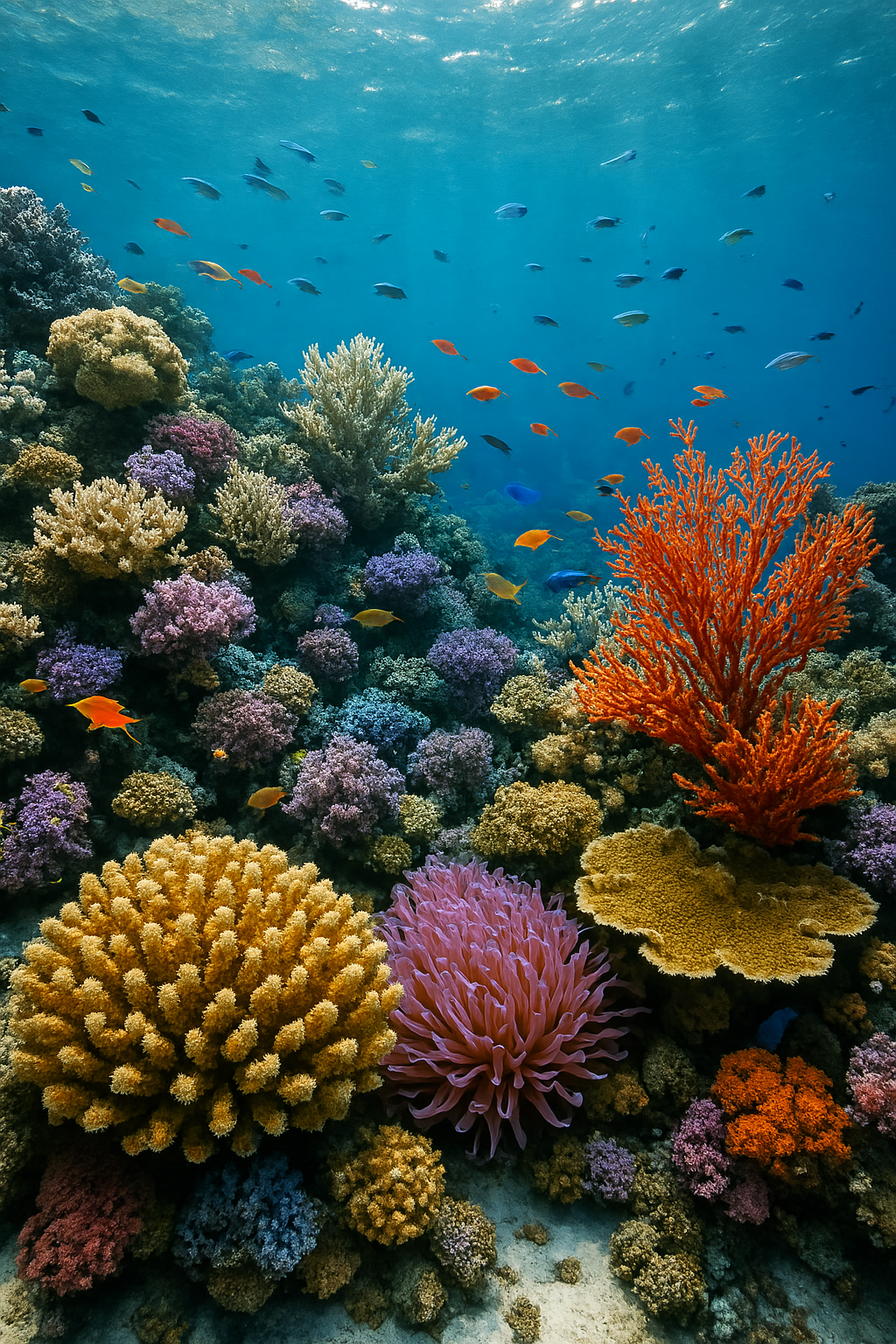
Coral reefs are some of the most vibrant and vital ecosystems on our planet. Often called the “rainforests of the sea,” they are home to an astonishing diversity of marine life and play a crucial role in protecting coastlines, supporting fisheries, and even inspiring medical discoveries. Yet, despite their beauty and importance, coral reefs face growing threats from climate change, pollution, and human activity. In this post, we’ll dive beneath the waves to uncover 25 fascinating facts about coral reefs — from their ancient origins to their modern challenges — and explore why these underwater wonders deserve our attention and protection.
1. Coral reefs are underwater ecosystems built by colonies of coral polyps Coral reefs are living structures formed by countless tiny animals called coral polyps. These polyps secrete calcium carbonate, which hardens into a protective skeleton. Over centuries, the skeletons accumulate and create massive reef formations. What makes reefs unique is that they are both geological and biological — they are rock‑like structures but entirely dependent on living organisms for growth and survival. This dual nature makes them one of the most fascinating ecosystems on Earth.
2. Most coral reefs are formed by stony corals Stony corals, also known as scleractinians, are the primary architects of reefs. Their polyps cluster together in colonies, each adding a small deposit of calcium carbonate to the reef structure. Over time, these deposits build up into vast underwater landscapes. Without stony corals, reefs would not exist in their current form, as other coral types lack the hard skeleton needed to create large structures.
3. Corals belong to the class Anthozoa in the phylum Cnidaria Corals are part of the same biological group as sea anemones and jellyfish. They belong to Anthozoa, a class of marine invertebrates within the phylum Cnidaria. This means they share traits like stinging cells (cnidocytes) used for defense and capturing prey. Despite their plant‑like appearance, corals are animals with complex biological functions.
4. Unlike sea anemones, corals secrete hard carbonate exoskeletons Sea anemones are soft‑bodied, but corals secrete hard skeletons made of calcium carbonate. This exoskeleton provides protection and allows corals to build reef structures. The skeleton remains even after the coral dies, serving as a foundation for new generations of polyps. This process creates the layered, rock‑like formations we recognize as reefs.
5. Reefs grow best in warm, shallow, clear, sunny, and agitated waters Coral reefs thrive in tropical oceans where sunlight penetrates easily. They need clear water because their symbiotic algae require light for photosynthesis. Warm temperatures, typically between 23–29°C, are ideal. Agitated waters, such as those near shorelines, bring nutrients and oxygen, further supporting reef growth.
6. Coral reefs first appeared about 485 million years ago The earliest coral reefs date back to the Ordovician period, around 485 million years ago. These ancient reefs were very different from modern ones, often dominated by other organisms like stromatoporoids and sponges. Over time, stony corals became the dominant reef builders, shaping the ecosystems we see today.
7. They displaced microbial and sponge reefs of the Cambrian Before corals, reefs were primarily formed by microbial mats and sponges. These structures provided habitats but lacked the complexity of coral reefs. When corals evolved, they quickly displaced these earlier reef systems, creating more diverse and resilient ecosystems.
8. Coral reefs are among the most biodiverse ecosystems on Earth Often called the “rainforests of the sea,” coral reefs host an extraordinary variety of life. They provide shelter, food, and breeding grounds for thousands of species, including fish, mollusks, crustaceans, and marine plants. This biodiversity makes reefs critical to global ecological balance.
9. Fringing reefs, barrier reefs, atolls, and platform reefs are the four main types Reefs are classified into four main types based on their structure and location. Fringing reefs grow directly along coastlines, barrier reefs are separated from land by lagoons, atolls form ring‑shaped structures around lagoons, and platform reefs grow on continental shelves. Each type reflects unique geological and oceanic conditions.
10. Darwin’s paradox describes coral reefs’ high biodiversity despite nutrient‑poor waters Charles Darwin observed that coral reefs thrive in waters that are otherwise nutrient‑poor. This paradox puzzled scientists for decades. The answer lies in the efficient recycling of nutrients within reef ecosystems, where symbiotic relationships between corals, algae, and other organisms sustain high productivity.
11. Zooxanthellae algae live symbiotically inside coral tissues Corals rely on microscopic algae called zooxanthellae, which live inside their tissues. These algae perform photosynthesis, providing food for the corals. In return, the corals offer shelter and access to sunlight. This partnership is the foundation of reef ecosystems, enabling corals to grow in nutrient‑poor waters.
12. Coral reefs provide shoreline protection By absorbing wave energy, reefs act as natural barriers that protect coastlines from erosion, storms, and flooding. This ecosystem service saves billions of dollars annually in coastal defense infrastructure. Without reefs, many coastal communities would be far more vulnerable to natural disasters.
13. They support fisheries and food security Millions of people worldwide depend on coral reefs for food. Reefs provide habitats for fish and other marine species that are vital to local and global fisheries. In many tropical countries, reef fish are a primary source of protein, making reefs essential for food security.
14. Coral reefs are important for tourism and recreation Reefs attract millions of tourists each year for snorkeling, diving, and other recreational activities. This tourism generates billions of dollars in revenue, supporting local economies. Healthy reefs are therefore not only ecological treasures but also economic assets.
15. Reefs are sources of biomedical compounds Many reef organisms produce unique chemical compounds for defense. Scientists are studying these compounds for potential medical applications, including treatments for cancer, HIV, and bacterial infections. Coral reefs may hold the key to future breakthroughs in medicine.
16. Climate change and ocean acidification are major threats Rising sea temperatures cause coral bleaching, while ocean acidification weakens coral skeletons. Together, these threats undermine reef resilience and survival. Climate change is the single greatest long‑term threat to coral reefs worldwide.
17. Coral bleaching occurs when stressed corals expel their algae When water temperatures rise, corals become stressed and expel their symbiotic algae. This causes them to turn white, a phenomenon known as bleaching. Without algae, corals lose their primary food source and may die if conditions do not improve.
18. Pollution, overfishing, and destructive practices are local threats Human activities such as agricultural runoff, sewage discharge, and unsustainable fishing practices damage reefs. Pollution promotes harmful algae growth, while overfishing disrupts ecological balance. Destructive practices like dynamite fishing physically destroy reef structures.
19. Invasive algae in Caribbean reefs have disrupted ecosystems In the Caribbean, invasive algae species have overgrown reefs, reducing coral cover and biodiversity. These algae thrive when herbivorous fish are overfished, highlighting the importance of maintaining ecological balance.
20. Microfragmentation and fusion are new restoration techniques Scientists are developing innovative methods to restore reefs. Microfragmentation involves breaking corals into tiny pieces, which grow faster when reattached. Fusion techniques encourage coral fragments to merge, accelerating reef recovery.
21. Marine protected areas help conserve reefs Establishing marine protected areas (MPAs) is one of the most effective strategies for reef conservation. MPAs restrict damaging activities like overfishing and pollution, giving reefs a chance to recover. However, enforcement varies globally, and many MPAs exist only on paper.
22. Coral farming and relocation are used to restore damaged reefs Coral farming involves growing corals in nurseries and transplanting them to damaged reefs. Relocation moves healthy corals to safer areas. While these methods show promise, success depends on long‑term protection and favorable environmental conditions.
23. Heat‑tolerant symbionts are being introduced to corals To help corals survive warming oceans, scientists are experimenting with introducing heat‑tolerant algae into coral tissues. These symbionts can withstand higher temperatures, potentially reducing bleaching events. This approach is part of “assisted evolution” strategies.
24. Coral reefs are found in over 100 countries Reefs are distributed across tropical oceans worldwide, from the Caribbean to Southeast Asia. They are most abundant in the Indo‑Pacific region, which hosts the majority of global reef biodiversity.
25. The Coral Triangle in Southeast Asia is the global center of reef biodiversity The Coral Triangle, spanning Indonesia, Malaysia, Papua New Guinea, the Philippines, Solomon Islands, and Timor‑Leste, is home to the highest diversity of corals and reef fish. It is considered the global epicenter of reef biodiversity and a priority for conservation efforts.
🌊 Frequently Asked Questions About Coral Reefs
1. What exactly is a coral reef?
A coral reef is an underwater ecosystem built by colonies of tiny animals called coral polyps. These polyps secrete calcium carbonate skeletons that accumulate over centuries, forming massive reef structures. Coral reefs are home to thousands of marine species and are often referred to as the “rainforests of the sea” because of their extraordinary biodiversity.
2. How do corals eat?
Corals feed in two ways:
- Symbiosis with algae (zooxanthellae): Microscopic algae live inside coral tissues, providing food through photosynthesis.
- Capturing plankton: Corals also use stinging tentacles to catch tiny organisms drifting in the water. This dual feeding strategy allows corals to thrive even in nutrient‑poor tropical waters.
3. What is coral bleaching?
Coral bleaching occurs when corals become stressed, usually due to rising sea temperatures, and expel their symbiotic algae. Without algae, corals lose their color and primary food source, turning white. If stressful conditions persist, corals may die, leading to reef collapse.
4. What are the main threats to coral reefs?
The biggest threats include:
- Climate change (warming seas, stronger storms).
- Ocean acidification (weakens coral skeletons).
- Pollution (agricultural runoff, sewage, plastics).
- Overfishing and destructive practices (like dynamite fishing).
- Coastal development (sedimentation and habitat loss).
5. What is ocean acidification and how does it affect coral reefs?
Ocean acidification occurs when oceans absorb excess carbon dioxide, lowering pH levels. This reduces the availability of carbonate ions, which corals need to build their skeletons. As a result, reefs grow more slowly and become weaker, making them vulnerable to erosion and collapse.
6. Where are coral reefs located?
Coral reefs are found in tropical oceans between 30°N and 30°S latitude. Major reef regions include:
- The Great Barrier Reef (Australia) – the largest reef system.
- The Coral Triangle (Southeast Asia) – the global center of reef biodiversity.
- Caribbean reefs – important for tourism and fisheries. In total, reefs exist in over 100 countries.
7. Can coral reefs be restored?
Yes, restoration techniques include:
- Coral farming: Growing corals in nurseries and transplanting them.
- Microfragmentation: Breaking corals into small pieces that grow faster.
- Introducing heat‑tolerant algae: Helping corals survive warming oceans. While promising, restoration is expensive and works best when combined with strong conservation measures.
8. What happens if coral reefs disappear?
If reefs collapse, the consequences are severe:
- Loss of biodiversity (thousands of marine species).
- Collapse of fisheries that feed millions of people.
- Increased coastal erosion and vulnerability to storms.
- Loss of tourism revenue and cultural heritage. The disappearance of reefs would destabilize both marine ecosystems and human communities.
9. Are there coral reefs that are thriving despite threats?
Yes, some reefs show resilience. For example, certain reefs in the Pacific have adapted to warmer waters, and marine protected areas have allowed reefs to recover from overfishing. However, these cases are exceptions, and most reefs remain under serious threat.
10. What can individuals do to help protect coral reefs?
- Reduce carbon footprint (to combat climate change).
- Avoid single‑use plastics and reduce pollution.
- Support sustainable seafood choices.
- Use reef‑safe sunscreen when swimming or diving.
- Support conservation organizations and policies that protect reefs. Individual actions, when multiplied, can make a significant difference.