Mayonnaise
Creamy, versatile, and surprisingly historic—mayonnaise is far more than just a sandwich spread. From its mysterious origins in 18th-century Europe to its status as America’s most popular condiment, this humble emulsion has a fascinating story to tell. Whether you love it or loathe it, mayonnaise has shaped culinary traditions across the globe, inspiring countless variations and even sparking cultural debates. In this post, we’ll dive into 25 intriguing facts about mayonnaise, exploring its history, science, and surprising uses that go way beyond the jar in your fridge. Get ready to discover why this “mother sauce” continues to reign supreme in kitchens worldwide!
1. Mayonnaise likely originated in Mahón, Menorca, Spain during the French occupation in the Seven Years’ War (1756).
The story of mayonnaise begins in the mid-18th century, during the tumultuous Seven Years’ War, a global conflict that involved most of the great powers of the time. In 1756, French forces captured the port city of Mahón on the island of Menorca, and it was here that culinary history was made. According to popular accounts, a French chef serving the Duke of Richelieu found himself without cream to prepare a traditional sauce. Resourceful and inventive, he substituted olive oil, creating a new emulsion that would later become known as mayonnaise. This moment marked the birth of one of the world’s most beloved condiments, blending Mediterranean ingredients with French culinary technique. The name “mahonnaise” is thought to pay homage to Mahón, cementing the sauce’s Spanish roots despite its adoption into French cuisine. This origin story highlights how necessity and creativity often drive culinary innovation, turning a wartime improvisation into a global staple.
2. The name “mayonnaise” first appeared in French cuisine around 1806.
Although the sauce was likely invented decades earlier, the term “mayonnaise” didn’t enter the culinary lexicon until the early 19th century. French cookbooks from around 1806 began to reference the word, signaling its growing popularity among chefs and gourmands. The etymology remains debated—some suggest it derives from “mahonnaise,” linking it to Mahón, while others argue it comes from the French word “moyeu,” meaning egg yolk. Regardless of its linguistic roots, the appearance of the name in print marked mayonnaise’s transition from a regional curiosity to a recognized element of haute cuisine. By the mid-1800s, mayonnaise had become a fixture in French culinary texts, often described as a “mother sauce” for cold preparations. This formal recognition helped spread the condiment across Europe and eventually to the Americas, where it would become a household staple.
3. One theory suggests it was created by a French chef for the Duke of Richelieu after his victory at Mahón.
The Duke of Richelieu, a prominent French military leader, is often credited with inspiring the creation of mayonnaise. After his forces triumphed at Mahón, the celebratory feast required a luxurious sauce to accompany the meal. Lacking cream, the chef improvised by emulsifying olive oil with egg yolks and lemon juice, producing a rich, velvety dressing that delighted the Duke and his guests. This anecdote underscores the role of aristocratic dining in shaping culinary traditions—lavish banquets often demanded innovation, and chefs rose to the challenge. While historians debate the accuracy of this tale, it remains a romantic origin story that ties mayonnaise to victory, opulence, and the ingenuity of French cuisine. Whether fact or legend, the association with Richelieu helped elevate mayonnaise’s status from a simple sauce to a symbol of refinement.
4. Early recipes used lemon juice instead of vinegar as the acidic component.
In the earliest versions of mayonnaise, lemon juice was the preferred acidic ingredient rather than vinegar. This choice was not arbitrary—lemons were widely available in Mediterranean regions and provided a bright, fresh flavor that complemented olive oil and egg yolks. The use of lemon juice also reflects the sauce’s Spanish roots, as citrus fruits were a staple in Iberian cooking. Over time, vinegar became more common, especially in French adaptations, because it was easier to store and transport. Vinegar also offered a sharper tang that balanced the richness of the oil and eggs, making it ideal for preserving the sauce in cooler climates. Today, both lemon juice and vinegar are used interchangeably, with some chefs insisting that lemon juice gives a more delicate taste. This evolution from lemon to vinegar illustrates how regional availability and culinary preferences shape even the smallest details of a recipe.
5. The process of emulsifying egg yolk was known to pharmacists for ointments long before culinary use.
Long before mayonnaise graced our plates, the science behind its creation was already familiar to pharmacists. Emulsification—the process of combining two immiscible liquids like oil and water into a stable mixture—was a technique used in apothecaries to prepare medicinal ointments and creams. Pharmacists understood that egg yolks, rich in lecithin, acted as natural emulsifiers, binding oil and water together. This knowledge eventually crossed into the culinary world, where chefs applied the same principles to create smooth, luxurious sauces. The transition from pharmacy to kitchen underscores the deep connection between science and cooking, revealing how culinary innovation often borrows from other disciplines. Today, emulsification remains a cornerstone of gastronomy, not only in mayonnaise but also in hollandaise, vinaigrettes, and countless modernist dishes.
6. A 1750 Spanish cookbook, Art de la Cuina, included a recipe for a similar sauce called aioli bo.
Historical evidence suggests that mayonnaise’s ancestor may have been aioli bo, a garlic and oil-based sauce featured in the 1750 Spanish cookbook Art de la Cuina by Fra Francesc Roger. This recipe predates the French claim to mayonnaise and highlights the strong culinary traditions of the Balearic Islands. Aioli bo was a rustic sauce, typically made by pounding garlic with olive oil in a mortar, sometimes enriched with egg yolk for added creaminess. The resemblance to mayonnaise is striking, suggesting that the French adaptation may have been inspired by this Spanish classic. The inclusion of aioli bo in an 18th-century cookbook demonstrates how regional dishes can evolve into international icons, shaped by cultural exchange and historical events like the Seven Years’ War.
7. Mayonnaise is considered the mother sauce of all cold sauces in Escoffier’s Le Guide Culinaire (1903).
In the world of classical French cuisine, Auguste Escoffier’s Le Guide Culinaire is a foundational text, and it elevates mayonnaise to an exalted status: the mother sauce of all cold sauces. Published in 1903, Escoffier’s work codified the principles of haute cuisine, organizing sauces into families. Just as béchamel serves as the base for many hot sauces, mayonnaise became the starting point for cold preparations like tartar sauce, remoulade, and sauce verte. This classification reflects mayonnaise’s versatility—it can be flavored with herbs, spices, or other condiments to create endless variations. By designating mayonnaise as a mother sauce, Escoffier ensured its place in culinary history, transforming it from a simple emulsion into a cornerstone of professional cooking.
8. Traditional mayonnaise consists of egg yolks, oil, and an acid (vinegar or lemon juice).
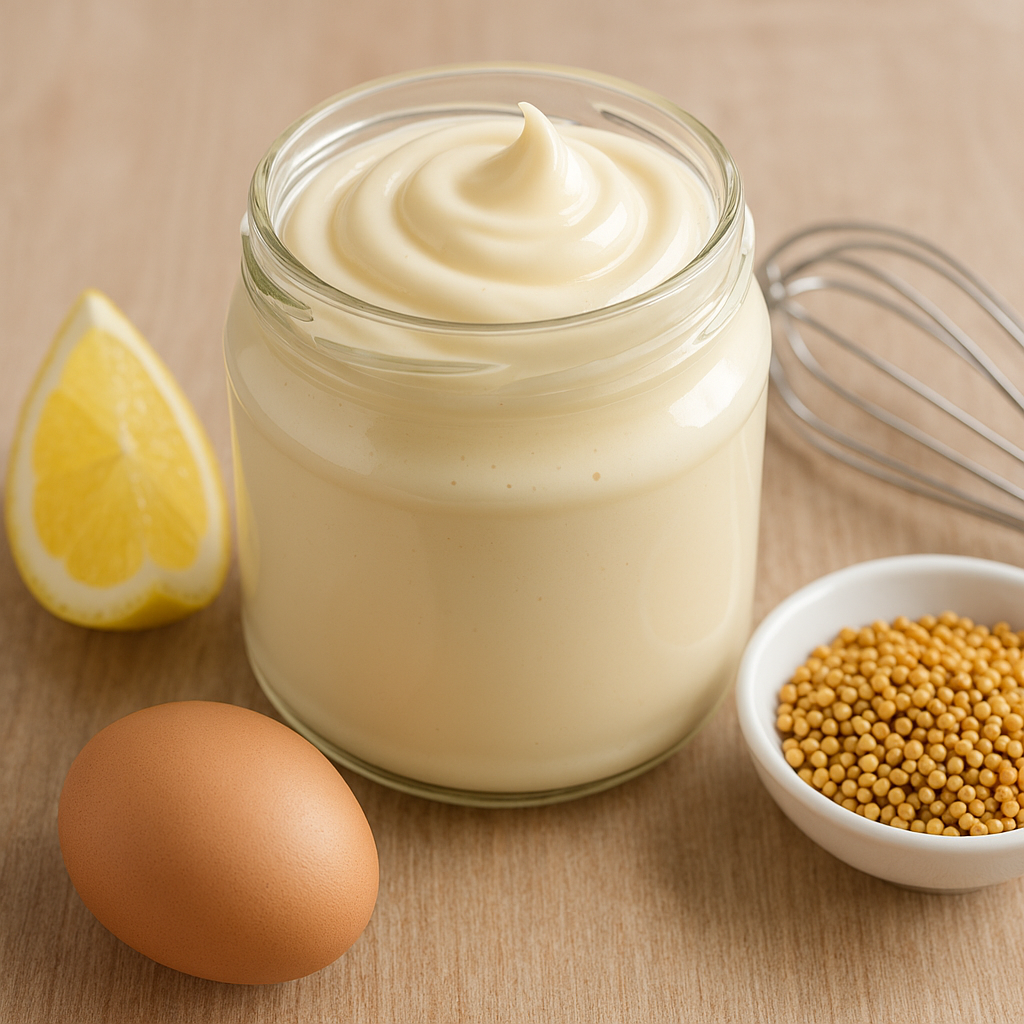
At its core, mayonnaise is a marvel of simplicity: just three primary ingredients—egg yolks, oil, and an acid—combined through careful emulsification. Egg yolks provide lecithin, a natural emulsifier that binds the oil and water-based acid into a stable mixture. The choice of oil influences flavor and texture; olive oil imparts a fruity richness, while neutral oils like canola or sunflower create a milder taste. The acid, whether vinegar or lemon juice, adds brightness and balances the fat, preventing the sauce from tasting greasy. Despite its humble composition, mayonnaise requires precision: adding oil too quickly can break the emulsion, resulting in a curdled mess. This delicate balance of science and technique explains why mayonnaise has fascinated chefs for centuries, evolving from a simple sauce into a culinary icon.
9. The key technique is emulsification, slowly whisking oil into egg yolks to create a stable mixture.
Emulsification is the scientific magic behind mayonnaise, transforming simple ingredients into a smooth, creamy sauce. This process involves combining two liquids that normally repel each other—oil and water-based acid—into a stable mixture. Egg yolks play a crucial role because they contain lecithin, a natural emulsifier that binds these opposing elements. The technique requires patience: oil must be added gradually while whisking vigorously, allowing tiny droplets to disperse evenly throughout the mixture. If rushed, the emulsion breaks, leaving a greasy mess instead of a silky sauce. This delicate balance of chemistry and technique explains why mayonnaise was once considered a mark of culinary skill. Today, blenders and food processors make emulsification easier, but the principle remains the same. Understanding emulsification not only unlocks the secret to perfect mayonnaise but also forms the foundation for countless other culinary creations, from vinaigrettes to hollandaise.
10. Some recipes use mustard as an emulsifier, adding flavor and stability.
Mustard is more than just a flavor enhancer in mayonnaise—it’s a functional ingredient that improves stability. Mustard seeds contain mucilage and natural emulsifiers that help bind oil and water, reducing the risk of separation. This makes mustard an invaluable ally for home cooks who fear a broken sauce. Beyond its technical benefits, mustard adds complexity to mayonnaise, introducing subtle heat and tang that complement the richness of egg yolks and oil. French Dijon mustard is a popular choice, lending a refined sharpness, while whole-grain mustard creates a rustic texture. The inclusion of mustard in mayonnaise recipes reflects the interplay between science and taste, where an ingredient serves both practical and sensory roles. It’s a reminder that even small additions can elevate a simple sauce into a nuanced culinary masterpiece.
11. Commercial mayonnaise often includes preservatives and stabilizers for shelf life, unlike homemade versions.
While homemade mayonnaise is prized for its fresh flavor, it has a short shelf life—usually about a week—because it lacks preservatives. Commercial mayonnaise, on the other hand, is engineered for longevity. Manufacturers incorporate stabilizers like xanthan gum and preservatives such as calcium disodium EDTA to prevent spoilage and maintain texture over months of storage. These additives ensure that mayonnaise remains safe and appealing even after long periods on supermarket shelves. The trade-off, however, is a slight difference in taste and mouthfeel compared to homemade versions. This contrast highlights the tension between convenience and authenticity in modern food culture. For those who value purity, homemade mayonnaise offers unmatched freshness, while commercial varieties cater to practicality and mass distribution.
12. Adding a teaspoon of water to eggs before emulsifying can improve texture.
A little-known trick among professional chefs is to add a teaspoon of water to egg yolks before starting the emulsification process. This simple step helps loosen the yolks, making it easier to incorporate oil gradually and evenly. The result is a lighter, creamier mayonnaise with a more stable emulsion. Water acts as a buffer, reducing the risk of the sauce breaking during preparation. This technique exemplifies how minor adjustments can yield significant improvements in culinary outcomes. It also underscores the precision required in classic cooking, where even a teaspoon of liquid can transform texture and consistency. For home cooks seeking restaurant-quality mayonnaise, this tip is a game-changer.
13. One tablespoon of mayonnaise contains about 90 calories, mostly from fat.
Mayonnaise is undeniably rich, and its nutritional profile reflects that indulgence. A single tablespoon packs approximately 90 calories, with the majority coming from fat—around 10 grams per serving. This high caloric density explains why mayonnaise is often labeled a “guilty pleasure” in diets. However, not all fats are created equal; mayonnaise made with olive oil provides heart-healthy monounsaturated fats, while versions using processed oils may contain less desirable trans fats. For calorie-conscious individuals, light or reduced-fat mayonnaise offers an alternative, though these products often rely on starches and gums to mimic the original texture. Understanding the nutritional content of mayonnaise helps consumers make informed choices, balancing flavor with health considerations.
14. It is a good source of vitamin E, an antioxidant.
Mayonnaise is often criticized for its high fat content, but it also offers nutritional benefits, particularly as a source of vitamin E. This fat-soluble antioxidant plays a vital role in protecting cells from oxidative damage, supporting immune function, and maintaining healthy skin. Because mayonnaise is primarily made from oil, it naturally contains vitamin E, especially when prepared with oils like sunflower or olive oil, which are rich in this nutrient. A single tablespoon of mayonnaise can contribute a modest amount toward the daily recommended intake of vitamin E, making it more than just an indulgent condiment. While it’s not a substitute for whole foods like nuts or seeds, mayonnaise demonstrates how even small dietary components can provide essential micronutrients. This fact adds nuance to the conversation about mayonnaise and health—it’s not purely a guilty pleasure but a complex food with both pros and cons.
15. Low-fat and vegan versions are widely available for dietary preferences.
As dietary trends evolve, mayonnaise has adapted to meet diverse consumer needs. Low-fat versions emerged in response to health-conscious movements in the late 20th century, replacing much of the oil with starches and gums to mimic the creamy texture of traditional mayonnaise. Vegan mayonnaise, on the other hand, eliminates eggs entirely, using plant-based emulsifiers like soy protein or aquafaba (the liquid from cooked chickpeas) to achieve stability. These innovations reflect the growing demand for inclusive food options that cater to ethical, health, and allergy-related concerns. Today, supermarket shelves feature an array of mayonnaise varieties—from classic full-fat to organic, avocado-oil-based, and even probiotic-enhanced versions. This diversity underscores mayonnaise’s resilience as a culinary staple, capable of reinventing itself without losing its essential identity.
16. Mayonnaise is the most popular condiment in the U.S., beating ketchup and mustard, with Americans spending $2 billion annually on it.
In the battle of condiments, mayonnaise reigns supreme in the United States. Despite ketchup’s cultural association with burgers and fries, mayonnaise quietly dominates sales, generating an astonishing $2 billion annually. This popularity stems from its versatility—it’s not only a sandwich spread but also a key ingredient in salads, dips, and dressings. Market research reveals that mayonnaise outsells ketchup and mustard by a significant margin, a fact that surprises many given ketchup’s iconic status in American cuisine. The preference for mayonnaise reflects broader culinary trends, including the rise of creamy textures and customizable flavors. From deli counters to home kitchens, mayonnaise has cemented its place as America’s favorite condiment, proving that subtlety often wins over flashiness in the world of food.
17. Over 280 million Americans consume mayonnaise, meaning three-quarters of the population has it at home.
Mayonnaise’s ubiquity in American households is staggering: approximately 280 million people—roughly three-quarters of the U.S. population—consume it regularly. This widespread adoption speaks to its role as a culinary cornerstone, appearing in everything from potato salads at summer barbecues to gourmet aioli in upscale restaurants. Its presence in home kitchens is so common that running out of mayonnaise can feel like a minor crisis for many families. This level of penetration also explains why mayonnaise dominates condiment sales, as discussed earlier. Beyond mere numbers, this statistic highlights mayonnaise’s cultural significance—it’s not just a sauce but a shared taste experience that transcends regional and demographic boundaries.
18. In Japan, Kewpie mayonnaise is a beloved brand known for its umami flavor.
While mayonnaise enjoys global popularity, Japan has elevated it to an art form through Kewpie, a brand introduced in 1925. Unlike Western mayonnaise, Kewpie uses only egg yolks (not whole eggs) and incorporates rice vinegar, creating a richer, tangier profile. Its signature squeeze bottle and iconic baby mascot have become symbols of Japanese culinary culture. Kewpie’s appeal lies in its umami depth, which enhances dishes ranging from sushi rolls to okonomiyaki (savory pancakes). This distinctive flavor has earned Kewpie a cult following worldwide, with chefs and home cooks alike praising its ability to transform simple meals into gourmet experiences. The brand’s success illustrates how regional adaptations can redefine a global product, turning mayonnaise into a cultural phenomenon.
19. Russia has one of the highest per capita mayonnaise consumption rates, often using it in salads.
In Russia, mayonnaise is not just a condiment—it’s a cultural staple. Russians consume more mayonnaise per capita than almost any other nation, incorporating it into a wide array of dishes beyond sandwiches. The most iconic example is Olivier salad, a traditional holiday dish made with diced vegetables, meat, and a generous amount of mayonnaise. This creamy dressing also appears in beet salads, fish dishes, and even as a topping for baked goods. The popularity of mayonnaise in Russia dates back to the Soviet era, when it was considered a luxurious product and later became widely available as industrial food production expanded. Today, Russian brands like Sloboda and Moskovsky Provansal dominate the market, and mayonnaise remains a symbol of comfort food in Russian cuisine. This enduring love affair illustrates how a simple sauce can become deeply embedded in national identity.
20. Hellmann’s began in a New York deli in 1905 and now dominates the U.S. market with over 45% share.
The story of Hellmann’s mayonnaise is a classic tale of entrepreneurial success. In 1905, German immigrant Richard Hellmann opened a deli in New York City, where his homemade mayonnaise quickly became a customer favorite. Recognizing its potential, Hellmann began selling the condiment in glass jars tied with a signature blue ribbon—a branding element that persists to this day. By the 1920s, Hellmann’s had become a household name, and its popularity soared during the mid-20th century as convenience foods gained traction. Today, Hellmann’s controls more than 45% of the U.S. mayonnaise market, generating hundreds of millions in annual sales. Its dominance reflects not only the quality of the product but also the power of branding and distribution in shaping consumer habits. From a humble deli recipe to a global icon, Hellmann’s exemplifies how innovation and marketing can transform a simple sauce into a culinary empire.
21. Mayonnaise serves as a base for sauces like tartar, remoulade, ranch, and salsa golf.
Mayonnaise’s versatility is one of its greatest strengths, serving as the foundation for countless derivative sauces. Tartar sauce, a seafood favorite, combines mayonnaise with pickles and herbs for a tangy, textured accompaniment. Remoulade, a French classic, adds mustard, capers, and anchovies for a bold, savory punch. Ranch dressing, beloved in the United States, blends mayonnaise with buttermilk and spices to create a creamy salad dressing that doubles as a dip. In Argentina, salsa golf—a mixture of mayonnaise and ketchup—has become a national favorite, often paired with fries or seafood. These variations demonstrate how mayonnaise acts as a culinary canvas, adaptable to different flavors and cultural contexts. Its ability to harmonize diverse ingredients explains why it remains indispensable in kitchens worldwide.
22. It can substitute for butter or oil in baking, adding moisture to cakes.
Mayonnaise’s role in baking is a well-kept secret among seasoned bakers. Because it contains both oil and eggs, mayonnaise can replace butter or oil in cake recipes, delivering moisture and richness without altering flavor. This substitution works particularly well in chocolate cakes, where mayonnaise enhances the texture, making it tender and fudgy. The science behind this trick lies in mayonnaise’s emulsified structure, which distributes fat evenly throughout the batter, preventing dryness. During World War II, when butter and eggs were rationed, mayonnaise became a popular baking ingredient, cementing its place in culinary ingenuity. Today, this technique remains a favorite among home bakers seeking convenience without compromising quality. It’s a testament to mayonnaise’s versatility beyond the realm of savory dishes.
23. Homemade mayonnaise has a short shelf life—about one week—while commercial versions last months.
The difference in shelf life between homemade and commercial mayonnaise is striking. Freshly prepared mayonnaise, made with raw egg yolks and no preservatives, typically lasts about one week when refrigerated. Its vulnerability to spoilage stems from the presence of perishable ingredients and the absence of stabilizers. In contrast, commercial mayonnaise undergoes pasteurization and includes additives like calcium disodium EDTA, which inhibit bacterial growth and oxidation, allowing it to remain safe for consumption for several months. This disparity highlights the trade-off between freshness and convenience. While homemade mayonnaise offers superior flavor and texture, it demands careful storage and quick use. Commercial varieties, on the other hand, cater to modern lifestyles, prioritizing longevity and safety. Understanding these differences empowers consumers to choose the option that best suits their needs.
24. Boutique brands like Sir Kensington’s and cult favorites like Kewpie have gained global popularity.
While traditional brands like Hellmann’s dominate the mainstream market, boutique mayonnaise brands have carved out a niche among food enthusiasts seeking premium quality and unique flavors. Sir Kensington’s, for example, emphasizes ethically sourced ingredients and artisanal production, appealing to consumers who value transparency and sustainability. Its flavors range from classic to innovative, including avocado oil and chipotle varieties. Meanwhile, Kewpie, originally a Japanese brand, has achieved cult status worldwide thanks to its rich umami profile and distinctive squeeze bottle. These brands represent a broader trend in the food industry: the rise of specialty condiments that cater to diverse tastes and ethical considerations. Their success underscores how mayonnaise continues to evolve, adapting to modern culinary values while retaining its timeless appeal.
25. Mayonnaise is sometimes called the “devil’s condiment” due to its polarizing reputation among food lovers.
Few foods inspire as much debate as mayonnaise. While millions adore its creamy texture and versatility, others despise it with equal passion, dubbing it the “devil’s condiment.” This polarizing reputation stems from its rich, fatty composition and its tendency to dominate dishes when used excessively. Cultural factors also play a role—some regions embrace mayonnaise wholeheartedly, while others view it with suspicion or disdain. The controversy has even sparked viral discussions online, with anti-mayo movements gaining traction on social media. Despite the backlash, mayonnaise remains a culinary powerhouse, proving that strong opinions often accompany iconic foods. Its divisive nature only adds to its intrigue, making mayonnaise not just a condiment but a cultural phenomenon that continues to stir conversation.
Frequently Asked Questions About Mayonnaise
1. What is mayonnaise made of?
Mayonnaise is an emulsion of oil, egg yolks, and an acid (usually vinegar or lemon juice). The egg yolks act as an emulsifier, binding the oil and water-based acid into a smooth, stable mixture. Traditional recipes often include mustard for flavor and extra stability. Commercial versions may add preservatives and stabilizers for shelf life. Vegan alternatives replace eggs with plant-based emulsifiers like soy protein or aquafaba. [en.wikipedia.org]
2. Is mayonnaise French or Spanish in origin?
The origin of mayonnaise is debated, but most historians agree it likely originated in Mahón, Menorca, Spain, during the French occupation in the Seven Years’ War (1756). A French chef reportedly created the sauce for the Duke of Richelieu, substituting olive oil for cream. The name appeared in French cuisine around 1806, cementing its association with French culinary tradition. [en.wikipedia.org]
3. Why is mayonnaise called a “mother sauce”?
In classical French cuisine, mayonnaise is considered the mother sauce of all cold sauces, as described by Auguste Escoffier in Le Guide Culinaire (1903). It serves as the base for numerous derivatives like tartar sauce, remoulade, and ranch dressing. This classification reflects its versatility and foundational role in culinary arts. [en.wikipedia.org]
4. How long does homemade mayonnaise last?
Homemade mayonnaise typically lasts about one week in the refrigerator because it contains raw eggs and lacks preservatives. Commercial mayonnaise, which is pasteurized and includes stabilizers, can last for months unopened and several weeks after opening. Always store mayonnaise in a cool environment and discard if it smells sour or separates. [en.wikipedia.org]
5. Is mayonnaise healthy or unhealthy?
Mayonnaise is calorie-dense, with about 90 calories per tablespoon, mostly from fat. While it provides beneficial nutrients like vitamin E, excessive consumption can contribute to weight gain. Healthier options include versions made with olive oil or avocado oil, which offer heart-healthy fats. Low-fat and vegan alternatives are also available for dietary preferences. [en.wikipedia.org]
6. Can mayonnaise cause food poisoning?
The risk of foodborne illness from mayonnaise is low if prepared and stored correctly. Commercial mayonnaise is pasteurized and acidic, which inhibits bacterial growth. Homemade mayonnaise, however, uses raw eggs and should be refrigerated immediately to reduce the risk of salmonella. Using pasteurized eggs for homemade mayo is recommended for safety. [en.wikipedia.org]
7. What are the most popular mayonnaise brands worldwide?
Globally recognized brands include Hellmann’s (also marketed as Best Foods in the western U.S.), Duke’s (popular in the American South), and Kewpie, a Japanese brand famous for its umami flavor. Other notable brands include Kraft, Lady’s Choice (Philippines), and Winiary (Poland). Boutique brands like Sir Kensington’s cater to premium markets. [en.wikipedia.org]
8. Why is Kewpie mayonnaise so popular in Japan?
Kewpie mayonnaise, introduced in 1925, uses egg yolks instead of whole eggs and incorporates rice vinegar, giving it a richer, tangier taste. It also contains monosodium glutamate (MSG), which enhances umami flavor. Its unique taste and creamy texture have made it a staple in Japanese cuisine, used in sushi rolls, okonomiyaki, and salads. [en.wikipedia.org]
9. What is the difference between mayonnaise and Miracle Whip?
Miracle Whip, introduced in 1933, is a mayonnaise alternative that contains less oil and more sugar and spices, giving it a sweeter, tangier flavor. Legally, it cannot be labeled as mayonnaise because it does not meet the minimum oil content required by U.S. food standards. Many people either love or hate Miracle Whip due to its distinct taste. [en.wikipedia.org]
10. Can mayonnaise be used in baking?
Yes! Mayonnaise can substitute for butter or oil in baking, especially in cakes. Because it contains both fat and eggs, it adds moisture and richness, resulting in a tender crumb. This technique became popular during World War II when butter and eggs were rationed. It works best in chocolate cakes and other dense desserts. [en.wikipedia.org]
11. Why do some people hate mayonnaise?
Mayonnaise is one of the most polarizing condiments. Critics often cite its texture, appearance, or association with high fat content. Cultural factors also play a role—some cuisines rarely use creamy sauces, making mayonnaise seem unfamiliar or unappealing. Despite this, mayonnaise remains the most popular condiment in the U.S., generating $2 billion annually. [en.wikipedia.org]
12. Is mayonnaise gluten-free?
Most mayonnaise brands are naturally gluten-free, as they contain oil, eggs, and vinegar. However, flavored varieties or those with additives may include gluten-containing ingredients. Always check the label if you have celiac disease or gluten sensitivity. Many brands now certify their products as gluten-free for consumer assurance. [en.wikipedia.org]
13. How do you fix broken mayonnaise?
If mayonnaise separates during preparation, you can rescue it by whisking a teaspoon of water or another egg yolk into the mixture slowly. This helps re-establish the emulsion. Alternatively, start a new batch and gradually incorporate the broken mayonnaise into it. Patience and slow oil addition are key to preventing separation. [en.wikipedia.org]
14. What are mayonnaise-based sauces?
Mayonnaise serves as the base for numerous sauces, including tartar sauce, remoulade, ranch dressing, salsa golf, and thousand island dressing. These variations often add herbs, spices, pickles, or ketchup to create distinct flavors. Its adaptability makes mayonnaise a cornerstone of both classic and modern cuisine. [en.wikipedia.org]
15. Is vegan mayonnaise the same as regular mayonnaise?
Vegan mayonnaise mimics the texture and flavor of traditional mayo but uses plant-based ingredients instead of eggs. Common emulsifiers include soy protein, pea protein, or aquafaba. Many vegan mayos also use oils like sunflower or avocado for richness. These alternatives cater to vegans, those with egg allergies, and health-conscious consumers. [en.wikipedia.org]