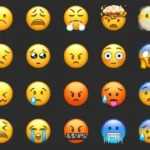
Internet Meme
Memes have become the heartbeat of Internet culture, shaping how we communicate, laugh, and even think online. From quirky image macros to viral TikTok trends, memes are more than just jokes—they’re cultural artifacts that reflect the collective creativity of millions. They evolve at lightning speed, crossing borders and languages, influencing everything from marketing strategies to political movements. In this post, we’ll explore 25 fascinating facts about memes, diving into their origins, impact, and the surprising ways they’ve transformed digital life. Whether you’re a casual scroller or a meme connoisseur, these insights will give you a deeper appreciation for the humor-driven phenomenon that dominates the web.
1. Origin of the Term
The concept of a “meme” predates the Internet by decades. Richard Dawkins introduced the term in his 1976 book The Selfish Gene to describe cultural ideas that spread and evolve similarly to biological genes. Dawkins envisioned memes as units of cultural transmission—songs, catchphrases, fashion trends—that replicate through imitation. When the Internet emerged, this concept found a perfect home in digital culture. Mike Godwin coined the phrase “Internet meme” in 1993, recognizing that online jokes and ideas spread rapidly across networks. This evolution from a biological metaphor to a cornerstone of Internet culture highlights how human creativity adapts to new technologies, turning memes into a defining feature of the digital age.
2. First Internet Meme
The Dancing Baby, also known as “Baby Cha-Cha-Cha,” is widely considered the first viral Internet meme. Created in 1996 as a 3D animation demo, it featured a baby dancing to upbeat music. Initially shared via email and early websites, the animation became a sensation, appearing on TV shows like Ally McBeal. Its popularity demonstrated the Internet’s potential for spreading quirky, humorous content globally. The Dancing Baby paved the way for countless memes, proving that digital culture could transcend traditional media and create phenomena that millions would recognize.
3. Memes as Cultural Units
Memes are more than jokes—they are cultural units that replicate and evolve through imitation. Just as genes pass biological traits, memes transmit ideas, humor, and social commentary. Online, this replication happens at lightning speed, with memes mutating as users remix images, add captions, and adapt them to new contexts. This evolutionary process explains why memes can start as niche jokes and become global phenomena. They reflect collective creativity, serving as snapshots of cultural trends and shared experiences in the digital era.
4. Image Macros
The image macro is the quintessential meme format, combining a picture with bold, often white text in Impact font. This style became iconic in the early 2000s on sites like 4chan and Reddit. Memes like Advice Animals—including classics like “Bad Luck Brian” and “Success Kid”—used this format to deliver punchy, relatable humor. The simplicity of image macros made them easy to create and share, fueling their dominance in early meme culture. Even today, this format remains popular, though modern memes often experiment with typography and design.
5. Viral Spread
Memes spread virally because they tap into humor, relatability, and cultural relevance. Platforms like Twitter, Instagram, TikTok, and Reddit amplify this process, allowing memes to reach millions within hours. A single tweet or TikTok can spark a global trend, as seen with memes like Distracted Boyfriend or Woman Yelling at a Cat. This virality reflects the Internet’s networked nature, where content thrives on sharing and remixing. Memes are not just entertainment—they are social signals, shaping conversations and influencing how people engage online.
6. Rickrolling
Rickrolling is one of the most enduring memes in Internet history. The prank involves tricking someone into clicking a link that unexpectedly leads to Rick Astley’s 1987 hit “Never Gonna Give You Up.” Originating in 2007 on 4chan, Rickrolling quickly spread across forums, social media, and even real-world events. Its appeal lies in its harmless humor and nostalgic charm. Over time, Rickrolling became a cultural icon, referenced in TV shows, political campaigns, and even by Rick Astley himself, who embraced the meme and performed at events celebrating its legacy.
7. Doge
The Doge meme, featuring a Shiba Inu dog surrounded by multicolored Comic Sans captions like “such wow” and “very amaze,” exploded in popularity around 2013. Its quirky grammar and playful tone captured the absurdist humor of Internet culture. Doge’s influence extended beyond memes—it inspired Dogecoin, a cryptocurrency that started as a joke but grew into a multi-billion-dollar market. This phenomenon illustrates how memes can transcend entertainment, impacting economics and technology in unexpected ways.
8. Memes and Politics
Memes have become powerful tools in political discourse. Campaigns and activists use memes to spread messages quickly and engage younger audiences. During elections, memes like Bernie Sanders’ mittens or Obama’s “Hope” poster adaptations dominate social media, shaping narratives and influencing public opinion. Memes simplify complex issues into digestible, shareable content, making them effective for persuasion and mobilization. However, this power also raises concerns about misinformation and polarization, as memes can distort facts while spreading virally.
9. Meme Lifespan
Most memes have a short lifespan, peaking in popularity for days or weeks before fading. This rapid turnover reflects the Internet’s fast-paced culture, where trends evolve constantly. However, some memes achieve evergreen status, resurfacing years later in new contexts. For example, Pepe the Frog began as a harmless comic character but evolved into countless variations, some controversial. The lifecycle of memes mirrors cultural shifts, with old memes often revived as nostalgic callbacks or ironic humor.
10. Meme Templates
Meme templates like Distracted Boyfriend, Drakeposting, and Expanding Brain provide a flexible framework for creativity. Users adapt these templates to countless scenarios, inserting new captions or images to fit current events or personal jokes. This adaptability fuels meme longevity, as templates evolve with cultural trends. Platforms like Imgflip and Reddit’s r/MemeTemplates offer libraries of popular formats, making meme creation accessible to anyone with an idea and a sense of humor.
11. Memes and Marketing
Memes have become a cornerstone of modern marketing strategies, especially for brands targeting younger audiences. Companies leverage memes because they are relatable, humorous, and highly shareable, making them perfect for viral campaigns. For example, fast-food chains like Wendy’s and Taco Bell frequently use meme formats on Twitter to engage customers in a playful tone. Memes allow brands to humanize themselves, creating a sense of community and cultural relevance. However, successful meme marketing requires authenticity—forced or outdated memes can backfire, making brands appear disconnected from their audience. This trend illustrates how memes have evolved from grassroots humor to powerful tools in digital advertising.
12. Evolution of Memes
Memes are not static; they evolve rapidly, often mutating into new forms as users remix and reinterpret them. A meme that starts as a simple joke can spawn countless variations, each reflecting different cultural contexts or inside jokes. For instance, the Distracted Boyfriend meme began as a commentary on relationships but quickly expanded to represent everything from consumer choices to political allegiances. This adaptability is a hallmark of meme culture, allowing old formats to stay relevant by adopting new meanings. The evolution of memes mirrors the dynamic nature of Internet culture, where creativity thrives on collaboration and reinvention.
13. Memes in Academia
Far from being trivial, memes have attracted serious academic attention. Scholars in fields like linguistics, sociology, and media studies analyze memes as forms of digital communication and cultural transmission. Memes offer insights into collective behavior, humor theory, and the role of technology in shaping discourse. Research explores how memes function as rhetorical devices, influencing public opinion and reinforcing social norms. Academic studies also examine meme lifecycles, tracing how they spread, mutate, and fade. This scholarly interest underscores the significance of memes as cultural artifacts, worthy of study alongside traditional forms of art and literature.
14. Memes and Copyright
The legal status of memes is complex because many use copyrighted images, music, or video clips. While memes often fall under fair use due to their transformative nature and parody elements, the boundaries are not always clear. For example, using a celebrity photo in a meme could raise intellectual property concerns if it’s exploited commercially. Platforms like YouTube and Instagram sometimes remove meme content for copyright violations, sparking debates about creative freedom in digital spaces. This tension highlights the need for clearer guidelines that balance copyright protection with the cultural value of memes as participatory media.
15. Meme Subcultures
Different online communities have distinct meme cultures, creating niche formats that sometimes go mainstream. Sites like Reddit, 4chan, and Tumblr are breeding grounds for unique memes that reflect their users’ humor and values. For example, 4chan’s Pepe the Frog evolved from a harmless comic character into a symbol with controversial political associations, while Tumblr memes often feature surreal, text-heavy humor. These subcultures influence broader Internet trends, demonstrating how memes can serve as markers of identity and belonging. Understanding these communities is key to decoding the deeper meanings behind certain memes.
16. Memes as Language
Memes have evolved into a unique form of visual language, capable of conveying complex ideas through humor, symbolism, and shared cultural references. Unlike traditional text-based communication, memes rely on images, captions, and context to deliver meaning instantly. For example, a meme like Expanding Brain can express nuanced opinions about intelligence or creativity without a single explanatory sentence. This visual shorthand thrives in digital spaces where attention spans are short, and humor is a universal connector. Memes often incorporate irony, sarcasm, and layered meanings, making them powerful tools for social commentary. Their ability to transcend linguistic barriers further cements their role as a global language of the Internet.
17. Memes and Generations
Different generations interpret and create memes in distinct ways, reflecting their cultural experiences and humor styles. Early memes like Advice Animals catered to Millennials, featuring straightforward jokes and relatable scenarios. In contrast, Gen Z memes often embrace absurdist humor, surreal imagery, and anti-jokes, as seen in trends like Deep-Fried Memes or Shrek is Love. These generational differences highlight how memes adapt to shifting cultural norms and technological platforms. Understanding these variations is crucial for marketers, educators, and researchers seeking to engage diverse audiences in the digital age.
18. Memes and Mental Health
Memes have emerged as unexpected tools for mental health support, offering comic relief and a sense of community during stressful times. During global crises like the COVID-19 pandemic, memes provided a coping mechanism, allowing people to share humor about lockdowns, remote work, and social distancing. This collective laughter fosters resilience, helping individuals process anxiety and uncertainty. However, not all mental health memes are positive—some perpetuate harmful stereotypes or trivialize serious conditions. Researchers are studying the psychological impact of memes, exploring how they can promote well-being while avoiding negative consequences.
19. Memes in Music
Memes have profoundly influenced music trends, with viral TikTok memes propelling songs to global fame. Tracks like “Old Town Road” by Lil Nas X and “Savage Love” by Jawsh 685 became chart-toppers largely due to meme-driven dance challenges and remixes. Memes also revive older songs, as seen with Fleetwood Mac’s “Dreams”, which surged in popularity after a TikTok video featuring a man skateboarding while drinking cranberry juice went viral. This phenomenon underscores the symbiotic relationship between memes and music, where humor and creativity drive cultural consumption.
20. Memes and AI
Artificial intelligence has entered the meme-making arena, generating endless variations at lightning speed. AI-powered tools like Imgflip’s Meme Generator and advanced models can create captions, remix templates, and even invent new formats. This automation accelerates meme culture, enabling rapid responses to trending topics. While AI-generated memes raise questions about originality and authenticity, they also democratize creativity, allowing anyone to participate in meme-making without design skills. As AI evolves, it may blur the line between human humor and machine-generated content, reshaping the future of digital expression.
21. Not Related to Dark Matter
Although dark energy and dark matter are often mentioned together, they are fundamentally different phenomena. Dark matter is a form of matter that exerts gravitational attraction, helping galaxies hold together and influencing their rotation curves. It clumps like ordinary matter but does not interact with light, making it invisible except through gravity. Dark energy, on the other hand, does the opposite—it drives the accelerated expansion of the universe by exerting a repulsive effect. While dark matter explains the structure and stability of galaxies, dark energy explains the large-scale dynamics of cosmic expansion. Their combined dominance—95% of the universe—underscores how little we understand about the cosmos.
22. Measurement Challenges
Studying dark energy requires extremely precise measurements of cosmic distances and expansion rates, which is one of the hardest tasks in observational astronomy. Astronomers rely on “standard candles” like Type Ia supernovae and “standard rulers” like baryon acoustic oscillations to gauge distances across billions of light-years. Even small errors in brightness or redshift measurements can lead to significant uncertainties in dark energy models. To overcome these challenges, scientists use massive datasets from galaxy surveys and advanced statistical techniques, but the complexity of these measurements means that every new observation brings both answers and more questions.
23. Possible Dynamic Nature
While the cosmological constant assumes dark energy is constant over time, some theories propose that it could be dynamic, changing as the universe evolves. This idea is often associated with quintessence, a hypothetical scalar field that varies in strength over cosmic history. If dark energy is dynamic, it could explain certain anomalies in observational data and offer clues about the fundamental forces of nature. Detecting such changes would require extremely precise measurements of the expansion rate at different epochs, a goal that future missions like Euclid and the Roman Space Telescope aim to achieve.
24. Influence on Cosmic Microwave Background
Dark energy affects the geometry of the universe, which in turn influences the patterns observed in the cosmic microwave background (CMB)—the faint afterglow of the Big Bang. By studying tiny temperature fluctuations in the CMB, scientists can infer the curvature of space and the relative contributions of matter, dark matter, and dark energy. Observations from missions like WMAP and Planck have confirmed that the universe is nearly flat, a result that strongly supports the existence of dark energy. These measurements provide an independent line of evidence, complementing supernova and galaxy survey data.
25. Still a Mystery
Despite decades of research and countless observations, dark energy remains one of the greatest unsolved problems in physics. We know it exists because of its effects on cosmic expansion, but its nature, origin, and connection to fundamental physics are still unknown. Is it a property of space, a dynamic field, or something entirely different? Could it point to new physics beyond Einstein’s general relativity? These questions drive some of the most ambitious scientific projects of our time, making dark energy not just a mystery, but a frontier—a challenge that could redefine our understanding of the universe.
Frequently Asked Questions About Memes
1. What is a meme?
A meme is a cultural unit—an idea, joke, image, video, or phrase—that spreads rapidly online, often in a humorous or relatable way. Originally coined by Richard Dawkins in his 1976 book The Selfish Gene, the term described how cultural ideas replicate like genes. Today, memes are primarily associated with Internet culture, serving as a form of visual shorthand for communication. [socialmedi…-tutor.com]
2. How did memes originate?
The concept of memes began as an academic idea in evolutionary biology, but Internet memes emerged in the late 1990s. One of the earliest viral examples was the Dancing Baby animation (1996), which spread via email and early websites. Since then, memes have evolved into a dominant form of digital expression. [facts.net]
3. Why are memes so popular?
Memes thrive because they are relatable, easy to share, and often humorous. They tap into cultural trends, emotions, and inside jokes, making them instantly recognizable. Social media platforms like Twitter, Instagram, TikTok, and Reddit amplify their reach, allowing memes to go viral within hours. [poeticmessages.com]
4. What makes a meme go viral?
A viral meme typically combines a strong visual element with a relatable or funny caption. It must be easy to remix and share, often tied to trending topics or universal experiences. Timing and platform algorithms also play a big role in boosting visibility. [socialmedi…-tutor.com]
5. Are memes only funny pictures?
No. Memes can be images, videos, GIFs, hashtags, or even text-based jokes. They often convey humor, but they can also express political opinions, social commentary, or emotional support. Memes have become a versatile communication tool in digital culture. [ohmyfacts.com]
6. How do memes influence society?
Memes shape online conversations, influence public opinion, and even impact politics. They simplify complex ideas into digestible visuals, making them powerful tools for activism, marketing, and cultural commentary. [poeticmessages.com]
7. What are the most popular meme formats?
Classic formats include:
- Image Macros (e.g., Success Kid, Bad Luck Brian)
- Reaction GIFs
- Distracted Boyfriend
- Drakeposting
- Deep-Fried Memes These templates allow endless remixing and adaptation. [facts.net]
8. How do memes evolve?
Memes mutate as users remix them with new captions, images, or contexts. A single meme can spawn hundreds of variations, reflecting cultural shifts and current events. This adaptability keeps memes relevant and fresh. [socialmedi…-tutor.com]
9. Are memes studied academically?
Yes. Memes are analyzed in fields like linguistics, sociology, and media studies. Scholars examine their role in digital communication, cultural transmission, and social influence. The study of memes, called memetics, explores how ideas spread and evolve online. [en.wikipedia.org]
10. Do memes have legal issues?
Many memes use copyrighted material, raising questions about fair use. While most memes qualify as transformative works, commercial use can lead to copyright disputes. Platforms sometimes remove meme content for infringement. [ohmyfacts.com]
11. How do brands use memes?
Brands leverage memes for marketing because they are relatable and shareable. Successful campaigns use humor and cultural relevance to engage audiences. However, forced or outdated memes can harm a brand’s image. [ohmyfacts.com]
12. Are memes the same across cultures?
No. Memes often adapt to local languages, humor styles, and cultural references. Global memes like Doge or Rickrolling transcend borders, but many remain niche within specific communities. [poeticmessages.com]
13. Do memes affect language?
Yes. Memes introduce slang and phrases like “LOL,” “YOLO,” and “FOMO” into everyday speech. They influence how people communicate online and offline, shaping modern language trends. [facts.net]
14. Can memes impact mental health?
Memes can provide comic relief and foster community, helping people cope with stress. However, some memes perpetuate harmful stereotypes or trivialize serious issues, so their impact can be both positive and negative. [poeticmessages.com]
15. What is the future of memes?
Memes are evolving with technology. AI-generated memes and augmented reality formats are emerging, making meme creation faster and more accessible. Memes will likely remain central to digital communication for years to come. [poeticmessages.com]