Ultramarine Flycatcher
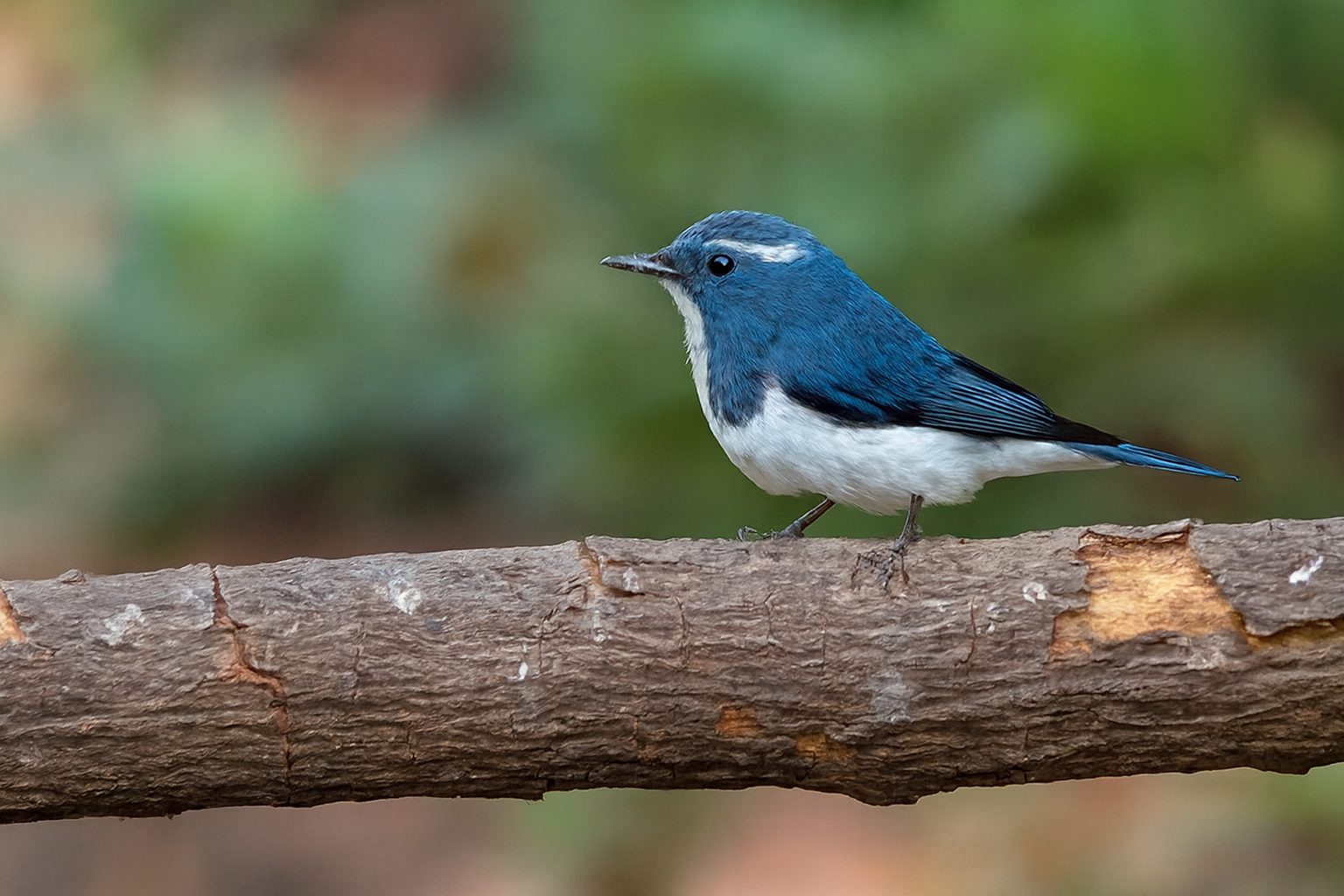
The ultramarine flycatcher (Ficedula superciliaris), also known as the white-browed blue flycatcher, is one of the most striking small birds found across the Himalayas and parts of South Asia. With its vivid ultramarine-blue plumage, contrasting white underparts, and fascinating behavioral traits, this species has captured the attention of ornithologists and bird enthusiasts alike since it was first described in 1840 by Thomas C. Jerdon. From its clinal variations in plumage across different regions to its seasonal migrations from the Himalayan breeding grounds to central and southern India, the ultramarine flycatcher embodies both beauty and adaptability. In this post, we’ll explore 25 detailed and intriguing facts about this remarkable bird, covering its appearance, habitat, breeding behavior, and ecological role, to give you a deeper appreciation of one of Asia’s most enchanting flycatchers.
1. The ultramarine flycatcher is also known as the white-browed blue flycatcher.
This small bird carries two common names: ultramarine flycatcher and white-browed blue flycatcher, both referencing its striking plumage. The term “ultramarine” highlights the deep blue coloration of the male, while “white-browed” refers to the pale supercilium seen in some subspecies. These names reflect regional variations and the bird’s visual appeal, especially among birdwatchers in South Asia.
2. It belongs to the Ficedula genus within the Muscicapidae family.
The ultramarine flycatcher is part of the Ficedula genus, which includes several small, insectivorous birds known as Old World flycatchers. These birds are members of the Muscicapidae family, a group characterized by agile flight and a diet primarily composed of flying insects. Their evolutionary lineage places them among some of the most efficient aerial hunters in the avian world.
3. The species was first described in 1840 by Thomas C. Jerdon.
British zoologist Thomas C. Jerdon formally described the ultramarine flycatcher in 1840, contributing to the early documentation of India’s rich birdlife. Jerdon’s work laid the foundation for ornithological studies in the region, and his naming of Ficedula superciliaris remains the accepted binomial classification. His legacy continues through the many species he cataloged during his time in colonial India.
4. Males are smaller than a sparrow, measuring around 10 cm.
The male ultramarine flycatcher is notably compact, measuring approximately 10 centimeters in length—smaller than a typical sparrow. Despite its size, it has a stocky build and vibrant plumage that makes it stand out in forested habitats. The deep blue coloration and prominent white belly patch give it a jewel-like appearance in the canopy.
5. The amount of white on the brow and tail shows clinal variation across the Himalayan foothills.
Clinal variation refers to gradual changes in physical traits across a geographic gradient, and in this species, it’s most evident in the white markings. As one moves from west to east along the Himalayan foothills, the extent of white on the brow and tail feathers changes. This variation has led ornithologists to identify distinct subspecies based on regional plumage differences.
6. The western subspecies has a bold white supercilium and white bases on outer tail feathers.
Birds from the western Himalayas exhibit a pronounced white eyebrow (supercilium) and white patches at the base of their outer tail feathers. These features make them visually distinct from their eastern counterparts and aid in field identification. The contrast between deep blue and white is especially striking in males during the breeding season.
7. The eastern subspecies (Ficedula superciliaris aestigma) lacks these white patches.
In contrast, the eastern subspecies known as Ficedula superciliaris aestigma shows reduced or absent white markings. These birds tend to have more uniform blue plumage and lack the bold supercilium seen in western populations. This divergence illustrates how geographic isolation can lead to subtle but consistent morphological differences.
8. A possible third subspecies (cleta) from the south Assam hills lacks any supercilium entirely.
Some ornithologists propose a third subspecies, cleta, found in the south Assam hills, which lacks a supercilium altogether. However, this classification remains debated due to limited data and overlapping traits with other populations. If confirmed, it would further underscore the species’ adaptability and regional diversity.
9. These birds are usually seen singly but may join mixed hunting parties during winter.
Ultramarine flycatchers are typically solitary, especially during the breeding season, but they sometimes join mixed-species foraging flocks in winter. These flocks include other insectivorous birds and allow for more efficient hunting and predator avoidance. Such behavior reflects the bird’s flexibility in social structure depending on seasonal conditions.
10. They prefer low trees and bushes, feeding among the foliage canopy.
Their foraging behavior is concentrated in the lower canopy and understory, where they hunt for insects among leaves and branches. They rarely venture into open areas, preferring the cover of foliage for both feeding and protection. This habitat preference makes them more challenging to spot, despite their vibrant coloration.
11. The ultramarine flycatcher often jerks its tail and fluffs its head feathers near its nest.
One of its characteristic behaviors includes tail jerking and head feather fluffing, especially when near its nesting site. These movements are often accompanied by a sharp “trrr” call, which may serve as a territorial or alarm signal. Such displays are useful for identifying the species in the wild, even when visual confirmation is difficult.
12. Their diet consists mainly of insects.
As insectivores, ultramarine flycatchers play a vital role in controlling forest insect populations. They catch prey mid-air or glean it from foliage, using their agility and keen eyesight. Their diet includes flies, beetles, caterpillars, and other small arthropods, contributing to ecosystem balance.
13. In summer, they breed in the western Himalayas from Jammu and Kashmir to Uttarakhand.
During the breeding season, ultramarine flycatchers are found in the western Himalayan regions, including Jammu and Kashmir, Himachal Pradesh, and Uttarakhand. These areas offer suitable elevations and forest types for nesting and raising young. In Nepal, they intergrade with eastern populations, creating a zone of overlap and genetic mixing.
14. Breeding occurs at elevations between 2000 and 2700 meters, but can range from 1800 to 3200 meters.
Their preferred breeding elevation is between 2000 and 2700 meters, though they have been recorded as low as 1800 meters and as high as 3200 meters. This altitudinal flexibility allows them to exploit a range of forest habitats, from temperate broadleaf to coniferous zones. Elevation also influences temperature, vegetation, and insect availability—all critical for breeding success.
15. They are also found in the Khasi and Cachar hills of Meghalaya and Nagaland.
Beyond the Himalayas, populations exist in the Khasi and Cachar hills of Meghalaya and parts of Nagaland. These northeastern regions offer similar forest conditions and elevation ranges, supporting breeding and foraging. However, the winter movements of these populations remain poorly understood, suggesting a need for further research.
16. Preferred summer habitats include open mixed forests of oak, rhododendron, pine, fir, and orchards.
During summer, ultramarine flycatchers favor open mixed forests composed of oak, rhododendron, pine, and fir. They are also found in cultivated orchards, showing some tolerance for human-modified landscapes. These habitats provide nesting sites, insect prey, and cover from predators.
17. In winter, they migrate to central and southern India, including Delhi, Maharashtra, Goa, Andhra Pradesh, and Odisha.
As temperatures drop in the Himalayas, these birds migrate to warmer regions in central and southern India. Wintering sites include Delhi, Maharashtra, Goa, Andhra Pradesh, and Odisha, where they inhabit gardens, wooded parks, and forest edges. This seasonal migration ensures access to food and suitable climate conditions.
18. Some wintering populations in eastern India retain the white supercilium and tail patches.
Interestingly, some birds wintering in eastern India still display the white supercilium and tail patches typical of western subspecies. This suggests either mixed ancestry or long-distance migration from western breeding grounds. Such observations highlight the complexity of flycatcher population dynamics.
19. Occasionally, the ultramarine flycatcher appears as a vagrant in northern Bangladesh.
Though not commonly found there, ultramarine flycatchers have been recorded as vagrants in northern Bangladesh. These rare sightings indicate the species’ ability to disperse beyond its typical range, possibly due to weather events or habitat shifts. Vagrancy adds to the intrigue of tracking migratory patterns.
20. Nesting season runs from mid-April to early July.
The breeding season spans mid-April to early July, aligning with peak insect abundance and favorable weather. This timing ensures optimal conditions for feeding chicks and minimizing exposure to harsh climate. Nesting activity is most intense during May and June, when territorial behavior and vocalizations increase.
21. Nests are made of fine moss, bark strips, and grass, placed in tree holes or steep banks up to seven meters high.
Ultramarine flycatchers construct nests using fine moss, bark strips, and grass, lining them with hair and rootlets for insulation. These nests are typically placed in tree cavities or on steep banks, sometimes as high as seven meters above ground. The choice of location offers protection from predators and environmental stress.
22. They readily accept nest boxes in hill station gardens.
In areas like hill stations, these birds have adapted to artificial nesting sites, readily using nest boxes provided by bird enthusiasts. This behavior makes them accessible for observation and conservation efforts. It also demonstrates their adaptability to semi-urban environments with suitable habitat features.
23. Clutches typically contain 3 to 5 eggs, most often 4.
The ultramarine flycatcher lays between 3 and 5 eggs per clutch, with 4 being the most common number observed. This clutch size is typical for small passerines, balancing reproductive output with the parents’ ability to feed and protect their chicks. By synchronizing egg-laying with peak insect availability, the species maximizes chick survival rates during the breeding season.
24. Egg size averages 16 x 12.2 mm.
The eggs of the ultramarine flycatcher are relatively small, averaging 16 millimeters in length and 12.2 millimeters in width. Their coloration is olive greenish or dull stone-buff, often speckled with reddish-brown freckles, which helps camouflage them against the nest lining. These precise measurements are useful for ornithologists in identifying nests and distinguishing them from similar flycatcher species.
25. Foraging behavior shows a preference for indirect cues over direct ones when assessing risk.
Studies of ultramarine flycatcher foraging behavior reveal that they rely more on indirect cues, such as environmental signals or the behavior of other birds, rather than direct observation of predators. This strategy allows them to balance feeding efficiency with safety, especially in dense forest habitats where visibility is limited. Such complex decision-making highlights the species’ adaptability and cognitive sophistication in navigating ecological challenges.
🐦 Ultramarine Flycatcher FAQs
1. What is the Ultramarine Flycatcher?
The ultramarine flycatcher, also known as the white-browed blue flycatcher, is a small arboreal bird in the genus Ficedula and family Muscicapidae. Males are strikingly deep blue with a white throat-to-belly patch, while females are dull gray-brown with paler underparts. It was first described in 1840 by Thomas C. Jerdon and remains a favorite among birdwatchers for its vivid plumage.
2. Where is the Ultramarine Flycatcher found?
Its breeding range extends from eastern Afghanistan to the Hengduan Mountains in China, covering much of the western and central Himalayas. In winter, it migrates to India and northwestern Indochina, descending into lower foothills and plains. Some populations in Northeast India are resident year-round and do not migrate.
3. How big is the Ultramarine Flycatcher?
The bird is smaller than a sparrow, measuring about 10 cm in length. Despite its small size, it has a stocky build and a bold appearance thanks to its contrasting plumage. This compact size makes it agile in catching insects among foliage.
4. What does the male look like compared to the female?
Adult males are incandescently blue with snowy white underparts, while females are dull gray-brown with paler bellies. Males may be confused with the Himalayan Bluetail but lack orange coloration. Females resemble Slaty-blue and Little Pied Flycatchers but lack rufous tones on the tail.
5. Are there subspecies of the Ultramarine Flycatcher?
Yes, there are recognized subspecies showing clinal variation in plumage. Western males have a bold white eyebrow (supercilium) and white bases on outer tail feathers, while eastern populations lack these markings. A possible third subspecies from the south Assam hills lacks a supercilium entirely, though its classification is debated.
6. What kind of habitat does it prefer?
During summer, it breeds in montane broadleaf and pine forests at elevations between 1800 and 3200 meters, often in oak, rhododendron, and fir forests. In winter, it descends into lower foothills, orchards, woodlands, and even urban parks. This adaptability allows it to thrive in both natural and semi-urban environments.
7. What is its conservation status?
The ultramarine flycatcher is listed as Least Concern (IUCN 3.1). Its wide distribution and stable population trends mean it is not currently threatened. However, habitat loss in the Himalayas and deforestation in wintering grounds could pose future risks.
8. What does the Ultramarine Flycatcher eat?
Its diet consists mainly of insects, which it catches mid-air or gleans from foliage. This insectivorous behavior makes it an important part of forest ecosystems, helping control pest populations. It often joins mixed-species foraging flocks in winter to maximize feeding efficiency.
9. What are its nesting habits?
Nesting occurs from mid-April to early July, with nests built from moss, bark strips, and grass, lined with hair and rootlets. Nests are placed in tree holes or steep banks up to seven meters high. The species readily accepts nest boxes in hill station gardens, making it accessible for conservation and observation.
10. How many eggs does it lay?
Clutches typically contain 3 to 5 eggs, most often 4, with an average size of 16 x 12.2 mm. Eggs are olive greenish or dull stone-buff with reddish-brown freckles, camouflaging them against the nest lining. This clutch size is typical for small passerines, balancing reproductive effort with parental care.
11. What are its calls and songs like?
The ultramarine flycatcher’s song is rarely heard but consists of a complex series of whistles and chatters. More commonly, it produces a sharp call note, often described as a “trrr” sound, especially near its nest. These vocalizations help with territory defense and communication.