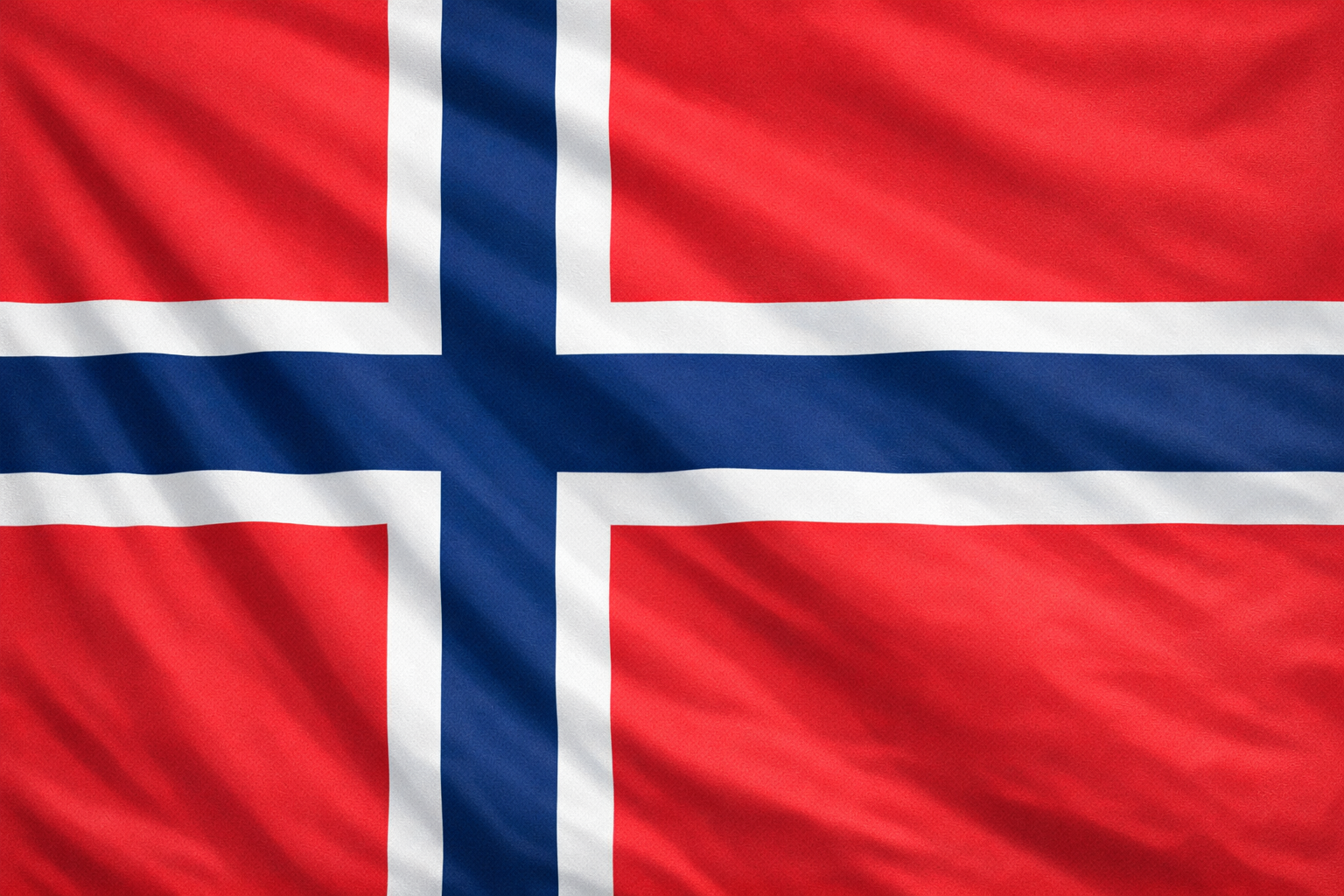
Norwegian-Flag
Norway, the land of fjords, Vikings, and breathtaking natural beauty, is a country that seamlessly blends ancient traditions with modern prosperity. From its dramatic coastline and Arctic wilderness to its pioneering role in renewable energy and social welfare, Norway offers a wealth of fascinating stories that go far beyond its postcard-perfect scenery. In this article, we’ll uncover 25 interesting facts about Norway—spanning history, culture, geography, and economics—that reveal why this Nordic nation continues to captivate the world.
Fact 1: Officially the Kingdom of Norway
Norway is formally known as the Kingdom of Norway, reflecting its status as a constitutional monarchy. This system blends democratic governance with a ceremonial monarchy, where the king serves as a symbolic head of state while political power rests with elected officials. The monarchy is deeply rooted in Norway’s history, tracing back to Viking chieftains and medieval kings, yet it has evolved into a modern institution that emphasizes continuity and national identity. Today, King Harald V embodies this tradition, representing Norway at home and abroad, while the government operates under parliamentary democracy. This dual structure highlights Norway’s ability to balance heritage with modern governance.
Fact 2: Oslo as the Capital and Largest City
Oslo, Norway’s capital, is not only the political center but also the cultural and economic heart of the nation. Located at the head of the Oslofjord, the city combines natural beauty with urban sophistication. It houses the Storting (parliament), the royal palace, and major museums like the Viking Ship Museum and the Munch Museum. Oslo is also a hub for innovation, sustainability, and architecture, often ranking among the world’s most livable cities. Its blend of fjord-side scenery, modern design, and historical landmarks makes it a microcosm of Norway’s identity—progressive yet deeply tied to its past.
Fact 3: A Population of About 5.6 Million
Norway’s population of roughly 5.6 million is relatively small compared to its vast land area, resulting in one of Europe’s lowest population densities. Most Norwegians live along the coast, where fjords and fertile valleys provide habitable land, while the interior and northern regions remain sparsely populated. This demographic distribution reflects the challenges of living in a country dominated by mountains, forests, and Arctic conditions. Despite its size, Norway has built a strong welfare state, ensuring high living standards for all citizens. The small population also fosters a sense of community and national cohesion, reinforcing Norway’s reputation as one of the happiest countries in the world.
Fact 4: Fjords and Rugged Coastline
Norway’s coastline is legendary, stretching over 25,000 kilometers when including islands and fjords. Fjords—deep, glacially carved inlets surrounded by towering cliffs—are among the country’s most iconic natural features. Famous fjords like Geirangerfjord and Sognefjord attract millions of tourists annually, offering breathtaking scenery and opportunities for hiking, boating, and photography. These landscapes are not only visually stunning but also historically significant, serving as natural harbors for Viking ships and modern fishing fleets. The rugged coastline has shaped Norwegian culture, economy, and identity, making the sea an inseparable part of life.
Fact 5: Borders with Sweden, Finland, and Russia
Norway shares land borders with Sweden, Finland, and Russia, reflecting its strategic position in Northern Europe. The border with Sweden is the longest, stretching over 1,600 kilometers, while the shorter borders with Finland and Russia connect Norway to the Arctic frontier. These borders have historically influenced trade, migration, and diplomacy. Norway’s relationship with Sweden has evolved from centuries of union and rivalry to modern cooperation, while its border with Russia highlights geopolitical tensions in the Arctic. The country’s location at the crossroads of Scandinavia and the Arctic underscores its importance in regional and global affairs.
Fact 6: The Viking Age Explorations
During the Viking Age (8th–11th centuries), Norwegian seafarers became renowned for their exploration and conquest. They sailed westward to Iceland, Greenland, and even North America, establishing settlements and trading networks. The Norse sagas recount voyages to Vinland, believed to be parts of modern-day Canada, making Norwegians among the first Europeans to reach the Americas. These explorations were driven by a combination of adventure, trade, and resource scarcity at home. The Viking legacy remains central to Norway’s identity, celebrated in museums, festivals, and cultural narratives that emphasize courage, innovation, and maritime skill.
Fact 7: Harald Fairhair’s Unification of Norway
Harald Fairhair, a legendary Viking king, is credited with unifying Norway around 872 CE after the Battle of Hafrsfjord. According to sagas, Harald vowed not to cut his hair until he had consolidated power, earning his epithet “Fairhair” once he achieved victory. His unification marked the beginning of Norway as a cohesive kingdom, laying the foundation for centralized rule. While historians debate the accuracy of these accounts, Harald’s story symbolizes the transition from fragmented chieftaincies to a unified nation. His legacy endures in Norwegian folklore and national pride, representing the origins of statehood.
Fact 8: The Black Death’s Devastation
The Black Death struck Norway in 1349, killing up to 60% of the population. This catastrophic loss reshaped society, leaving vast areas depopulated and weakening the nobility. Farms were abandoned, and economic activity collapsed, plunging Norway into decline. The demographic devastation also made Norway more vulnerable to foreign influence, eventually leading to its union with Denmark. The Black Death’s impact is still remembered in Norwegian history as a turning point, illustrating how pandemics can alter the trajectory of nations. It remains one of the darkest chapters in Norway’s past.
Fact 9: Norway in the Kalmar Union
In 1397, Norway joined the Kalmar Union, a political alliance with Denmark and Sweden under a single monarch. While intended to strengthen Scandinavian unity, the union ultimately led to Danish dominance over Norway. For centuries, Norway was governed from Copenhagen, losing much of its autonomy. This period shaped Norwegian culture and politics, embedding Danish influence in language, law, and administration. The union’s legacy is complex—while it provided stability, it also suppressed Norway’s independence. The experience fueled later nationalist movements that sought to reclaim sovereignty.
Fact 10: Independence and Constitution of 1814
In 1814, Norway declared independence from Denmark and adopted a constitution at Eidsvoll, one of the oldest still in use today. Although Norway was soon forced into a union with Sweden, the constitution remained a symbol of national identity and self-determination. It established democratic principles, including separation of powers and civil rights, laying the groundwork for modern governance. The events of 1814 are celebrated annually on May 17, Norway’s National Day, reflecting the enduring importance of constitutional independence in the nation’s history.
Fact 11: Full Independence in 1905
Norway achieved full independence in 1905 after peacefully dissolving its union with Sweden. This event marked a turning point in Norwegian history, as the nation finally reclaimed sovereignty after centuries of foreign domination. The dissolution was remarkably peaceful, achieved through diplomacy rather than war, and it set the tone for Norway’s modern identity as a nation that values negotiation and stability. The people overwhelmingly supported independence in a referendum, and Prince Carl of Denmark was invited to become King Haakon VII, symbolizing continuity and legitimacy. This moment remains a source of pride, celebrated as the rebirth of Norway as a fully independent state.
Fact 12: Nazi Occupation During World War II
In 1940, Nazi Germany invaded Norway, occupying the country until 1945. Despite Norway’s neutrality, its strategic location and access to the North Atlantic made it a target. The occupation brought hardship, censorship, and repression, but it also sparked widespread resistance. Underground movements, sabotage operations, and the bravery of ordinary citizens became defining features of this period. The occupation left lasting scars but also strengthened Norway’s commitment to democracy and freedom. The memory of resistance continues to inspire national narratives of resilience and courage.
Fact 13: Resistance and Merchant Fleet Contributions
Norway’s resistance movement played a vital role in undermining Nazi control, conducting sabotage missions against infrastructure and supply lines. Meanwhile, the Norwegian merchant fleet, one of the largest in the world, was commandeered by the Allies and became crucial in transporting supplies across dangerous waters. These contributions were disproportionately significant given Norway’s size, highlighting the nation’s determination to fight for freedom. The fleet’s sacrifices are commemorated as a cornerstone of Norway’s wartime legacy, demonstrating how a small country can make a big impact in global conflict.
Fact 14: Oil and Gas Discoveries in the 1960s
The discovery of oil and natural gas in the North Sea during the 1960s transformed Norway’s economy. Once a relatively poor nation reliant on fishing and agriculture, Norway rapidly became one of the wealthiest countries in the world. The petroleum industry now accounts for a significant portion of exports and government revenue. Unlike many resource-rich nations, Norway managed its wealth prudently, investing in infrastructure, welfare, and long-term savings. This discovery reshaped Norway’s global role, turning it into an energy powerhouse while also sparking debates about sustainability and climate responsibility.
Fact 15: The Sovereign Wealth Fund
Norway established the Government Pension Fund Global, often called the “oil fund,” to manage its petroleum revenues. Today, it is the largest sovereign wealth fund in the world, valued at over US$2.1 trillion. The fund invests globally in stocks, bonds, and real estate, ensuring that oil wealth benefits not just current citizens but future generations. Its ethical guidelines prohibit investments in companies involved in human rights abuses or environmental destruction, reflecting Norway’s values. The fund is a model of fiscal responsibility, admired worldwide for balancing prosperity with sustainability.
Fact 16: High Human Development Index
Norway consistently ranks among the highest in the Human Development Index (HDI), reflecting its strong welfare system, universal healthcare, and emphasis on education. Citizens enjoy high life expectancy, low inequality, and robust social protections. This achievement is not accidental but the result of deliberate policies that prioritize well-being over mere economic growth. Norway’s HDI ranking underscores its success in combining wealth with social justice, making it a benchmark for other nations seeking to balance prosperity with equity.
Fact 17: The Norwegian Krone
Norway’s official currency is the Norwegian krone (NOK), symbolizing its independence from the European Union’s euro system. The krone reflects Norway’s cautious approach to integration, allowing it to maintain control over monetary policy while still participating in the European Economic Area. The currency is stable and strong, buoyed by oil revenues and prudent fiscal management. It represents both economic sovereignty and national identity, reinforcing Norway’s preference for autonomy in global affairs.
Fact 18: Bokmål and Nynorsk
Norwegian has two official written forms: Bokmål and Nynorsk. Bokmål, influenced by Danish during centuries of union, is the more widely used, while Nynorsk was developed in the 19th century to reflect rural dialects and assert cultural independence. This dual system embodies Norway’s linguistic diversity and historical struggles for identity. Minority languages like Sámi are also recognized, reflecting the nation’s commitment to preserving indigenous heritage. Language in Norway is not just communication—it is a symbol of history, politics, and cultural pride.
Fact 19: Religion in Norway
The Church of Norway, a Lutheran denomination, is the largest religious body, though secularism is rising, with nearly 27% of Norwegians reporting no religion. Religion historically shaped Norwegian society, influencing laws, traditions, and education. Today, while Christianity remains culturally significant, Norway is increasingly pluralistic, with growing Muslim and other minority communities. This shift reflects broader European trends toward secularism and diversity, highlighting Norway’s evolving identity in a globalized world.
Fact 20: NATO Membership Without EU Membership
Norway is a founding member of NATO, underscoring its commitment to collective security, yet it has chosen not to join the European Union. Instead, it participates in the European Economic Area, granting access to the single market while preserving sovereignty over key policies like fisheries and agriculture. This unique position reflects Norway’s cautious pragmatism—embracing cooperation where beneficial but maintaining independence where vital. It allows Norway to balance integration with autonomy, a hallmark of its foreign policy.
Fact 21: Winter Olympic Dominance
Norway is a powerhouse in winter sports, consistently topping medal tables in the Winter Olympics. Skiing, biathlon, and cross-country events are national passions, rooted in the country’s snowy landscapes and cultural traditions. Athletes like Marit Bjørgen and Ole Einar Bjørndalen have become legends, embodying Norway’s sporting excellence. This dominance is not just about competition—it reflects a lifestyle where outdoor activity and physical fitness are integral to national identity. Winter sports are woven into the fabric of Norwegian culture.
Fact 22: Cultural Icons Grieg and Ibsen
Norway has produced world-renowned cultural figures, including composer Edvard Grieg and playwright Henrik Ibsen. Grieg’s music, inspired by Norwegian folk traditions, brought the nation’s sound to global audiences, while Ibsen’s plays, such as A Doll’s House, challenged social norms and influenced modern drama. These figures symbolize Norway’s contributions to global culture, proving that even a small nation can shape artistic movements. Their legacies continue to inspire pride and creativity in Norway today.
Fact 23: Traditional Cuisine
Norwegian cuisine reflects its geography and climate, emphasizing seafood, game, and dairy. Salmon and cod are staples, exported worldwide, while reindeer meat connects to Sámi traditions. Brunost, or brown cheese, is a uniquely Norwegian delicacy with a caramel-like flavor. Traditional dishes like rakfisk (fermented fish) and lutefisk (dried fish treated with lye) showcase Norway’s resourcefulness in preserving food. Cuisine is both nourishment and cultural expression, linking modern Norwegians to their ancestors’ ingenuity.
Fact 24: National Day on May 17
Norway celebrates its National Day on May 17, commemorating the signing of the constitution in 1814. Known as “Syttende Mai,” the day is marked by parades, flags, and children’s celebrations rather than military displays. It reflects Norway’s emphasis on democracy, community, and joy. The day unites citizens across political and social divides, reinforcing national identity and pride. It is a vibrant expression of Norway’s values, celebrated with enthusiasm both domestically and abroad.
Fact 25: Svalbard and the Global Seed Vault
The Svalbard archipelago, under Norwegian sovereignty, is famous for its Arctic wildlife and unique governance. It also hosts the Global Seed Vault, a secure facility preserving seeds from around the world to safeguard biodiversity against disasters. Svalbard symbolizes Norway’s role as a steward of global heritage, combining environmental responsibility with scientific foresight. Its icy landscapes and polar bears attract adventurers, while the Seed Vault underscores Norway’s commitment to humanity’s future.
❓ Frequently Asked Questions About Norway
1. Do I need a visa to visit Norway?
Norway is part of the Schengen Area, which means travelers from visa-exempt countries such as the US, UK, Canada, and Australia can stay for up to 90 days within a 180-day period without a visa. For longer stays, such as work or study, you’ll need to apply for a residence permit. Always check current requirements before traveling, as rules can change.
2. What is the best time of year to visit Norway?
The ideal time depends on what you want to experience. Summer (June–August) offers long daylight hours, mild temperatures, and is perfect for fjord cruises and hiking. Winter (December–March) is cold and snowy, making it the best season for skiing and seeing the Northern Lights. In the far north, you can witness the Midnight Sun in summer and Polar Nights in winter, both unique natural phenomena.
3. Is Norway expensive to travel or live in?
Yes, Norway is consistently ranked among the most expensive countries in the world. Food, accommodation, and transportation can be costly compared to other destinations. However, wages are high, and residents benefit from strong social welfare systems. Visitors can manage costs by using public transport, staying in budget accommodations, and enjoying Norway’s abundant free natural attractions.
4. What currency does Norway use?
Norway’s official currency is the Norwegian krone (NOK). Credit and debit cards are widely accepted, and mobile payments are common. Cash is rarely needed, even in small towns, making transactions simple and convenient for travelers.
5. Can I see the Northern Lights in Norway?
Yes, Norway is one of the best places in the world to see the Aurora Borealis. The phenomenon is most visible between late September and mid-April, especially in northern regions like Tromsø, Alta, and the Lofoten Islands. Clear skies and minimal light pollution are essential for the best viewing experience.
6. What languages are spoken in Norway?
The official language is Norwegian, which has two written forms: Bokmål and Nynorsk. In northern regions, Sámi is also recognized as an official language. English is widely spoken, especially in cities, so travelers rarely face communication barriers.
7. What is Norwegian culture like?
Norwegians value modesty, punctuality, and respect for nature. The concept of “friluftsliv” (open-air living) is central, encouraging outdoor activities year-round. Social interactions are often reserved, but warm once relationships are established. National pride is expressed through traditions like the May 17 Constitution Day celebrations, skiing, and folk music.
8. Is Norway safe for tourists?
Norway is considered one of the safest countries in the world, with low crime rates and a high level of trust in society. Violent crime is rare, and travelers generally feel secure even in remote areas. The main safety concerns are natural—icy roads in winter, avalanches in mountain regions, and unpredictable weather in the Arctic.
9. What food is Norway known for?
Norwegian cuisine reflects its geography, with seafood playing a central role. Salmon, cod, and herring are staples, while reindeer meat connects to Sámi traditions. A uniquely Norwegian treat is brunost (brown cheese), with its sweet, caramel-like flavor. Traditional dishes like rakfisk (fermented fish) and lutefisk (dried fish treated with lye) showcase Norway’s resourceful food preservation methods.
10. How do I get around Norway?
Norway has excellent public transportation, including trains, buses, and ferries that connect cities and fjords. Driving is also popular, especially for scenic routes like the Atlantic Road, but winter conditions require caution and mandatory snow tires. Domestic flights are common for reaching remote northern areas quickly.