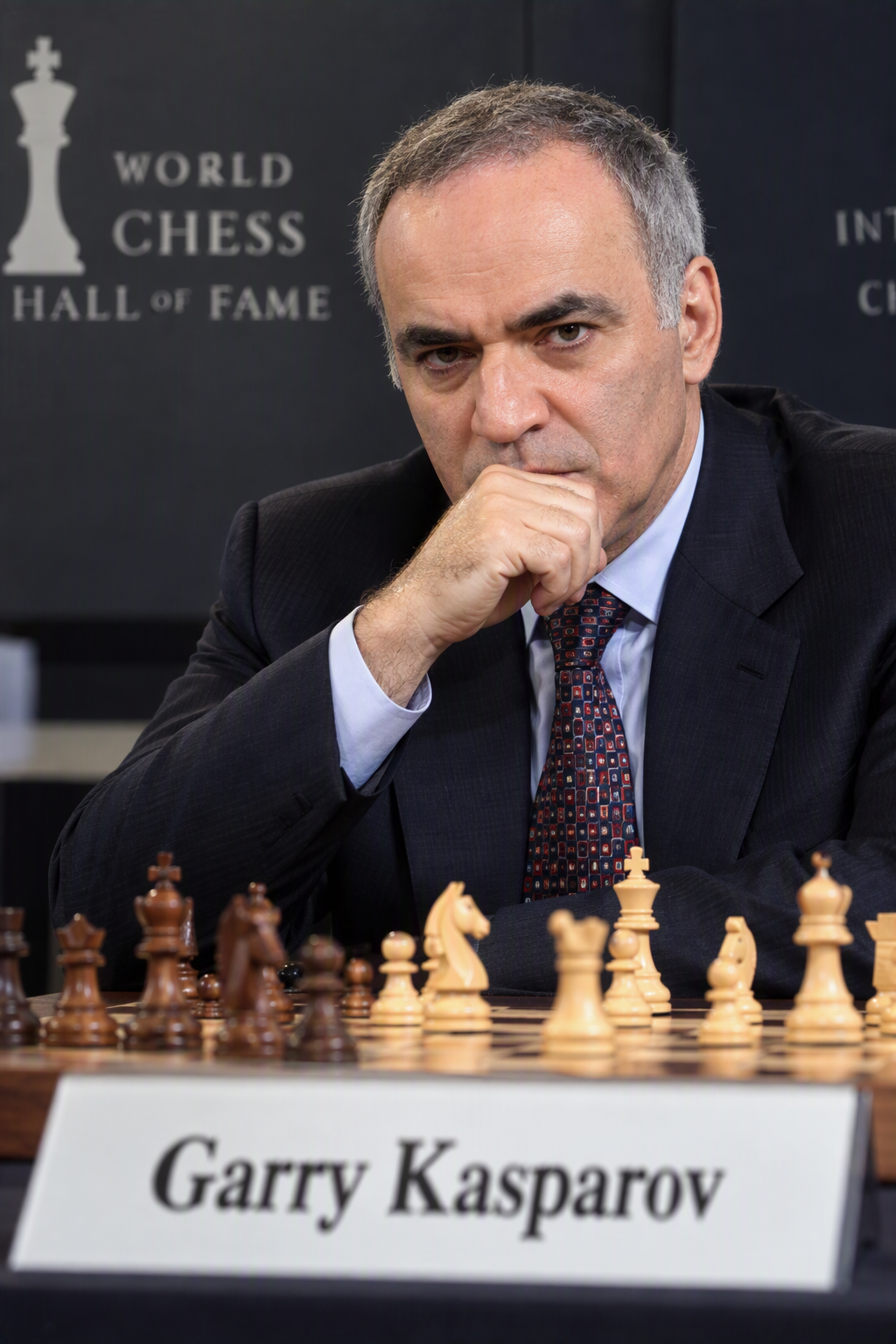
Garry Kasparov
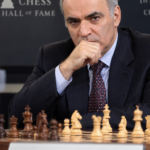
What does it take to become the most dominant chess player of a generation, defeat world champions, redefine how the game is played, and then help shape conversations about technology, politics, and artificial intelligence long after leaving the board? Garry Kasparov is far more than a chess grandmaster. He is a record-breaking champion, a fierce competitor, a strategic thinker, and one of the most influential figures in modern chess history. From becoming the youngest undisputed World Chess Champion at age 22 to battling IBM’s Deep Blue in a landmark man-versus-machine showdown, Kasparov’s life is filled with remarkable achievements, intense rivalries, and fascinating stories that extend far beyond the 64 squares. Here are 25 interesting facts that showcase the extraordinary career and enduring legacy of one of the greatest chess players of all time.
1. Born on 13 April 1963 in Baku, Azerbaijan SSR, Soviet Union
Garry Kasparov was born on 13 April 1963 in Baku, the capital of what was then the Azerbaijan Soviet Socialist Republic, a constituent republic of the Soviet Union. Baku was one of the Soviet Union’s most cosmopolitan cities and a major center of industry and education. Growing up in this multicultural environment exposed Kasparov to a society that valued intellectual achievement and competitive excellence, particularly in chess, which occupied a prestigious position within Soviet culture.
2. Born Garik Kimovich Weinstein
Kasparov was born Garik Kimovich Weinstein. His father, Kim Weinstein, was Jewish, and his family name reflected that heritage. Following his father’s death, his mother encouraged him to adopt a Russianized version of her surname, Kasparyan, which became Kasparov. The change was partly practical, helping him navigate Soviet society, where ethnic identities could sometimes influence opportunities. By the time he rose to international prominence, the name Garry Kasparov had become synonymous with elite chess.
3. Father Jewish, Mother Armenian
Kasparov’s father was Jewish and his mother, Klara Kasparyan, was Armenian. This mixed heritage placed him at the intersection of several cultures within the Soviet Union. His Armenian family background would later play an important role in his life, especially during rising ethnic tensions in the Caucasus. Despite these diverse roots, Kasparov consistently identified himself as a product of Soviet intellectual culture and the rigorous chess tradition that nurtured his development.
4. Father Died of Leukemia When He Was Seven
A defining event in Kasparov’s childhood occurred when his father died from leukemia while Kasparov was 7 years old. The loss profoundly affected the family and left his mother as the primary influence in his life and chess career. Klara became fiercely committed to supporting his talent, making major sacrifices to ensure he received elite coaching and competitive opportunities. Many observers credit her determination as a crucial factor in his eventual rise to world champion.
5. Solved a Chess Problem as a Child
One of the earliest signs of Kasparov’s talent emerged when he solved a chess puzzle that his parents had been discussing. Although still a child, he immediately saw the correct continuation and demonstrated an unusual ability to visualize positions and calculate moves. This moment convinced his parents that his aptitude was exceptional, prompting them to provide formal training. It marked the beginning of a journey that would eventually place him among the greatest chess players in history.
6. Studied Under Mikhail Botvinnik from 1973 to 1978
Between 1973 and 1978, Kasparov trained under former world champion Botvinnik, often called the “Patriarch of Soviet Chess.” Botvinnik’s school was one of the most prestigious training institutions in the world, producing generations of elite players. Under this system, Kasparov learned disciplined opening preparation, deep strategic analysis, and scientific methods of studying chess. The influence of those five years remained visible throughout his career and helped shape his dynamic, aggressive style.
7. Became a Grandmaster in 1980
Kasparov earned the title of Grandmaster in 1980, becoming one of the youngest players in the world ever to achieve that distinction at the time. The Grandmaster title is the highest permanent title awarded by international chess authorities and is generally considered evidence of world-class strength. Achieving it before adulthood immediately placed Kasparov among the Soviet Union’s most promising talents and signaled that a future world championship challenge was realistic.
8. Won the World Junior Championship in 1980
In 1980, Kasparov captured the World Junior Chess Championship, one of the most prestigious titles available to young players. Many future world champions have won the tournament, making it a strong predictor of future elite success. Kasparov’s victory confirmed that he was no longer merely a talented prospect but a player capable of competing with the strongest emerging talents from around the world.
9. Became World No. 1 in January 1984
In January 1984, Kasparov became the highest-rated chess player in the world, reaching a rating of 2710 and overtaking the established elite. At the time, becoming world No. 1 was especially significant because Soviet chess dominated international competition. His rise to the top ranking marked a transfer of power within the chess world and established him as the leading challenger to reigning world champion Anatoly Karpov.
10. Youngest Undisputed World Champion at Age 22
In 1985, at the age of 22, Kasparov defeated Anatoly Karpov to become the youngest undisputed World Chess Champion in history at that time. The victory represented the culmination of years of preparation and one of the most anticipated championship matches ever played. By claiming the title at such a young age, he surpassed generations of previous champions and inaugurated a new era in world chess.
11. World Champion from 1985 to 2000
Kasparov held the world championship from 1985 until 2000, a reign spanning 15 years. Maintaining supremacy for such a long period required successfully confronting successive generations of challengers while adapting to changing opening theory and competitive conditions. His championship tenure ranks among the longest and most dominant in modern chess history, reinforcing his reputation as one of the game’s all-time greats.
12. Created the Professional Chess Association in 1993
In 1993, Kasparov and challenger Nigel Short broke away from the international governing body, FIDE, and established the Professional Chess Association (PCA). The dispute centered on control of world championship matches and commercial rights. The split transformed professional chess and created rival championship titles for many years. Although controversial, the PCA reflected Kasparov’s determination to give elite players greater control over the sport.
13. Lost to Deep Blue in 1997
In 1997, Kasparov lost a six-game match to IBM Deep Blue, becoming the first reigning world champion defeated by a computer under standard tournament conditions. The result was historic not only for chess but also for artificial intelligence. It demonstrated that machines had reached the point where they could challenge and defeat the world’s strongest human players in a complex intellectual domain previously thought to require uniquely human intuition.
14. Peak Rating of 2851 in July 1999
Kasparov achieved a peak Elo rating of 2851 in July 1999. At the time, this rating was unprecedented and widely viewed as evidence that he had reached a level of strength unmatched in chess history. The Elo system measures competitive performance statistically, and surpassing the 2800 mark was itself extraordinary. Reaching 2851 established a benchmark that stood for more than a decade.
15. Rating Record Stood Until 2013
Kasparov’s 2851 rating remained the highest ever recorded until 2013, when Magnus Carlsen exceeded it. Maintaining a rating record for approximately 14 years is remarkable given the constant evolution of professional chess and the increasing number of elite competitors. The longevity of the record highlights just how far ahead of his contemporaries Kasparov had been during his peak years.
16. Ranked World No. 1 for 255 Months
Kasparov held the world No. 1 ranking for a record 255 months, equivalent to more than 21 years. No other player had maintained supremacy for so long. This achievement is particularly impressive because rankings fluctuate constantly in top-level chess, where a few poor tournaments can significantly alter standings. The statistic reflects extraordinary consistency across multiple decades.
17. Won 11 Chess Oscars
Kasparov won the Chess Oscar award 11 times, a record that reflects how frequently he was regarded as the best player in the world during a given year. The award was determined by votes from leading chess journalists and experts. Winning it repeatedly demonstrated that his dominance was not limited to ratings or titles; observers consistently viewed his play as the highest standard in the sport.
18. Retired from Competitive Chess in 2005
Kasparov retired from regular professional chess in 2005, shortly after winning the elite Linares Tournament for the ninth time. What made the decision particularly surprising was that he retired while still considered one of the strongest players on Earth. Rather than decline through age or poor results, he stepped away at the top of the game to focus on writing, public speaking, and political activism.
19. Founded the United Civil Front
After leaving professional chess, Kasparov founded the United Civil Front, a political movement critical of the Russian government and particularly of Vladimir Putin. The organization sought democratic reforms and greater political freedoms. By entering politics, Kasparov transitioned from being a global sports icon to one of Russia’s most visible opposition figures, a move that exposed him to considerable political controversy and risk.
20. Coached Magnus Carlsen from 2009–2010
Between 2009 and 2010, Kasparov worked with Magnus Carlsen, who would later become one of the strongest players in history. Their collaboration focused on strategic understanding, opening preparation, and high-level competitive decision-making. Although the partnership lasted only about a year, it occurred during a pivotal period in Carlsen’s development and linked two generations of world-class chess talent: the dominant champion of the late twentieth century and the dominant champion of the early twenty-first century.
21. Named After U.S. President Harry S. Truman
According to biographical accounts associated with Kasparov, he was named after U.S. President Harry S. Truman, whom his father reportedly admired. His birth name was Garik, a Russian form related to the name Harry. If accurate, the naming choice was unusual in the context of the Cold War, when the Soviet Union and the United States were geopolitical rivals. The story has often been cited because it symbolizes the independent-minded environment in which Kasparov was raised. Although frequently repeated in profiles and biographies, this specific claim is less widely documented in major reference works than other milestones of his career.
22. Five World Championship Matches Against Anatoly Karpov and a 144-Game Rivalry
The rivalry between Garry Kasparov and Anatoly Karpov is widely considered the greatest head-to-head contest in chess history. They faced each other in five World Chess Championship matches between 1984 and 1990. Across those championship encounters, the commonly cited aggregate score is 144 games, consisting of 21 wins for Kasparov, 19 wins for Karpov, and 104 draws. Beyond the numbers, the rivalry represented a clash of styles: Karpov’s positional precision and defensive mastery versus Kasparov’s dynamic, aggressive, and deeply prepared attacking play. The sheer volume of games allowed both players to push opening theory and strategic understanding to unprecedented levels, influencing elite chess for decades afterward.
23. Won or Tied for First in Every Tournament Entered from 1981 to 1991
One of the most remarkable statistics associated with Kasparov’s peak years is the claim that from 1981 through 1991, he either won outright or tied for first place in every tournament he entered. If taken literally, this would represent an uninterrupted streak spanning approximately 10 years at the highest level of international chess. During that period, Kasparov faced elite grandmasters such as Anatoly Karpov, Viktor Korchnoi, Jan Timman, and others who themselves were among the strongest players in the world. The claim is frequently cited as evidence that Kasparov was not merely the world champion but the dominant competitive force of his era, maintaining extraordinary consistency against opposition that would have challenged almost any other champion.
24. Botvinnik’s “Future of Chess” Remark
A famous quote attributed to Botvinnik states: “The future of chess lies in the hands of this young man.” The remark allegedly followed Botvinnik’s observation of Kasparov’s talent while the young player was studying at his school. Whether the wording has been reproduced precisely or paraphrased over time, the quote has become part of chess folklore because it captures how highly Botvinnik regarded Kasparov’s potential. Botvinnik himself was a former world champion and one of the principal architects of the Soviet chess-training system, so an endorsement from him carried exceptional weight. The story reflects the widespread belief among Soviet chess authorities that Kasparov possessed abilities that could eventually place him among the greatest players in history.
25. Kasparov Called the 1993 FIDE Split the “Worst Mistake of His Career”
Years after leaving FIDE and helping establish the Professional Chess Association (PCA) in 1993, Kasparov reportedly expressed regret about the long-term consequences of the split and described it as the “worst mistake of my career.” The division resulted in rival world championships and fragmented the professional chess world for many years. Although Kasparov believed players deserved greater authority over championship events and commercial rights, the schism created confusion among fans and sponsors regarding who the legitimate world champion was. The split lasted until the reunification of the title in 2006, meaning the chess world spent roughly 13 years divided. The reported statement is significant because it suggests that, despite his original motivations, Kasparov later viewed the damage caused by the separation as outweighing its intended benefits.
Copilot said:
Frequently Asked Questions About Garry Kasparov
1. Who is Garry Kasparov?
Garry Kasparov is a Russian chess grandmaster, former World Chess Champion, author, political activist, and one of the most influential figures in the history of chess. Born on April 13, 1963, in Baku, then part of the Soviet Union, Kasparov rose through the renowned Soviet chess system and became World Chess Champion in 1985 at the age of 22. His combination of deep preparation, aggressive attacking style, and relentless competitiveness transformed the modern game. Beyond chess, he became internationally known for his match against IBM’s Deep Blue computer in 1997 and later for his criticism of the Russian government and advocacy for democracy.
2. Why is Garry Kasparov considered one of the greatest chess players of all time?
Kasparov is considered one of the greatest players ever because of his sustained dominance, competitive achievements, and impact on chess theory. He held the world No. 1 ranking for a record 255 months and was World Chess Champion from 1985 to 2000. During his prime, he consistently outperformed the strongest players in the world and introduced innovative opening ideas that are still studied today. His peak rating of 2851 was unprecedented at the time and remained the highest ever achieved until Magnus Carlsen surpassed it in 2013. Many experts regard Kasparov’s combination of preparation, calculation, positional understanding, and fighting spirit as one of the most complete skill sets in chess history.
3. How old was Garry Kasparov when he became World Chess Champion?
Kasparov became World Chess Champion in 1985 at the age of 22 after defeating Anatoly Karpov. At the time, this made him the youngest undisputed World Chess Champion in history. The victory was particularly significant because Karpov was considered one of the strongest champions ever and had dominated world chess before Kasparov’s rise. Winning the title at such a young age marked the beginning of a new era in competitive chess.
4. What was Garry Kasparov’s highest chess rating?
Kasparov achieved a peak Elo rating of 2851 in July 1999. This rating was the highest ever recorded at the time and remained the world record for approximately fourteen years. In the Elo rating system, every additional point becomes increasingly difficult to earn at elite levels, making the achievement particularly remarkable. His rating reflected not only his tournament victories but also his consistent success against the world’s strongest opposition.
5. How many times was Garry Kasparov World Champion?
Kasparov held the World Chess Championship continuously from 1985 until 2000. While the format and governance of the title became complicated after the 1993 split with FIDE, his reign at the top of world chess lasted for fifteen years. During that period he successfully defended his title against multiple challengers and maintained his position as the dominant force in professional chess.
6. Did Garry Kasparov ever lose a chess match?
Yes. Despite being one of the most successful players in history, Kasparov lost several high-profile matches during his career. His most famous defeat came in 1997 against IBM’s Deep Blue computer. He also lost his classical World Championship title to Vladimir Kramnik in 2000. However, what makes Kasparov exceptional is that these defeats were rare compared to the enormous number of victories, tournament wins, and years of dominance he accumulated throughout his career.
7. What happened between Garry Kasparov and Deep Blue?
In 1997, Kasparov played a six-game match against Deep Blue, a supercomputer developed by IBM. After winning an earlier encounter in 1996, Kasparov entered the rematch as the favorite. However, Deep Blue won the match 3.5-2.5, becoming the first computer to defeat a reigning World Chess Champion in a match played under standard tournament conditions. The event became a landmark moment in artificial intelligence and remains one of the most discussed matches in chess history.
8. What was Garry Kasparov’s playing style?
Kasparov was known for an aggressive, dynamic, and highly tactical style. He enjoyed initiating attacks, creating complications, and placing pressure on opponents from the opening stage onward. Unlike many attacking players, however, his aggression was backed by deep strategic understanding and meticulous preparation. He often arrived at tournaments armed with cutting-edge opening analysis that gave him advantages before the game had barely begun. His style made him both feared by opponents and exciting for spectators.
9. Who was Garry Kasparov’s biggest rival?
Kasparov’s greatest rival was undoubtedly Anatoly Karpov. The two legends contested five World Championship matches and became the defining chess rivalry of the 1980s. Their clashes represented a battle between contrasting styles: Karpov’s positional precision and defensive mastery against Kasparov’s energetic and aggressive approach. The rivalry produced some of the highest-quality chess ever played and helped elevate global interest in the game.
10. Why did Garry Kasparov retire from professional chess?
Kasparov retired from regular competitive chess in 2005 while still among the world’s strongest players. Unlike many athletes who retire after a decline in performance, Kasparov stepped away while continuing to win major tournaments. He chose to focus on writing, public speaking, political activism, and promoting democratic reforms. His retirement surprised many observers because he remained a legitimate contender for any major title.
11. Has Garry Kasparov written any books?
Yes. Kasparov is a prolific author. His most famous works include the multi-volume My Great Predecessors series, which examines the lives and games of former world champions. He has also written books on strategy, decision-making, politics, and artificial intelligence. His writings are widely respected because they combine practical expertise with historical analysis and personal insight gained from decades at the highest levels of competition.
12. Did Garry Kasparov coach Magnus Carlsen?
Yes. Kasparov worked with Magnus Carlsen from 2009 to 2010. Although their collaboration lasted only about a year, it occurred during a critical phase in Carlsen’s development. Kasparov helped refine Carlsen’s strategic thinking, opening preparation, and understanding of complex positions. Carlsen later became World Chess Champion and one of the few players often mentioned alongside Kasparov in discussions about the greatest chess player of all time.
13. What openings is Garry Kasparov famous for?
Kasparov is closely associated with the Sicilian Defense, particularly the Najdorf Variation, which became one of his most powerful weapons as Black. He also made major contributions to opening theory in the King’s Indian Defense, Grünfeld Defense, and several lines of the Ruy Lopez. His extensive preparation often introduced new ideas that opponents struggled to counter. Many opening variations first popularized by Kasparov continue to be played at the highest levels today.
14. Is Garry Kasparov still involved in chess?
Although retired from full-time competition, Kasparov remains active in the chess world through commentary, teaching, writing, and occasional exhibition events. He continues to share insights on elite tournaments, mentor players, and promote chess education globally. His analysis remains highly respected because of his unparalleled experience at the top of the game.
15. What is Garry Kasparov doing now?
Today, Kasparov is primarily known as an author, speaker, political commentator, and advocate for democracy and human rights. He frequently discusses topics such as leadership, innovation, artificial intelligence, geopolitics, and strategic thinking. While chess remains an important part of his legacy, much of his public work now focuses on broader intellectual and political issues.
16. Who is better: Garry Kasparov or Magnus Carlsen?
This is one of the most debated questions in chess. Supporters of Kasparov point to his 15-year world championship reign, record 255 months as world No. 1, and revolutionary influence on modern chess. Supporters of Carlsen highlight his exceptional consistency, ability to win positions that appear equal, and achievements in the computer-assisted era. Since the two players competed in different generations under different conditions, there is no definitive answer. Most experts agree that both belong in the very small group of players who have a legitimate claim to being the greatest of all time.
17. Did Garry Kasparov ever regain the World Championship after losing it?
No. Kasparov lost the Classical World Championship title to Vladimir Kramnik in 2000 and never regained it. He continued competing at the highest level for several years afterward, but he retired from professional chess in 2005 before making another successful championship run. Despite this, he remained the world’s highest-rated player for much of that period and continued winning elite tournaments.
18. Why is Garry Kasparov important beyond chess?
Kasparov’s significance extends far beyond the game itself. His 1997 match against Deep Blue became a defining moment in the public discussion of artificial intelligence. He has also become an influential voice on strategy, technology, leadership, and democratic governance. Through books, lectures, and public advocacy, Kasparov has demonstrated how lessons learned from elite competition can apply to business, politics, and decision-making in a rapidly changing world.
19. What can beginners learn from Garry Kasparov?
Beginners can learn the importance of preparation, continuous improvement, and active play. Kasparov believed that success came not just from talent but from relentless study and adaptation. His games teach players how to seize the initiative, exploit opportunities, and maintain pressure on opponents. Even today, coaches frequently use Kasparov’s games to illustrate attacking principles and strategic planning.
20. What is Garry Kasparov’s legacy?
Kasparov’s legacy is that of a player who redefined excellence in chess. He dominated the sport for over a decade, expanded the boundaries of opening preparation, inspired future generations of players, and helped bring chess into global mainstream culture. Whether remembered for becoming World Champion at 22, holding the No. 1 ranking for 255 months, reaching a rating of 2851, battling Deep Blue, or influencing Magnus Carlsen, Garry Kasparov remains one of the most important and impactful figures the game has ever produced.