Meiji Shrine
Nestled in the heart of Tokyo’s bustling Shibuya district, Meiji Shrine (Meiji Jingū) stands as a serene, spiritual oasis dedicated to the deified spirits of Emperor Meiji and Empress Shōken. Far more than just a traditional Shinto site, this iconic landmark is a masterpiece of early 20th-century civic devotion, featuring a meticulously planned, man-made forest of 120,000 trees, a poignant history of WWII destruction and grassroots rebirth, and unique cultural displays like French wine barrels resting alongside traditional sake. Whether you are planning a visit to witness a grand sumo Yokozuna ceremony, exploring its sacred inner precincts, or simply marveling at its endurance amidst modern urban development controversies, this guide unveils 25 fascinating, deeply detailed facts about Meiji Shrine that reveal the profound history, architecture, and enduring legacy of Japan’s most revered modern sanctuary.
1. Royal Dedication and Deified Spirits
Meiji Shrine (Meiji Jingū) is a paramount Shinto shrine located in Tokyo, explicitly dedicated to the deified spirits (kami) of Emperor Meiji and his wife, Empress Shōken. Emperor Meiji is historically revered for his pivotal role in the Meiji Restoration, which transformed Japan from an isolated feudal society into a modernized, industrialized world power. The enshrinement of the imperial couple reflects the Shinto belief in the divine nature of the imperial lineage, serving as a spiritual anchor for the nation’s modern identity. The shrine functions not merely as a historical monument, but as an active religious site where millions of worshippers annually pay their respects to the architects of modern Japan.
2. Not a Burial Site
Despite its profound spiritual significance and status as the primary place of worship for the late emperor, the Meiji Shrine does not contain the actual physical remains or grave of Emperor Meiji. His mortal remains are interred at the Fushimi-momoyama mausoleum, located significantly further south in Kyoto, the ancient imperial capital. This geographical separation is consistent with traditional Shinto practices, which strictly distinguish between the physical burial site of a deceased person and the spiritual enshrinement of their kami (spirit). Consequently, the Tokyo shrine serves exclusively as a locus for spiritual veneration and memorialization rather than a funerary site.
3. Prime Location in Shibuya
The shrine is strategically situated in the bustling Shibuya ward of Tokyo, immediately adjacent to the expansive Yoyogi Park. This specific location was deliberately chosen because it was an iris garden area that Emperor Meiji and Empress Shōken were known to frequently visit and enjoy during their lifetimes. Today, this placement creates a striking juxtaposition, offering a massive, tranquil forested sanctuary directly in the heart of one of the world’s most densely populated and hyper-modern metropolitan centers. The proximity to Harajuku and Shibuya stations makes it highly accessible, drawing millions of visitors seeking respite from the surrounding urban concrete jungle.
4. Architectural Visionary: Itō Chūta
The architectural conception and construction of the shrine began in 1915 under the direct supervision of Itō Chūta, one of Japan’s most prominent and influential architects of the early 20th century. Itō was renowned for his extensive studies of both traditional Japanese and Asian architecture, as well as his later work blending Eastern and Western styles. His involvement ensured that the shrine would be designed with profound historical authenticity and structural integrity. The project was initiated shortly after the Japanese Diet passed a resolution in 1912 to formally commemorate the emperor’s monumental role in the Meiji Restoration.
5. Traditional Nagare-zukuri Design
The shrine was meticulously constructed in the traditional nagare-zukuri architectural style, which is characterized by its asymmetrical gabled roof that projects over the main entrance to form a protective portico. To ensure authenticity and durability, the primary building materials utilized were high-quality Japanese cypress (hinoki) and copper. The cypress was chosen for its natural resistance to decay, aromatic properties, and deep cultural significance in Shinto shrine construction, while the copper was used for roofing and decorative elements that would gracefully develop a protective patina over time. This adherence to classical methods was intended to reflect the timeless and enduring nature of the imperial institution.
6. Massive National Civic Effort
The erection of the Meiji Shrine was executed as a massive, coordinated national project that transcended regional boundaries. It successfully mobilized youth groups, students, and various civic associations from throughout the entirety of Japan, who enthusiastically contributed both manual labor and financial funding. This widespread civic participation was designed to foster a unified national identity and collective reverence for the emperor who had modernized the country. The sheer scale of volunteer involvement underscored the deep public devotion to Emperor Meiji and transformed the shrine’s construction into a unifying patriotic endeavor.
7. Empire-Wide Material Donations
The sourcing of materials for the shrine was a logistical feat that spanned the breadth of the Japanese Empire at the time. The primary, massive timbers were harvested from the forests of Kiso in Nagano Prefecture and from Alishan in Taiwan, which was then a Japanese territory. Furthermore, construction materials were actively utilized and donated from every single Japanese prefecture, extending to include regions such as Karafuto (Sakhalin), Korea, the Kwantung Leased Territory, and Taiwan. This empire-wide contribution symbolized the vast reach and unifying influence of the Meiji era’s modernization efforts.
8. Hidden Costs and Volunteer Labor
The financial logistics of the construction were heavily subsidized by public generosity, drastically reducing the official monetary expenditure. It was officially estimated that the direct cost of construction was ¥5,219,000 in 1920, which is approximately equivalent to US$26 million in today’s currency. However, this figure represented only about a quarter of the actual, total cost of the project. The vast majority of the financial burden was absorbed by the immense, unquantified value of the voluntarily donated materials and the thousands of hours of unpaid labor provided by citizens across the nation.
9. Official Dedication Timeline
The shrine’s timeline of completion and dedication was marked by several significant milestones in the early 20th century. It was formally dedicated to the public on November 3, 1920, a date chosen to coincide with the late Emperor Meiji’s birthday. The primary construction of the shrine buildings was fully completed in 1921. Following this, the extensive landscaping and development of the surrounding grounds, including the planting and cultivation of the vast forest, were officially finished by 1926, solidifying the shrine complex in its intended, complete form.
10. Highest Historical Rank: Kanpei-taisha
Under the pre-World War II State Shinto system, the Meiji Shrine held the highest possible religious and political status. Until 1946, it was officially designated as a Kanpei-taisha, a classification meaning that it stood in the absolute first rank of government-supported shrines in Japan. This designation meant it received direct financial support and oversight from the Imperial Household Ministry, reflecting its paramount importance in the national spiritual hierarchy. This status was only dissolved after the war with the issuance of the Shinto Directive, which mandated the separation of religion and state.
11. WWII Destruction by Air Raids
The original, meticulously crafted shrine buildings did not survive the devastation of the mid-20th century. The entire original wooden structure was completely destroyed and reduced to ashes during the intense Tokyo air raids of World War II. The firebombing campaigns of 1945 targeted large swaths of the city, and the shrine, constructed primarily of highly flammable cypress wood, was highly vulnerable. Despite the total loss of the main buildings, the surrounding man-made forest remarkably survived the fires, preserving the spiritual and ecological heart of the complex.
12. Post-War Rebirth and Public Funding
Following the devastation of the war, the reconstruction of the Meiji Shrine was undertaken as a symbol of Japan’s post-war recovery and resilience. The present iteration of the shrine buildings was not funded by the government, but rather through a massive, nationwide public fundraising effort driven by private citizens and organizations. This grassroots financial campaign successfully gathered the necessary resources, and the reconstructed shrine was officially completed and consecrated in October 1958. The rebuilding process faithfully replicated the original 1920 design, ensuring historical continuity.
13. Vast Forest Coverage
The shrine is enveloped by a meticulously planned forest that covers a substantial area of 70 hectares, which is equivalent to 170 acres. This expansive green space serves as a critical ecological and psychological buffer, absorbing the noise and pollution of the surrounding metropolis. The sheer size of the forested area makes it one of the largest green spaces in central Tokyo, providing a vital habitat for local wildlife and a serene recreational environment for millions of annual visitors seeking tranquility and spiritual reflection.
14. Man-Made Wilderness of 120,000 Trees
The forest is not a naturally occurring ancient woodland, but rather a highly engineered, artificial ecosystem consisting of exactly 120,000 trees representing 365 different species. This specific diversity was deliberately planned by forestry experts and botanists in the early 20th century to ensure the forest would become self-sustaining. The selection of 365 species was symbolic, representing every day of the year, and the dense planting strategy was designed to accelerate the growth of a mature, climax forest that would appear as though it had stood for centuries.
15. Century-Old Botanical Donations
The establishment of this vast arboreal collection was made possible through an unprecedented wave of public philanthropy. The 120,000 trees were donated by individuals, community groups, and organizations from all parts of Japan when the shrine was initially established. Citizens from every prefecture contributed saplings and seeds, transforming the shrine’s creation into a deeply personal, nationwide botanical tribute to the late emperor. This collective botanical donation remains a unique example of civic-driven environmental and spiritual landscaping in modern history.
16. Grand Entrance via Jingu Bashi
The transition from the bustling city streets to the sacred grounds of the shrine is marked by the Jingu Bashi bridge. This bridge serves as the formal entrance to the shrine complex, acting as a physical and psychological threshold for visitors. Crossing the Jingu Bashi is traditionally viewed as a symbolic act of purification and transition, leaving the profane, noisy world of the city behind and entering the sacred, tranquil precincts of the kami. The bridge sets a reverent tone for the long, tree-lined approach that follows.
17. Two Distinct Precincts: Naien and Gaien
The overall shrine complex is geographically and functionally divided into two major, distinct areas: the Naien and the Gaien. The Naien is the inner precinct, which is the sacred, spiritual heart of the shrine centered directly around the main worship buildings and the tranquil Inner Garden. In contrast, the Gaien is the outer precinct, which serves a more public, cultural, and recreational function, housing museums, memorial halls, and large-scale sports facilities. This dual structure allows the site to serve both solemn religious purposes and broader civic functions.
18. Treasure Museum in Azekurazukuri Style
Within the Naien (inner precinct), visitors will find the Meiji Shrine Treasure Museum, a highly significant repository of historical artifacts. This museum is architecturally distinct, built in the traditional Azekurazukuri style, which is a classical Japanese log-storehouse construction method characterized by interlocking wooden beams that provide exceptional structural stability and protection against the elements. Inside, the museum houses a priceless collection of personal articles, garments, and historical documents belonging to Emperor Meiji and Empress Shōken, offering deep insights into their lives and the era.
19. Collection of 80 Historical Murals
The Gaien (outer precinct) prominently features the Meiji Memorial Picture Gallery, a culturally significant institution dedicated to visual storytelling. The gallery houses a monumental collection of 80 large murals, meticulously painted by some of Japan’s most prominent artists of the early 20th century. These murals are divided equally between the Japanese-style painting (Nihonga) and Western-style painting (Yoga) sections, and they illustratively depict key historical events and milestones in the lives of Emperor Meiji and Empress Shōken, serving as a visual biography of the era.
20. Olympic Legacy and Sports Facilities
The Gaien area is also historically significant for its integration of major athletic and sporting facilities, reflecting the Meiji era’s embrace of physical education and international sports. This includes the historic Meiji Jingu Gaien Stadium and the original National Stadium (completed in 1958). Furthermore, the site is adjacent to the newer Japan National Stadium, which was completed in 2019 and served as the centerpiece for the Tokyo 2020 Olympic and Paralympic Games. This continuous use of the land for sports links the shrine’s grounds to Japan’s modern athletic achievements.
21. Constitutional History and Meiji Memorial Hall
Also located within the Gaien is the Meiji Memorial Hall (Meiji Kinenkan), a building of profound political and historical importance. Originally constructed in the late 19th century, this hall was used for critical governmental meetings and high-level discussions, most notably those surrounding the drafting and establishment of the Meiji Constitution. Its presence on the shrine grounds physically connects the spiritual veneration of the emperor with the tangible political and legal frameworks he established to modernize the Japanese state.
22. Modern Shinto Weddings and Events
In contemporary times, the Meiji Memorial Hall has been adaptively repurposed to serve modern ceremonial and commercial needs while retaining its historical prestige. Today, it is one of Tokyo’s most sought-after and prestigious venues for traditional Shinto weddings, offering couples a deeply cultural and historically resonant setting for their nuptials. In addition to wedding ceremonies, the hall is utilized for high-end meeting room rentals and provides restaurant services, blending its historical legacy with modern hospitality and event management.
23. Sacred Sumo Yokozuna Tradition
The shrine is deeply intertwined with the traditions of professional sumo wrestling, Japan’s national sport. A highly revered ring-entering ceremony, known as Dezuiri, is performed by a Yokozuna (grand champion) at the shrine in January (typically around January 5–7) and again during the Autumn Festival. Furthermore, it is a strict and celebrated tradition that newly promoted Yokozuna must perform their very first official ring-entering ceremony at Meiji Shrine, seeking the blessings of the kami for strength, stability, and a dignified tenure as the sport’s highest-ranking athlete.
24. Display of Sake and French Wine Barrels
A visually striking and unique feature of the shrine grounds is the extensive display of donated beverage barrels, which symbolize both traditional Japanese culture and the international outlook of the Meiji era. Hundreds of traditional sake barrels (kazaridaru), wrapped in straw and donated by breweries nationwide, are prominently displayed. Uniquely, these are paired with wooden barrels of Burgundy wine donated from France. This deliberate juxtaposition honors Emperor Meiji’s historical role in opening Japan to the world and his personal appreciation for both indigenous traditions and Western innovations.
25. Modern Conservation Controversy and ICOMOS Warning The shrine’s future has recently become the subject of intense environmental and cultural debate. In February 2023, the Tokyo Metropolitan Government approved a controversial plan to redevelop 28.4 hectares of the Meiji Jingu Gaien area. The proposal includes the construction of a new sports stadium, a hotel, and three skyscrapers. In September 2023, the International Council on Monuments and Sites (ICOMOS), a formal UNESCO advisory body, issued a stark warning of “irreversible destruction of cultural heritage” if the project proceeds, as it will result in the permanent loss of 3,000 mature trees and vital open park space, threatening the ecological and historical integrity of the site.
FAQs about Meiji Shrine
1. How do I get to Meiji Shrine from central Tokyo?
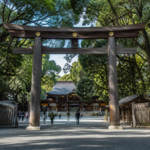
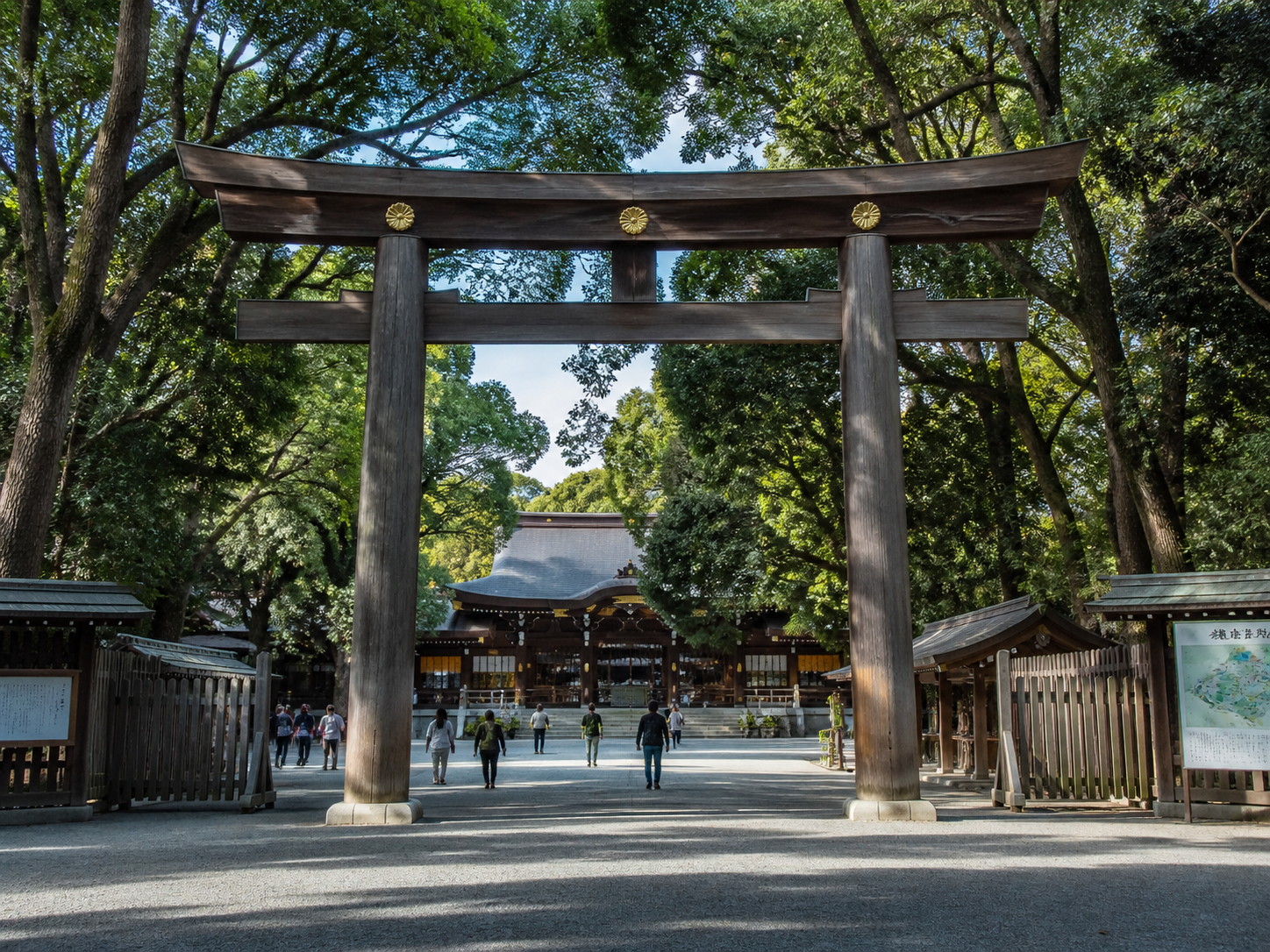
Meiji Shrine is highly accessible and located right next to two major train stations. The most common and scenic route is via JR Harajuku Station (on the JR Yamanote Line). From the station’s front exit, it is a straightforward, 5-to-10-minute walk straight down a wide, tree-lined path that leads directly to the shrine’s massive southern torii gate. Alternatively, you can use Tokyo Metro Meiji-jingumae Station (on the Chiyoda and Fukutoshin Lines); exiting from Exit 1 or 2 places you right at the entrance to Takeshita Street, and the shrine is just a 3-minute walk to the west. For a quieter approach, Yoyogi-koen Station (on the Tokyo Metro Chiyoda Line) places you at the northern entrance of the shrine grounds, which is often less crowded.
2. Is there an entrance fee to visit Meiji Shrine?
No, entry to the main Meiji Shrine grounds, including the outer precinct (Gaien), the inner precinct (Naien), and the main worship hall, is completely free of charge. The shrine is open to the public year-round. However, there is a separate, optional attraction within the inner precinct called the Meiji Shrine Inner Garden (Gyoen), which features a beautiful traditional landscape and an iris garden. Admission to the Inner Garden requires a small fee of 500 yen for adults (children enter for free). The adjacent Meiji Memorial Picture Gallery in the outer precinct also charges a separate admission fee of 1,000 yen for adults.
3. What is the proper etiquette for praying at Meiji Shrine?
Shinto shrines have specific, respectful customs for worship. When you approach the main worship hall (Haiden), follow these steps:
- Purify yourself: At the temizuya (water pavilion) before the main hall, use the provided ladle to rinse your left hand, then your right hand. Cup some water in your left hand to rinse your mouth (do not drink directly from the ladle), then rinse the left hand again and turn the ladle upright to clean the handle.
- Approach the hall: Walk up to the offering box. It is customary to toss a 5-yen coin (go-en, which sounds like the word for “fate” or “connection”) into the box.
- Pray: Bow deeply twice. Clap your hands twice firmly. Keep your hands together, close your eyes, and offer a silent prayer or expression of gratitude.
- Depart: Bow deeply one final time before stepping away. Note: Do not walk directly down the center of the path leading to the hall, as this is considered the path of the kami (gods); walk slightly to the side.
4. How much time should I allocate for a visit to Meiji Shrine?
A typical visit to Meiji Shrine takes between 1.5 to 2.5 hours. This allows enough time to walk through the forested approach from Harajuku, observe the massive torii gates, watch the traditional purification rituals, explore the main worship hall, and view the extensive displays of donated sake and wine barrels. If you plan to pay the 500 yen to enter the tranquil Inner Garden (Gyoen) or visit the Meiji Memorial Picture Gallery in the outer precinct, you should allocate closer to 3 hours to fully appreciate the grounds without rushing.
5. What are the sake and wine barrels displayed at the shrine?
The large wooden barrels stacked in pyramids on the shrine grounds are kazaridaru (decorative barrels). The sake barrels are donated by breweries from all over Japan as an offering to the kami of Emperor Meiji and Empress Shōken, wishing for the prosperity of the nation and the shrine. Uniquely, Meiji Shrine also displays barrels of French Burgundy wine. This is a deliberate and historically significant tribute to Emperor Meiji, who was known to appreciate Western culture and was instrumental in opening Japan to the world during the Meiji Restoration. The juxtaposition of traditional Japanese sake and Western wine perfectly symbolizes the era’s blend of indigenous tradition and global modernization.
6. Is the Meiji Shrine Inner Garden (Gyoen) worth the extra admission fee?
Yes, for most visitors, the 500 yen fee is highly worthwhile. While the main shrine grounds are a bustling, forested pathway, the Inner Garden is a secluded, meticulously maintained traditional Japanese landscape garden. It was originally part of the imperial family’s private estate. The garden features a large central pond, winding gravel paths, teahouses, and lush foliage that changes beautifully with the seasons. It is especially famous for its iris garden, which blooms spectacularly in mid-June, drawing large crowds. It offers a significantly quieter, more meditative experience compared to the main shrine approach.
7. What is the best time of year (and day) to visit Meiji Shrine?
- Time of Day: To avoid massive crowds, arrive right when the shrine opens at sunrise (around 6:00 AM to 7:00 AM, depending on the season). The morning light filtering through the forest is magical, and you may even witness traditional Shinto wedding processions, which are most common on weekend mornings.
- Time of Year: January 1st to 3rd is Hatsumode (the first shrine visit of the New Year), attracting over 3 million visitors. It is a vibrant, culturally rich experience but extremely crowded. For pleasant weather and beautiful foliage, late November to early December (autumn leaves) and mid-June (iris blooming in the Inner Garden) are ideal.
8. Is Meiji Shrine wheelchair and stroller accessible?
Yes, Meiji Shrine is largely accessible, though with some minor caveats. The main approach from Harajuku Station is a wide, gently sloping gravel path that is generally easy to navigate for wheelchairs and strollers. The main worship area is flat and accessible. However, some of the smaller, secondary paths within the deeper forested areas or the Inner Garden (Gyoen) may have uneven gravel or slight steps. The shrine provides accessible restrooms near the main worship hall and the Inner Garden entrance. It is highly recommended to use the southern entrance from Harajuku, as it offers the most direct and barrier-free route to the main facilities.