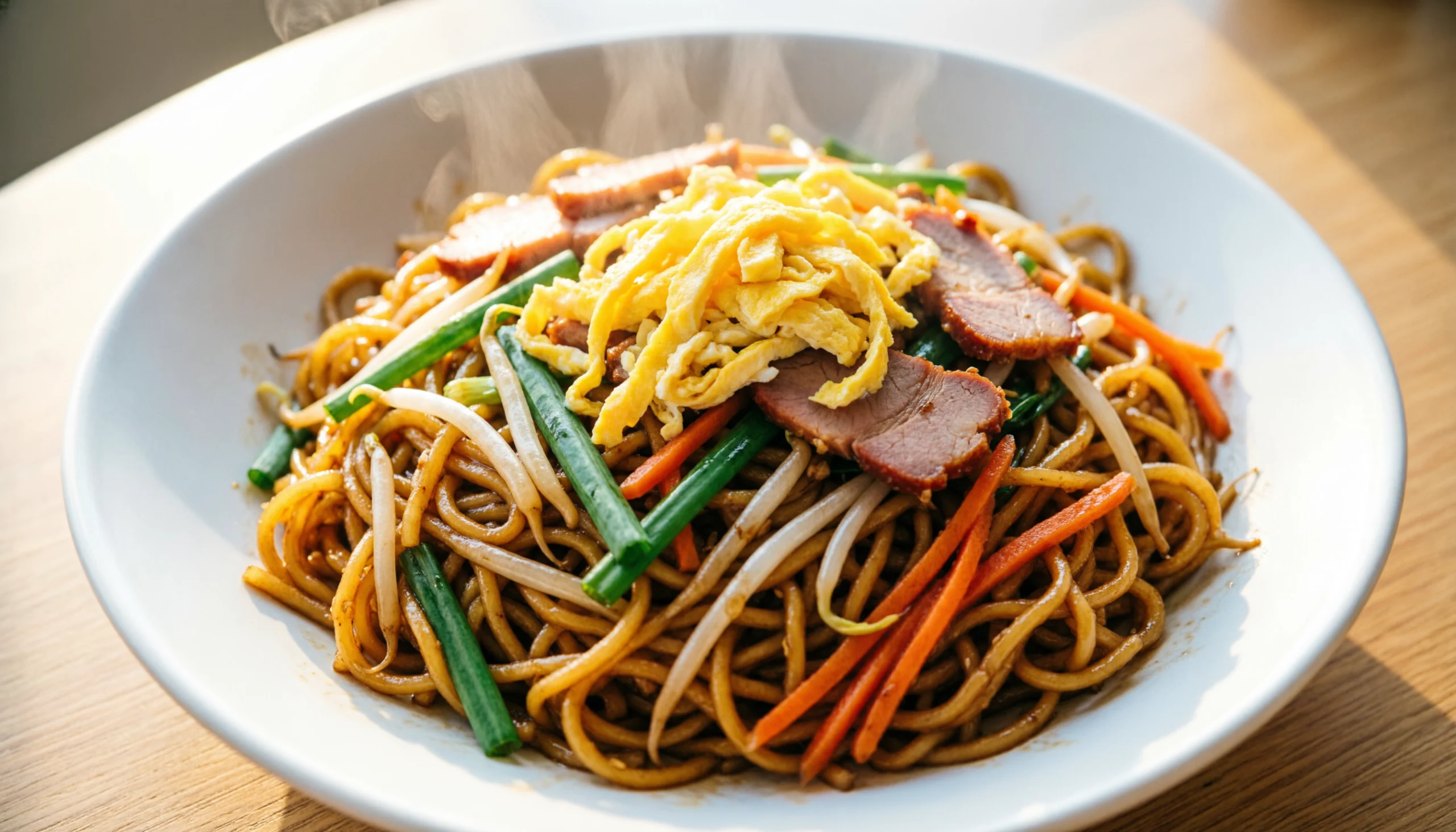
Lo Mein
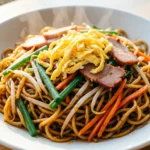
Lo mein is one of the world’s most beloved Chinese noodle dishes, known for its tender egg noodles, savory sauces, and delicious mix of meats and vegetables. While many people enjoy lo mein as a popular takeout favorite, few know the fascinating history, cultural significance, and unique traditions behind this iconic dish. From its origins in Guangdong, China, to the surprising meaning of its name and the differences between authentic Cantonese and modern American versions, lo mein has a story that’s just as rich as its flavor. In this article, we’ll uncover 25 interesting facts about lo mein that reveal how a simple bowl of noodles became a global culinary favorite.
1. The name “lo mein” literally means “stirred noodles.”
The term lo mein comes from the Cantonese phrase 撈麵 (lou1 min6), which translates to “stirred noodles.” The word mein simply means noodles, while lou refers to the action of mixing, tossing, or stirring ingredients together. This name is significant because it describes the dish’s preparation method rather than its ingredients. Instead of being defined by a specific sauce or topping, lo mein is fundamentally a noodle dish where the noodles are tossed with seasonings and other ingredients. The name itself reflects a traditional Chinese culinary practice of identifying dishes by technique rather than by recipe.
2. Traditional Cantonese lo mein is not pan-fried or stir-fried.
One of the biggest misconceptions about lo mein is that it is a fried noodle dish. In authentic Cantonese cooking, the noodles are boiled until tender, drained, and then tossed with sauce. Unlike chow mein, the noodles are not typically placed in a wok for frying or crisping. This creates a softer texture that allows the noodles to absorb sauce while remaining tender and springy. The distinction is important because many people outside China associate all Chinese noodle dishes with wok frying, when in reality the original Cantonese version emphasizes the texture of freshly boiled noodles.
3. Lo mein originated in China and is especially associated with Guangdong province.
Lo mein traces its roots to China, specifically to the culinary traditions of Guangdong, the southern coastal province that gave rise to much of what the world recognizes as Cantonese cuisine. Guangdong has long been a major center for trade, migration, and food innovation. Because many Chinese immigrants who settled overseas came from Guangdong, Cantonese dishes became the dominant form of Chinese food in many Western countries. Lo mein is therefore not just a noodle dish but also a representative example of how Guangdong’s food culture spread internationally through migration and diaspora communities.
4. The dish is traditionally made with thin flour-and-egg noodles.
Authentic lo mein uses thin noodles made from wheat flour and eggs. The addition of egg differentiates them from many plain wheat noodles by giving them a richer flavor, a yellow color, and greater elasticity. These noodles are carefully produced to withstand tossing with sauces and toppings without breaking apart. Their relatively thin shape also helps them absorb flavors evenly. The noodle itself is arguably the most important ingredient in lo mein, since the dish’s success depends heavily on achieving the proper balance between softness, chewiness, and sauce absorption.
5. These noodles are prized for their elastic, chewy texture.
The traditional flour-and-egg noodles used for lo mein are notable for their elasticity. When cooked correctly, they remain springy and resilient rather than becoming mushy. This texture is highly valued in Chinese cuisine because it provides a satisfying mouthfeel and allows diners to appreciate the quality of the noodle itself. Elastic noodles also hold up well during tossing and serving, maintaining their structure even when coated in sauce. The emphasis on texture is one reason why authentic lo mein recipes focus so much attention on noodle preparation, often considering it just as important as the toppings.
6. In Cantonese cuisine, the noodles are typically boiled and tossed with sauce.
The defining preparation method for Cantonese lo mein is simple but deliberate. The noodles are first boiled, then drained and tossed with sauce. Sometimes the sauce is mixed directly into the noodles, while in other cases it is served separately for diners to combine themselves. This technique highlights the noodles rather than overwhelming them. Because the noodles are not subjected to intense stir-frying, they retain their delicate texture and absorb seasonings more evenly. The process reflects a broader Cantonese cooking philosophy that values balance, freshness, and the natural characteristics of ingredients.
7. Oyster sauce is a classic accompaniment for authentic lo mein.
One of the most common sauces used with Cantonese lo mein is oyster sauce. Developed in southern China, oyster sauce is known for its deep savory flavor, subtle sweetness, and rich umami character. It complements the mild flavor of the noodles without overpowering them. In many traditional preparations, only a modest amount is used, allowing the noodle texture to remain the star of the dish. Oyster sauce also exemplifies Guangdong’s coastal culinary heritage, where seafood-based condiments and sauces have long played an important role in local cooking.
8. Cantonese lo mein is often topped with char siu.
A classic pairing for lo mein is char siu, the famous Cantonese barbecued pork. Char siu is marinated with a combination of seasonings and roasted until it develops a glossy exterior and distinctive reddish appearance. When served with lo mein, the sliced pork provides a contrast of textures and flavors: sweet and savory meat alongside tender noodles. This combination became especially influential because char siu was one of the most recognizable Cantonese foods introduced to overseas Chinese communities and later to the broader public. As a result, char siu lo mein remains one of the most iconic versions of the dish today.
9. Beef brisket is another classic topping.
Another traditional accompaniment is beef brisket, a cut of meat that benefits from slow cooking. In Cantonese cuisine, brisket is often braised for long periods until it becomes tender and flavorful. When paired with lo mein, the rich beef contrasts beautifully with the relatively simple noodles. The combination showcases an important aspect of Chinese noodle culture: noodles frequently serve as a base that highlights carefully prepared proteins. Beef brisket lo mein is particularly popular because the sauce from the braised meat can mingle with the noodles, creating a deeper and more complex flavor profile.
10. Lo mein is frequently served with wontons.
In Cantonese dining traditions, lo mein is commonly served alongside wontons, which are delicate dumplings typically filled with seasoned meat or seafood. This pairing creates a complete meal that combines two beloved noodle-shop specialties. Wontons add another layer of texture and flavor, complementing the soft noodles with their tender wrappers and savory fillings. In some establishments, the wontons may be served in a separate bowl of broth while the lo mein remains dry and sauce-tossed. This arrangement allows diners to enjoy two distinct preparations at once and highlights the versatility of Cantonese noodle cuisine.
11. Some versions come with a separate bowl of broth.
Unlike many noodle dishes where the noodles and liquid are served together, traditional Cantonese lo mein can be accompanied by a separate bowl of broth. This arrangement allows the noodles to remain dry enough to retain their texture while still giving diners the option to sip a warm soup alongside the meal. The practice reflects the Cantonese emphasis on preserving texture and balance. Instead of allowing the noodles to sit in liquid and soften over time, the broth is kept apart, letting each component be enjoyed on its own terms. This serving style also demonstrates how Chinese noodle dishes are often more customizable than Western diners might expect.
12. The Chinese characters for lo mein are 撈麵 and 捞面.
Lo mein is written as 撈麵 in Traditional Chinese and 捞面 in Simplified Chinese. Although the characters are written differently, they represent the same dish and concept. The existence of two writing systems reflects broader linguistic and cultural developments within the Chinese-speaking world. Traditional characters are commonly used in places such as Hong Kong and Taiwan, while Simplified Chinese is the standard writing system in mainland China. The dish’s name therefore offers a glimpse into the diversity of Chinese language and culture beyond the food itself.
13. In Mandarin, the dish is pronounced “lāo miàn.”
While most English speakers know the dish by its Cantonese-derived name “lo mein,” Mandarin speakers refer to it as lāo miàn. This difference highlights the linguistic diversity of China, where many regional languages and dialects coexist. The international popularity of the Cantonese pronunciation rather than the Mandarin one reflects the historical influence of Cantonese-speaking immigrants who introduced many Chinese dishes to overseas audiences. As a result, many globally recognized Chinese food names, including lo mein, originate from Cantonese rather than Mandarin vocabulary.
14. The character 撈 originally meant “to scoop out of water.”
An interesting linguistic detail behind lo mein is the original meaning of the character 撈. Historically, the character referred to the action of dredging, fishing out, or scooping something from water. This meaning is particularly fitting for noodle making, since cooked noodles are often lifted out of boiling water before being seasoned and served. Over time, the word developed different everyday meanings depending on region and dialect. The survival of this character in the dish’s name preserves a connection to older Chinese culinary vocabulary and cooking practices.
15. In Cantonese, the same character evolved to commonly mean “to stir.”
Although 撈 originally referred to scooping something from water, the word acquired a more casual meaning in Cantonese usage: to mix, toss, or stir ingredients together. This evolution is important because it explains why the dish is understood today as “stirred noodles.” The change in meaning demonstrates how living languages evolve and adapt over time. Lo mein serves as a linguistic artifact, preserving both the older and newer interpretations of the character within a single dish name. For language enthusiasts, it is a fascinating example of how food names can reveal historical changes in everyday speech.
16. In northern China, the related term bàn miàn can refer to many different noodle dishes.
Outside Guangdong, similar terminology can have much broader meanings. In northern China, the term bàn miàn is often used for mixed or tossed noodles in general rather than a specific dish. This means that a diner traveling across China may encounter dishes with the same name but entirely different ingredients, cooking methods, and regional traditions. The variation illustrates one of the most fascinating aspects of Chinese cuisine: names often describe preparation styles rather than fixed recipes. Consequently, noodle dishes can evolve dramatically as they move between regions.
17. In Xinjiang, the category includes laghman.
The Wikipedia article notes that in Xinjiang, the broader category of tossed noodles includes laghman, a famous dish associated with the region’s Uyghur community. Laghman differs significantly from Cantonese lo mein, often featuring hand-pulled noodles and robust meat-and-vegetable toppings. The connection demonstrates how noodle traditions stretch across vast parts of China and incorporate influences from different ethnic groups, climates, and historical trade routes. It also shows that lo mein belongs to a much larger family of noodle dishes that share common concepts while expressing unique regional identities.
18. In the United States, lo mein became one of the most popular Chinese takeout dishes.
Few Chinese dishes have achieved the level of recognition enjoyed by lo mein in the United States. It became a staple of takeout menus because it is filling, adaptable, and travels well. Soft noodles retain heat effectively and can absorb sauces without becoming overly dry. As Chinese restaurants expanded across North America, lo mein emerged as one of the dishes most frequently ordered by customers unfamiliar with regional Chinese cuisine. Its popularity helped establish Chinese takeout as a major part of the American dining landscape.
19. Many American restaurants treat lo mein and chow mein as nearly interchangeable.
In traditional Cantonese cooking, lo mein and chow mein are clearly distinct dishes, particularly in how the noodles are prepared. However, in many American Chinese restaurants, the terms are sometimes used loosely or understood by customers as referring to similar noodle dishes. This blending of identities reflects the way immigrant cuisines adapt to local expectations. Over decades of menu simplification and cultural exchange, distinctions that were obvious in Guangdong became less pronounced in the American market. The result is a uniquely American interpretation of Chinese noodle cuisine that differs substantially from its original context.
20. American-style lo mein is usually stir-fried with soy sauce and seasonings.
Perhaps the biggest transformation occurred in the cooking method. In the United States, lo mein is commonly prepared by stir-frying noodles with soy sauce and additional seasonings in a wok. This technique creates a richer, more heavily seasoned dish that appeals to local preferences. The American version often emphasizes convenience, consistency, and bold flavors, making it distinct from the simpler Cantonese style. Over time, this adaptation became so widespread that many diners now assume it is the standard form of lo mein, even though it differs from the traditional preparation.
21. Common vegetables in American lo mein include bok choy and cabbage.
Vegetables play an important role in American-style lo mein, adding color, freshness, and texture. Two of the most common additions are bok choy and cabbage. These vegetables hold up well during stir-frying and complement the soft noodles without overwhelming them. Their widespread availability also helped restaurants prepare the dish efficiently and economically. The inclusion of vegetables transformed lo mein from a simple noodle preparation into a more complete one-dish meal that appeals to a broad range of customers.
22. Typical protein choices include chicken, beef, roast pork, shrimp, and lobster.
One reason for lo mein’s enduring popularity is its versatility. Restaurants can easily adapt the dish using different proteins, including chicken, beef, roast pork, shrimp, and even lobster. This flexibility allows cooks to create options at various price points while appealing to diverse tastes. The noodle base remains largely the same, but the choice of protein can significantly alter the dish’s flavor, texture, and overall character. As a result, lo mein functions less like a single recipe and more like a platform for countless combinations.
23. Many restaurants offer “house lo mein.”
A common menu item in North America is house lo mein, a version that combines multiple meats in a single serving. Rather than limiting customers to one protein, restaurants might include chicken, pork, beef, shrimp, or several of these together. The concept reflects a broader tradition in Chinese restaurant menus where “house special” dishes showcase variety and abundance. House lo mein is often marketed as a premium offering because it provides a wider range of flavors and textures than standard versions.
24. In Indonesia, lo mein is often made using “mie hokkien.”
The influence of Chinese migration extended far beyond North America. In Indonesia, versions of lo mein are commonly made with mie hokkien, a style of egg noodle linked to Chinese culinary traditions. The adaptation demonstrates how Chinese noodle dishes evolved differently in Southeast Asia, incorporating local ingredients and tastes while preserving recognizable Chinese roots. Indonesian interpretations of Chinese cuisine often represent generations of cultural exchange, making them distinct culinary traditions in their own right.
25. Lo mein has relatives across Asia.
The Wikipedia article places lo mein within a broader network of noodle traditions that includes lamian, lomi, pancit, pho, ramen, and yakisoba. Although these dishes come from different countries and cultures, they illustrate how noodles became one of Asia’s most widespread and adaptable foods. Each tradition developed its own techniques, flavors, and cultural significance, yet all share the common idea of transforming simple flour-based noodles into highly regional culinary icons. Viewing lo mein within this larger family highlights its role not just as a Cantonese dish, but as part of a continent-wide story of migration, trade, and culinary innovation.
Frequently Asked Questions (FAQs) About Lo Mein:
1. What is Lo Mein?
Lo mein is a traditional Chinese noodle dish made with wheat-and-egg noodles that are boiled and then tossed with a flavorful sauce. In Cantonese cuisine, lo mein is often served with toppings such as char siu (barbecued pork), beef brisket, wontons, or vegetables. Unlike some other noodle dishes, authentic lo mein emphasizes the noodles’ texture and is generally not fried.
Today, lo mein is enjoyed around the world and has evolved into many regional variations. In Western countries, it is commonly prepared with stir-fried vegetables, proteins, and savory sauces, making it a popular takeout favorite.
2. What does “Lo Mein” mean?
The name “lo mein” comes from the Cantonese term 撈麵 (lou1 min6), which translates to “stirred noodles” or “tossed noodles.”
The word “mein” means noodles, while “lo” refers to mixing or tossing the noodles with sauce. The name reflects the dish’s preparation method rather than the ingredients used.
3. Is Lo Mein Chinese?
Yes. Lo mein originated in China and is closely associated with Guangdong Province and Cantonese cuisine.
Although the dish has become popular worldwide, its roots can be traced to southern Chinese culinary traditions. Over time, Chinese immigrants introduced lo mein to countries such as the United States, Canada, and Indonesia, where localized versions emerged.
4. What’s the difference between Lo Mein and Chow Mein?
The main difference lies in the cooking method.
Lo Mein:
- Noodles are boiled and tossed with sauce.
- Texture is soft, tender, and chewy.
- Sauce coats the noodles more heavily.
Chow Mein:
- Noodles are stir-fried or pan-fried.
- Texture can be crispy or slightly crunchy.
- Focuses more on wok-fried flavors.
While many restaurants use the terms interchangeably, authentic Cantonese cuisine treats them as distinct dishes.
5. What kind of noodles are used in Lo Mein?
Traditional lo mein uses thin wheat-and-egg noodles.
The eggs give the noodles:
- A yellow color
- A richer flavor
- A springy, elastic texture
These noodles are specially suited for absorbing sauce while maintaining their structure and chewiness.
6. Is Lo Mein healthy?
Lo mein can be healthy depending on how it is prepared.
Healthier versions typically include:
- Plenty of vegetables
- Lean proteins such as chicken or shrimp
- Moderate sauce portions
Less healthy versions may contain:
- Large amounts of oil
- High-sodium sauces
- Processed meats
Homemade lo mein often allows for better control of ingredients and portion sizes.
7. Is Lo Mein vegetarian?
It can be.
Traditional lo mein may contain meat-based sauces or toppings, but many restaurants offer vegetarian versions made with:
- Mushrooms
- Bok choy
- Carrots
- Snow peas
- Cabbage
- Tofu
Vegetarians should always verify whether oyster sauce or meat broth has been used.
8. What meats are commonly added to Lo Mein?
Popular protein options include:
- Chicken
- Beef
- Roast pork (char siu)
- Shrimp
- Lobster
- Tofu (vegetarian)
- Mixed meats (“House Lo Mein”)
Because lo mein is highly versatile, virtually any protein can be incorporated into the dish.
9. Why is Lo Mein so popular?
Several factors contribute to its popularity:
- Easy to customize
- Filling and satisfying
- Delicious combination of flavors and textures
- Affordable ingredient list
- Travels well for takeout and delivery
Its adaptability has helped it become one of the most ordered Chinese dishes worldwide.
10. What sauce is used in Lo Mein?
Lo mein sauce varies by recipe but often includes:
- Soy sauce
- Oyster sauce
- Sesame oil
- Sugar
- Garlic
- Ginger
The goal is to create a balanced savory flavor that lightly coats the noodles without overwhelming them.