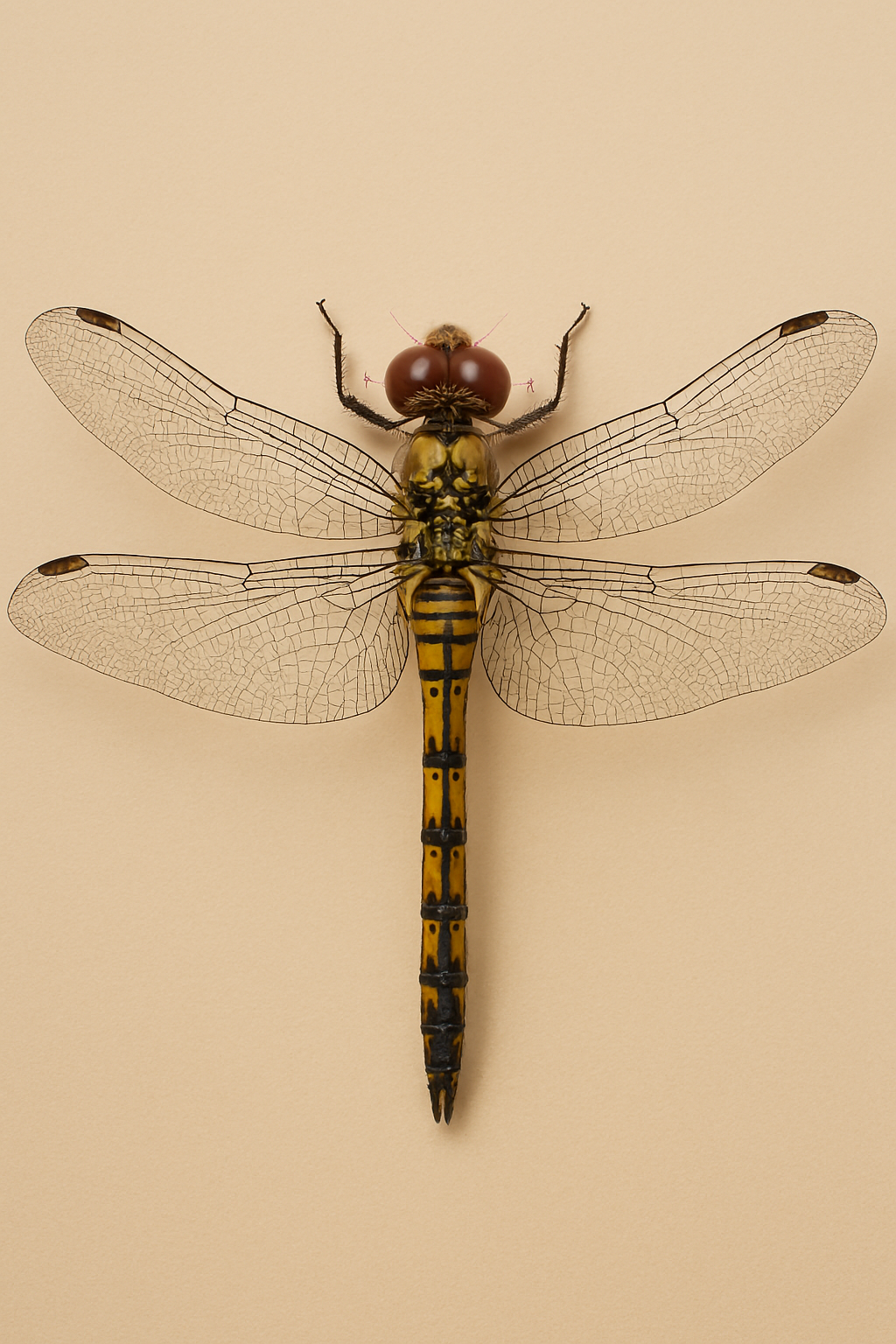
Dragonfly top view
Dragonflies are among Earth’s most ancient and fascinating insects, captivating people with their brilliant colors, powerful flight, and remarkable hunting abilities. Long before humans appeared, these aerial predators were already thriving near freshwater habitats, evolving sophisticated vision, complex life cycles, and unique reproductive behaviors. From their aquatic beginnings as nymphs to their brief but agile lives as adults, dragonflies reveal extraordinary adaptations that have allowed them to survive for millions of years. In this article, we’ll explore 25 interesting facts about dragonflies that highlight their biology, behavior, and deep connection to the natural world—all of which reveal why these insects continue to inspire curiosity and admiration.
1. Dragonflies are insects of the infraorder Anisoptera
Dragonflies belong to the infraorder Anisoptera, which is nested within the order Odonata, a group of insects known for their strong flight and predatory behavior. This taxonomic placement distinguishes dragonflies from damselflies, which belong to a different infraorder within Odonata. Scientists use the term true dragonflies when referring specifically to Anisoptera, as the word “dragonfly” is sometimes used loosely to describe all odonates. This classification reflects differences in body structure, flight ability, and wing positioning, all of which are defining traits of dragonflies.
2. There are about 3,000 known living species
Approximately 3,000 extant dragonfly species have been scientifically described, making them a diverse though not overwhelmingly large insect group. This number reflects only currently living species and does not include extinct relatives known from fossils. Ongoing scientific research means that new species are still occasionally identified, especially in tropical regions where biodiversity is highest. The known species are distributed across multiple families, each with distinct characteristics and habitats.
3. Most species live in tropical regions
The greatest diversity of dragonflies occurs in tropical climates, where warm temperatures and abundant freshwater habitats support their life cycle. Tropical regions provide year‑round conditions suitable for continuous breeding and development, unlike temperate regions where seasonal changes limit activity. As a result, dragonflies in temperate zones tend to have shorter active seasons and fewer species overall. This distribution highlights the importance of climate in shaping dragonfly biodiversity.
4. Wetland loss threatens dragonfly populations
Dragonflies are strongly dependent on wetland habitats, and the loss or degradation of these environments poses a major threat to their survival. Pollution, drainage for agriculture, urban expansion, and climate change reduce the availability of clean water needed for larval development. Because dragonfly larvae are aquatic and often sensitive to water quality, habitat loss can quickly lead to population declines. Their vulnerability makes dragonflies important indicators of environmental health.
5. Dragonflies have very large compound eyes
One of the most striking features of dragonflies is their large compound eyes, which dominate most of their head. These eyes allow dragonflies to detect movement with extraordinary accuracy, a crucial adaptation for aerial hunting. The size and placement of their eyes contribute to their exceptional visual awareness, enabling them to track prey, rivals, and potential mates in mid‑air. This visual advantage is central to their success as predators.
6. Each eye contains nearly 24,000 ommatidia
Each compound eye of a dragonfly is composed of nearly 24,000 ommatidia, or individual visual units. These tiny lenses work together to create a mosaic-like image that excels at detecting motion rather than fine detail. This structure allows dragonflies to respond instantly to changes in their surroundings, an ability that is especially useful during high‑speed flight and hunting.
7. Dragonflies have two pairs of transparent wings
Adult dragonflies possess two pairs of strong, transparent wings, which are reinforced with a complex network of veins. Some species display colored markings on their wings, which may play roles in species recognition or mating displays. The wing structure allows dragonflies to generate powerful lift and maneuver precisely, even at slow speeds or while hovering.
8. Their wings are held flat at rest
Unlike many insects, dragonflies typically hold their wings flat and away from the body when resting. This posture is one of the easiest ways to distinguish them from damselflies, which usually fold their wings along the body. The resting wing position reflects differences in wing structure and musculature between the two groups and is a defining trait of Anisoptera.
9. Dragonflies have elongated bodies
Dragonflies are characterized by long, slender, elongated bodies, which help stabilize them during flight. The elongated abdomen plays a key role in balance and maneuverability, allowing precise control when turning or hovering. It also houses important organs involved in reproduction and digestion, contributing to the insect’s aerodynamic efficiency.
10. Many species show metallic or iridescent colors
Many dragonflies display brilliant metallic or iridescent coloration, which is produced by structural coloration rather than pigments. This means that microscopic structures in their exoskeleton reflect light in specific ways, creating shimmering effects. These vivid colors make dragonflies highly visible in flight and may play roles in communication, mate selection, or territorial displays.
11. Dragonflies are stronger fliers than damselflies
Dragonflies are powerful and agile fliers, significantly stronger than their close relatives, damselflies. Their robust thoracic muscles and wing structure allow sustained speed, rapid acceleration, and controlled hovering. This strength gives dragonflies an advantage in hunting and territorial defense, making them dominant aerial predators.
12. They perform highly accurate aerial ambushes
Dragonflies are capable of highly accurate aerial ambushes, intercepting prey mid‑air rather than chasing it blindly. Their flight control, combined with exceptional vision, allows them to calculate the trajectory of moving targets and intercept them with minimal effort. This hunting strategy contributes to their high success rate compared to many other insect predators.
13. Dragonflies use motion camouflage
One of the more unusual behaviors described in dragonflies is their use of motion camouflage when approaching prey or rivals. By adjusting their flight path so that they appear stationary against the background, dragonflies can approach unnoticed. This sophisticated tactic enhances their ability to ambush prey and defend territory.
14. Dragonflies are predatory at all life stages
Dragonflies are predators throughout their entire life cycle, from aquatic larvae to flying adults. This continuous predatory role makes them important regulators of insect populations in both aquatic and terrestrial ecosystems. Unlike many insects that feed on plants during some stages, dragonflies remain carnivorous from birth to death.
15. Their larvae are aquatic nymphs
The larval stage of a dragonfly is known as a nymph or naiad, and it lives underwater. These larvae inhabit ponds, lakes, streams, and wetlands, where they hunt other aquatic organisms. Their aquatic lifestyle contrasts sharply with the aerial nature of adults but is essential to the species’ life cycle.
16. The nymph stage can last up to five years
In some species, the nymphal stage can last as long as five years, making it the longest part of a dragonfly’s life. During this time, the nymph grows through multiple molts before emerging as an adult. The length of this stage depends on species, climate, and food availability.
17. Adult dragonflies usually live only a few weeks
Despite their long larval period, adult dragonflies typically live for around five weeks or less. Their adult life is focused on feeding, mating, and dispersal. This short lifespan makes their efficiency as flyers and predators all the more remarkable.
18. Some adults survive only a few days
In some cases, adult dragonflies may survive only a few days, especially under harsh environmental conditions or heavy predation pressure. This extreme contrast between long larval life and short adult life highlights how much energy is invested in reaching maturity.
19. Some dragonflies are migratory
Certain dragonfly species are capable of long‑distance movement and migration, sometimes traveling great distances between breeding sites. These movements demonstrate their strong flight abilities and adaptability to changing environments. Although not all species migrate, this behavior is notable among insects.
20. Dragonflies live near water
Most dragonflies live near freshwater habitats, as water is essential for egg‑laying and larval development. Adults may roam widely but usually remain close to ponds, lakes, rivers, or wetlands. This close association with water defines much of their ecology and behavior.
21. Dragonflies use indirect insemination
Dragonflies have a unique reproductive system involving indirect insemination, which is unusual among insects. Males transfer sperm to specialized secondary genitalia before mating. This system adds complexity to their mating behavior and reproductive strategies.
22. Mating forms a “wheel” or “heart” shape
During mating, dragonflies form a distinctive wheel‑ or heart‑shaped posture, with the male clasping the female and the female curling her abdomen to receive sperm. This iconic shape is one of the most recognizable behaviors associated with dragonflies.
23. Reproduction involves sperm competition
Dragonfly reproduction includes sperm competition and delayed fertilization, meaning females may store sperm from multiple males before fertilizing their eggs. This leads to intense competition among males and has influenced the evolution of complex mating behaviors and structures.
24. Giant prehistoric relatives existed
Fossils show that very large dragonfly‑like insects, known as griffinflies, existed around 325 million years ago. These insects had wingspans of up to 750 mm (about 30 inches), far exceeding modern dragonflies in size. They were distant relatives, not true dragonflies.
25. True dragonflies appeared in the Early Jurassic
Although dragonfly‑like insects existed much earlier, true dragonflies first appeared during the Early Jurassic period. These early ancestors established the body plan that modern dragonflies still follow today, proving the design’s evolutionary success.
Frequently Asked Questions (FAQs) About Dragonflies
1) What do dragonflies eat?
Dragonflies are strictly carnivorous insects that feed almost entirely on other insects. As adults, they hunt flying prey such as mosquitoes, flies, gnats, midges, butterflies, moths, and even smaller dragonflies. They catch prey mid‑air using their legs like a basket and often eat while flying. In their aquatic larval stage (nymphs), dragonflies feed on mosquito larvae, aquatic insects, tadpoles, and small fish. Because both life stages are predatory, dragonflies are extremely effective natural pest controllers. [dragonflywebsite.com], [scienceinsights.org]
2) Are dragonflies dangerous to humans?
No—dragonflies are not dangerous to humans. They do not have stingers, are not venomous, and do not transmit diseases. While dragonflies have strong jaws used to eat insects, they rarely bite humans and typically only do so if handled roughly. Even then, bites are mild and usually do not break the skin. Despite intimidating folklore names like “devil’s darning needle,” dragonflies are harmless and beneficial insects. [webmd.com], [scienceinsights.org]
3) Can dragonflies bite or sting?
Dragonflies cannot sting because they lack a stinger entirely. Although they can technically bite using their mandibles, biting is rare and only occurs in self‑defense when a dragonfly is trapped or handled. Most species are incapable of breaking human skin. Any bite sensation is typically described as a light pinch and requires no medical treatment. [spiderzoon.com], [healthline.com]
4) How long do dragonflies live?
A dragonfly’s lifespan varies greatly between life stages. Most of their life is spent underwater as nymphs, which can last from several months to up to five years, depending on species and environment. In contrast, the adult stage is short, lasting anywhere from a few weeks to about two months. During adulthood, dragonflies focus primarily on feeding and reproduction. [geeksforgeeks.org], [learnaboutnature.com]
5) What is the life cycle of a dragonfly?
Dragonflies undergo incomplete metamorphosis, meaning they do not have a pupal stage. Their life cycle consists of three stages: egg, nymph (larva), and adult. Eggs are laid in or near water, hatch into aquatic nymphs, and later emerge as winged adults. The transition from nymph to adult—called emergence—is one of the most dramatic transformations in the insect world. [geeksforgeeks.org], [spiderzoon.com]
6) Why are dragonflies always near water?
Dragonflies are closely tied to freshwater habitats because their larvae are aquatic. Eggs are laid in ponds, lakes, wetlands, or slow‑moving streams, and nymphs live underwater until maturity. Even adults remain near water sources to reproduce and find prey. A healthy dragonfly population often indicates clean water and a stable ecosystem. [iere.org], [biologyinsights.com]
7) Why are dragonflies important to the ecosystem?
Dragonflies play a key ecological role as both predators and bioindicators. They help control populations of mosquitoes and other nuisance insects, reducing the need for chemical pesticides. Their sensitivity to pollution and water quality makes them reliable indicators of wetland health. Changes in dragonfly populations can signal environmental problems early. [biologyinsights.com], [sciencing.com]
8) Do dragonflies help control mosquitoes?
Yes—dragonflies are powerful mosquito predators. Adult dragonflies eat mosquitoes mid‑air, while nymphs consume mosquito larvae underwater. A single dragonfly can eat dozens to hundreds of mosquitoes per day, making them one of nature’s most effective mosquito control solutions. [dragonflywebsite.com], [birdsandblooms.com]
9) How can you tell a dragonfly from a damselfly?
Dragonflies and damselflies belong to the same order (Odonata) but differ clearly in appearance. Dragonflies have thicker bodies, larger eyes that usually touch, and rest with wings spread open. Damselflies are slimmer, have separated eyes, and fold their wings together when at rest. These traits make identification relatively easy even for beginners. [en.wikipedia.org], [dragonflywebsite.com]
10) Why do dragonflies form a heart or wheel shape?
The distinctive “wheel” or “heart” shape forms during mating. The male grasps the female behind the head, and the female curls her abdomen forward to receive sperm. This unique mating posture is a hallmark of dragonflies and reflects their complex reproductive system involving indirect insemination. [en.wikipedia.org], [geeksforgeeks.org]