Lake Victoria
Lake Victoria, stretching across Tanzania, Uganda, and Kenya, is not only Africa’s largest lake but also one of the most fascinating natural wonders in the world. Known as the world’s largest tropical lake and the second-largest freshwater lake by area, it plays a vital role in shaping East Africa’s climate, economy, and culture. Its waters feed into the Nile, sustain Africa’s largest inland fishery, and host an extraordinary diversity of species, including hundreds of unique cichlid fish. Yet, Lake Victoria is also a cautionary tale, facing challenges from invasive species, pollution, and climate change. In this post, we’ll dive into 25 captivating facts that reveal the lake’s immense importance, its ecological wonders, and the pressing issues that threaten its future.
1. Africa’s Largest Lake
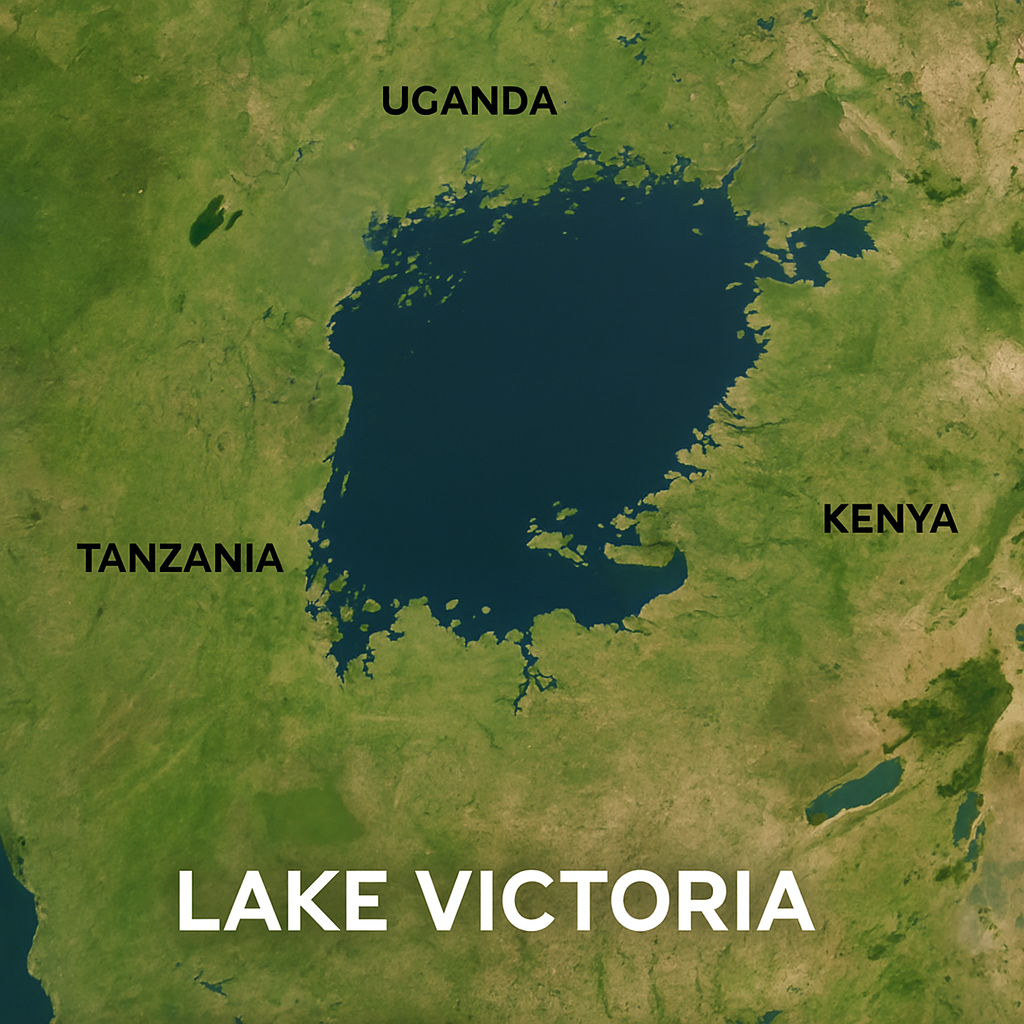
Lake Victoria holds the title of Africa’s largest lake by area, stretching across nearly 60,000 square kilometers. Its vastness makes it a defining feature of East Africa’s geography, influencing weather patterns, supporting millions of livelihoods, and serving as a critical water source. The sheer scale of the lake means it functions almost like an inland sea, shaping the cultures and economies of the nations that border it.
2. World’s Largest Tropical Lake
Globally, Lake Victoria is recognized as the largest tropical lake. Its equatorial location ensures warm temperatures year-round, which in turn supports a rich diversity of aquatic life. This tropical climate also makes the lake particularly vulnerable to invasive species and algal blooms, as warm waters accelerate ecological changes.
3. Second-Largest Freshwater Lake by Area
Although Lake Superior in North America surpasses it in size, Lake Victoria is the second-largest freshwater lake in the world by surface area. This ranking underscores its global importance, placing it among Earth’s most significant bodies of water. Its freshwater reserves are vital not only for local communities but also for regional ecosystems.
4. Elevation Above Sea Level
Sitting at 1,135 meters above sea level, Lake Victoria occupies a high plateau in East Africa. This elevation contributes to its unique climate, with cooler nights and seasonal rainfall patterns. The altitude also influences the flow of rivers feeding into and out of the lake, particularly the White Nile.
5. Shared by Three Countries
Lake Victoria is divided among Tanzania, Uganda, and Kenya, with Tanzania holding the largest share. This international distribution makes the lake a focal point of regional cooperation and sometimes tension, as each country relies on its waters for fishing, transport, and agriculture.
6. Geologically Young
Despite its immense size, Lake Victoria is relatively young in geological terms, having formed about 400,000 years ago. It emerged due to tectonic activity in the East African Rift, which reshaped landscapes and created basins that filled with water. Its youth explains why its ecosystems are still evolving rapidly.
7. History of Drying Up
Remarkably, Lake Victoria has dried up completely at least three times in its history. The most recent desiccation occurred around 17,300 years ago, with the basin refilling about 14,700 years ago. These cycles of disappearance and rebirth highlight the lake’s vulnerability to climatic shifts.
8. Primary Inflow and Outflow
The Kagera River is the lake’s main inflow, bringing water from Rwanda and Burundi. Its outflow is the Victoria Nile, which begins at Jinja, Uganda, and eventually feeds into the White Nile. This connection makes Lake Victoria a crucial part of the Nile River system, linking East Africa to Egypt.
9. Rainfall Contribution
Unlike many lakes that rely heavily on rivers, Lake Victoria receives about 80% of its water directly from rainfall. This dependence makes it highly sensitive to climate change, as shifts in rainfall patterns can dramatically alter water levels and ecosystems.
10. High Evaporation Rates
The lake loses between 2 and 2.2 meters of water annually through evaporation. This high rate reflects its tropical climate and vast surface area. Evaporation plays a major role in balancing the lake’s hydrology, but it also means that prolonged droughts can lower water levels significantly.
11. Rich Cichlid Diversity
Lake Victoria is famous for its extraordinary diversity of haplochromine cichlids, with over 500 species recorded. Most are endemic, meaning they exist nowhere else on Earth. This makes the lake a living laboratory for evolutionary biology.
12. Adaptive Radiation Hotspot
The cichlids of Lake Victoria are a textbook example of adaptive radiation, having evolved into hundreds of species in just 15,000 years. They adapted to different ecological niches, from algae scraping to insect hunting, showcasing evolution in fast-forward.
13. Nile Perch Invasion
The introduction of the Nile perch in the mid-20th century devastated native fish populations. This predatory species caused the extinction of about 40% of the lake’s cichlids, altering the ecosystem permanently. While Nile perch boosted commercial fishing, it came at a steep ecological cost.
14. Other Wildlife
Beyond fish, Lake Victoria supports hippopotamuses, Nile crocodiles, otters, freshwater crabs, and endemic snails. These species contribute to the lake’s ecological richness, though many face threats from habitat loss and pollution.
15. Mosquito-Eating Spider
One of the lake’s most unusual residents is Evarcha culicivora, a spider that feeds on malaria-carrying mosquitoes. This rare dietary preference makes it a natural ally in controlling disease vectors, highlighting the lake’s ecological uniqueness.
16. Water Hyacinth Invasion
In the 1990s, water hyacinth spread rapidly across Lake Victoria, choking waterways and reducing oxygen levels. This invasive plant disrupted fishing and transport, while also creating breeding grounds for disease-carrying insects. Efforts to control it continue today.
17. Pollution Problems
Untreated sewage, industrial waste, and agricultural runoff have polluted the lake, leading to eutrophication. Excess nutrients fuel algal blooms, which deplete oxygen and kill fish. Pollution remains one of the greatest threats to Lake Victoria’s sustainability.
18. Deforestation Impact
Deforestation around the lake basin increases sedimentation, clouding the water and reducing its quality. Soil erosion also disrupts spawning grounds for fish, further stressing the ecosystem.
19. Expanding Surface Area
Between 2010 and 2022, Lake Victoria’s surface area grew by 15%, flooding nearby communities. This expansion reflects both climate variability and human impacts, underscoring the lake’s dynamic nature.
20. Climate Change Threats
Climate change exacerbates all of Lake Victoria’s challenges, from altered rainfall patterns to rising temperatures. These shifts threaten fisheries, biodiversity, and the millions of people who depend on the lake.
21. Largest Inland Fishery
Lake Victoria supports Africa’s largest inland fishery, providing food and income for millions. Its fisheries are central to regional economies, though they face mounting pressure from overfishing and ecological imbalance.
22. Changing Fish Composition
Historically, native tilapia and cichlids dominated catches. Today, Nile perch and Nile tilapia are most common, reflecting the ecological transformation caused by species introductions.
23. Peak Harvests of Nile Perch
In the early 1990s, Nile perch harvests peaked at 500,000 tonnes annually. This boom fueled export industries but proved unsustainable, leading to declines in later years.
24. Global Fish Exports
Fish from Lake Victoria are exported worldwide, making the lake a global supplier of freshwater fish. However, this international demand often prioritizes commercial gain over ecological balance.
25. Challenges for Fishing Communities
Fishing communities around Lake Victoria face declining stocks, pollution, and invasive species. These challenges threaten livelihoods, forcing many to adapt through alternative income sources or migration.
FAQs about Lake Victoria
📍 Location & Geography
- Where is Lake Victoria located? Lake Victoria lies in East Africa, bordered by Tanzania (49%), Uganda (45%), and Kenya (6%). It sits at an elevation of 1,135 meters above sea level and covers about 59,947 km², making it Africa’s largest lake and the world’s largest tropical lake.
- How was Lake Victoria formed? Geologically, Lake Victoria is relatively young, formed about 400,000 years ago due to tectonic activity in the East African Rift. It has dried up completely at least three times in its history, most recently around 17,300 years ago, before refilling about 14,700 years ago.
🌊 Hydrology
- What rivers feed Lake Victoria? The Kagera River is the primary inflow, along with smaller rivers like the Mara and Yala. About 80% of the lake’s water comes from rainfall, making it highly sensitive to climate changes.
- What river drains Lake Victoria? The lake’s only outlet is the Victoria Nile, which flows northward from Jinja, Uganda, and eventually becomes part of the White Nile, linking East Africa to Egypt.
🐟 Biodiversity & Ecology
- What types of fish are found in Lake Victoria? Lake Victoria hosts over 500 species of haplochromine cichlids, most endemic. However, the introduction of the Nile perch in the mid-20th century caused the extinction of about 40% of native cichlids. Today, Nile perch and Nile tilapia dominate catches.
- What other wildlife lives in the lake? Beyond fish, the lake supports hippopotamuses, Nile crocodiles, otters, freshwater crabs, endemic snails, and even a unique spider (Evarcha culicivora) that feeds on malaria-carrying mosquitoes.
⚠️ Environmental Challenges
- What are the main environmental problems facing Lake Victoria? Key issues include:
- Invasive species: Nile perch and water hyacinth disrupting ecosystems.
- Pollution: Untreated sewage, industrial waste, and agricultural runoff causing eutrophication.
- Deforestation: Increasing sedimentation and reducing water quality.
- Climate change: Altered rainfall patterns and rising temperatures threatening fisheries and communities.
💰 Economy & Human Impact
- Why is Lake Victoria important to local economies? Lake Victoria supports Africa’s largest inland fishery, providing food and income for millions. At its peak in the early 1990s, Nile perch harvests reached 500,000 tonnes annually, fueling a global export industry. Today, overfishing and ecological imbalance pose challenges, but the lake remains vital to Tanzania, Uganda, and Kenya’s economies.
- How does Lake Victoria affect regional climate and culture? The lake influences rainfall and weather patterns across East Africa, while also serving as a cultural landmark. Locals historically referred to it as Nyanza, Nam Lolwe, and Nnalubaale, names that reflect its deep cultural significance long before European explorers renamed it Lake Victoria.