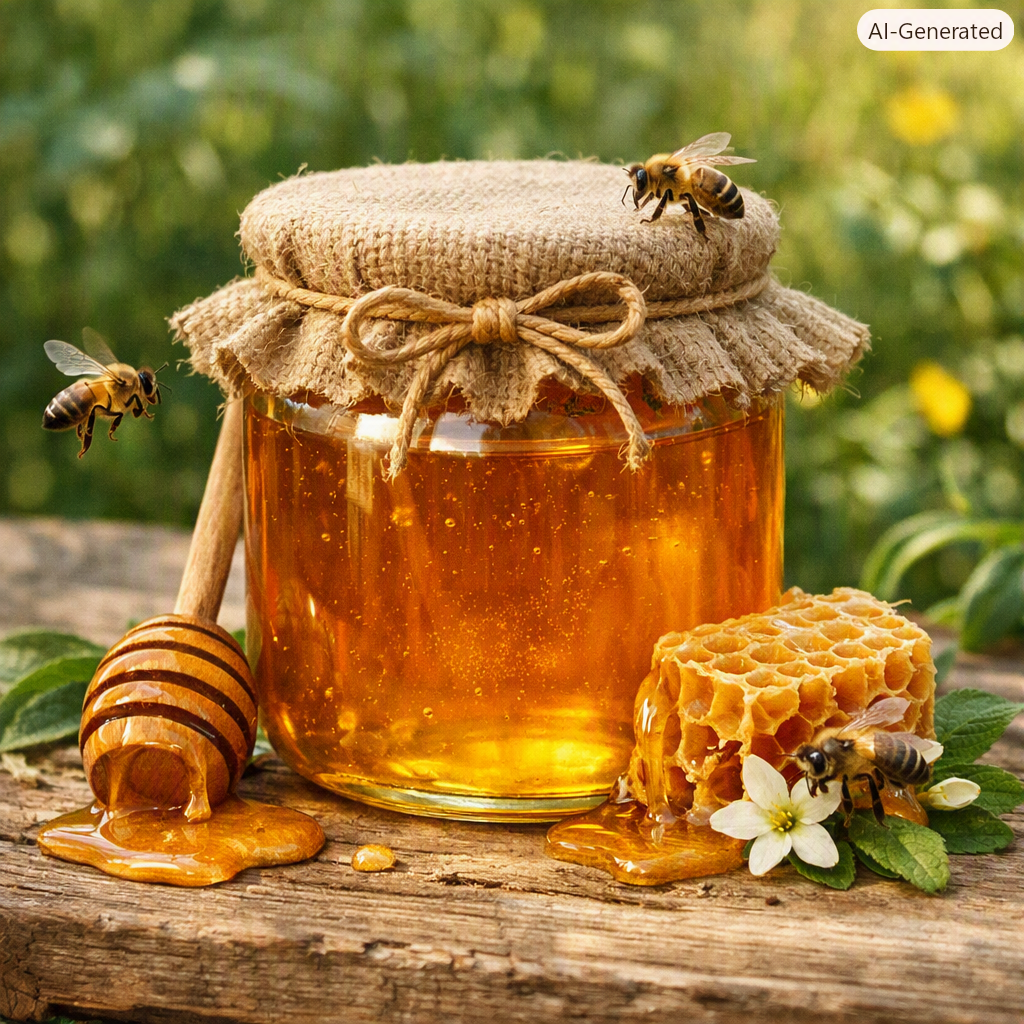
Honey
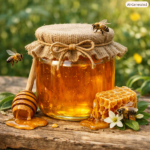
Honey is much more than just a natural sweetener to drizzle over your morning toast; it is a true marvel of nature, history, and science. From ancient Egyptian tombs where it was discovered perfectly preserved after thousands of years, to the staggering reality that a single bee must visit over a thousand flowers just to fill its tiny honey stomach, this golden elixir is packed with surprises. Whether you’re a curious foodie, a budding beekeeper, or simply someone who loves a good trivia deep-dive, you’ll be captivated by the complex chemistry, fascinating insect behaviors, and wild historical anecdotes behind your favorite jar. Get ready to have your mind buzzed with knowledge as we explore 25 of the most interesting, mind-blowing facts about honey that will forever change the way you look at this liquid gold.
Fact number 1 The depiction of ancient honey foraging in the Cuevas de la Araña (Cave of the Spider) near Valencia, Spain, offers a breathtaking glimpse into prehistoric human life. Dating back at least 8,000 years, the Mesolithic cave painting shows a solitary figure bravely scaling vines or ropes on a sheer cliff face, carrying a basket or gourd, and surrounded by dots representing bees. This artwork highlights not only the immense value early humans placed on honey as a rare, calorie-dense natural sweetener before the advent of agriculture, but also the significant physical dangers they were willing to endure to harvest it.
Fact number 2 Honey’s legendary shelf life is not a myth; it is a scientifically verified phenomenon. Archaeologists have discovered pots of honey in ancient Egyptian tombs, including that of Tutankhamun, dating back over 3,000 years, and the substance remained perfectly edible. This incredible longevity is due to a “perfect storm” of chemical properties: an extremely low moisture content, a highly acidic pH, and the presence of naturally occurring hydrogen peroxide. Together, these factors create an environment where bacteria, fungi, and spoilage microorganisms simply cannot survive, effectively making honey the ultimate natural preservative.
Fact number 3 The sheer scale of effort required to produce honey is staggering, rooted in the anatomy of the honey bee. Bees possess a specialized “honey stomach” or crop, which is entirely separate from their digestive stomach and can hold a mere 40 milligrams of nectar—roughly half the bee’s unladen weight. To fill this tiny reservoir, a single forager may need to visit between 100 and 1,500 flowers. Consequently, producing just one pound of honey requires a collective foraging effort equivalent to roughly 55,000 miles of flight, or about two orbits around the Earth, by the tens of thousands of bees in a single hive.
Fact number 4 The transformation of watery floral nectar into thick, stable honey requires a dramatic reduction in water content. Fresh nectar collected from flowers is typically 70% to 80% water, making it highly susceptible to fermentation and spoilage. To remedy this, worker bees deposit the nectar into the hexagonal cells of the honeycomb and actively fan it with their wings. This continuous, coordinated evaporation process draws the moisture content down to a precise 15.5% to 18%, transforming a perishable sap into a dense, shelf-stable food source that can sustain the colony through harsh winters.
Fact number 5 The creation of honey is as much a feat of biochemistry as it is of physical labor. As bees collect nectar, they mix it with secretions from their hypopharyngeal glands, most notably an enzyme called invertase. When the bee regurgitates the nectar into the honeycomb, this enzyme catalyzes a process called hydrolysis, which breaks down sucrose (a complex, less stable disaccharide) into glucose and fructose (simple, highly stable monosaccharides). This enzymatic conversion is crucial, as it prevents the sugars from crystallizing too rapidly and makes the honey more digestible and resistant to spoilage.
Fact number 6 A beehive operates much like a highly regulated, climate-controlled facility, and “hive air conditioning” is vital to its survival. Bees achieve this thermoregulation through coordinated wing-beating at the entrance and throughout the hive’s corridors. This creates a steady, directed airflow that pulls warm, humid air out of the hive and draws cooler, drier air in. This ventilation is essential not only for curing the wet honey and preventing mold, but also for maintaining the brood nest at a precise, life-sustaining temperature of 34–35°C (93–95°F), regardless of the outside weather.
Fact number 7 While the Western honey bee (Apis mellifera) is the most famous producer, it is far from the only insect that makes honey. Many species of non-parasitic bumblebees and all species of stingless bees (tribe Meliponini) produce their own versions of honey, albeit in much smaller quantities than commercial honey bees. Fascinatingly, honey production even extends to the wasp family; the Mexican honey wasp (Brachygastra lecheguana) gathers nectar and stores it in its paper-like nest, producing a sweet, edible honey that is still occasionally harvested and consumed by local communities in Mexico and the southern United States.
Fact number 8 The architectural methods of honey storage vary wildly depending on the species. While traditional honey bees secrete pure beeswax from their abdominal glands to construct mathematically perfect, space-efficient hexagonal prisms, stingless bees take a different approach. They mix wax with plant resins to create a stronger, antimicrobial building material called cerumen. Instead of open hexagonal cells, stingless bees construct clusters of small, rounded, enclosed pots to store their honey and pollen, which resemble tiny, organic clay jars suspended within the nest.
Fact number 9 Honey’s ability to act as a natural preservative is largely governed by the physics of osmosis. Because honey is a supersaturated sugar solution, it exerts immense osmotic pressure. If bacteria, mold, or yeast spores land in honey, the high sugar concentration literally draws the water out of the microorganisms’ cells through their membranes. This rapid dehydration shrivels and kills the microbes before they have any chance to multiply. When combined with honey’s naturally low pH (averaging around 3.9), it becomes an almost foolproof barrier against biological decay.
Fact number 10 Beyond its physical properties, honey possesses active, chemical antibacterial defenses. During the honey-making process, bees introduce the enzyme glucose oxidase into the nectar. When the sealed honeycomb is later opened or the honey is diluted (such as when applied to a wound), this enzyme reacts with the glucose and oxygen in the air to produce two byproducts: gluconic acid and hydrogen peroxide. Hydrogen peroxide is a well-known antiseptic, which is why raw, unpasteurized honey has been used for millennia in traditional medicine to treat burns, cuts, and prevent infections.
Fact number 11 Honey is highly hygroscopic, meaning it actively attracts and absorbs moisture directly from the surrounding air. While this property can be beneficial in baking (keeping goods moist), it poses a significant storage challenge. If a jar of honey is left unsealed in a humid environment, it will pull in water vapor. If the overall water content rises above the critical threshold of roughly 18% to 25%, dormant, sugar-tolerant (osmophilic) yeasts naturally present in the honey can awaken, leading to fermentation, bubbling, and eventual spoilage.
Fact number 12 At room temperature, honey exists as a supersaturated, supercooled liquid. This means it contains far more dissolved sugar than water can naturally hold under normal conditions, making it a metastable substance. Because it is thermodynamically unstable, the glucose molecules will eventually seek a more stable state by bonding together and falling out of the solution. This process, known as crystallization or granulation, is a completely natural physical change, not a sign of spoilage, and simply indicates that the honey is pure and unadulterated.
Fact number 13 The rate and texture of honey crystallization are directly dictated by its floral source, specifically the ratio of fructose to glucose. Glucose is much less soluble in water than fructose and is the primary driver of crystallization. Therefore, honeys with a high glucose-to-fructose ratio, such as canola (brassica), clover, or dandelion honey, will crystallize into a smooth, creamy solid within a matter of weeks. Conversely, honeys with a higher fructose content, such as tupelo, acacia, or chestnut honey, can remain a clear, viscous liquid for years without granulating.
Fact number 14 Honey exhibits fascinating behavior when exposed to extreme cold, defying the way water-based liquids typically freeze. Due to its low water content and high viscosity, honey does not freeze into a solid block of ice even at sub-zero temperatures. At −20°C (−4°F), it becomes incredibly thick and sluggish, but continues to flow at a microscopic rate. It only reaches its “glass transition temperature”—becoming a true, brittle, amorphous solid similar to glass—when cooled to between −42°C and −51°C.
Fact number 15 The electrical conductivity of honey is a vital metric used by food scientists to determine its quality, botanical origin, and authenticity. Because honey contains trace amounts of electrolytes, including organic acids and minerals like potassium, calcium, and magnesium, it can conduct a weak electrical current. Darker honeys, such as buckwheat or manuka, naturally have a higher mineral content and thus higher conductivity. If a honey sample shows abnormally low conductivity, it is a strong indicator that it has been adulterated with mineral-free corn syrup or refined sugar.
Fact number 16 The complex sensory profile of honey is a direct reflection of its botanical origins. Advanced analytical techniques like gas chromatography have identified over 100 distinct volatile organic compounds (VOCs) in individual honey samples, which combine to create unique aromas and flavors. For instance, lavender honey contains high levels of linalool, imparting a distinct floral scent, while sunflower honey has waxy, pollen-like notes, and buckwheat honey contains compounds that give it a robust, malty, almost molasses-like aroma. No two floral sources produce the exact same chemical fingerprint.
Fact number 17 Long before European colonizers introduced the Western honey bee to the Americas, indigenous cultures were already practicing advanced beekeeping. The ancient Maya, for example, engaged in large-scale meliponiculture, the domestication and farming of native New World stingless bees (such as Melipona beecheii). They constructed specialized horizontal log hives and held these bees in high spiritual regard, featuring them prominently in their mythology and using their unique, tangy honey for both culinary purposes and sacred medicinal rituals.
Fact number 18 The use of a bee smoker by beekeepers is a brilliant exploitation of honey bee psychology and evolutionary biology, not a method of “knocking them out.” When a hive is opened, guard bees release an alarm pheromone (isopentyl acetate) that alerts the colony to a threat. Smoke masks this chemical signal, preventing the hive from mobilizing a defense. Furthermore, the smoke triggers an instinctual survival response: the bees assume a forest fire is approaching and gorge themselves on honey in preparation for potentially abandoning the hive. A bee with a full stomach is physically more cumbersome and significantly more docile, making it less likely to sting.
Fact number 19 Mead, often referred to as “honey wine,” holds the title of possibly the world’s oldest fermented beverage, with archaeological evidence dating back roughly 9,000 years to ancient China, and later appearing in early European and African cultures. Early humans likely discovered that a mixture of honey, water, and wild, airborne yeast would naturally ferment over time. This accidental discovery provided a safe, calorie-rich, and mildly intoxicating beverage that could be stored for long periods, cementing honey’s central role in ancient human celebrations, religious rites, and social bonding.
Fact number 20 Modern global honey production is a massive agricultural enterprise, yet it faces significant ecological challenges. In 2023, worldwide honey production reached approximately 1.9 million tonnes. China is the dominant producer, accounting for roughly 24% of the global total, followed by nations like Turkey, Ethiopia, Iran, and Argentina. However, this large-scale commercial output contrasts sharply with the struggles of local, small-scale beekeepers in North America and Europe, who are currently battling severe threats to bee health, including colony collapse disorder, pervasive pesticide use, and the widespread loss of natural foraging habitats.
Fact number 21 Detecting honey adulteration is a high-stakes scientific endeavor, as unscrupulous producers often dilute pure honey with cheap corn or high-fructose cane syrup. To catch this fraud, laboratories use Isotope Ratio Mass Spectrometry (IRMS). This technology relies on the fact that corn and sugar cane are “C4 plants,” which utilize a different photosynthetic pathway than the “C3 plants” (most flowers, trees, and shrubs) that bees naturally forage on. C4 plants incorporate a higher ratio of the heavy carbon-13 isotope. IRMS detects this distinct isotopic “fingerprint,” instantly revealing if foreign, non-floral sugars have been secretly blended into the product.
Fact number 22 From an evolutionary and nutritional standpoint, honey is a powerhouse. A single standard tablespoon (14mL) of honey provides approximately 180 kilojoules (43 kilocalories) of rapidly absorbable, simple carbohydrates. For prehistoric hunter-gatherer societies, stumbling upon a wild beehive was akin to hitting a nutritional jackpot. This dense, portable, and easily digestible energy source would have been absolutely crucial for human survival, aiding in early brain development and providing the sustained fuel necessary for long foraging treks or demanding hunting expeditions.
Fact number 23 Honey’s physical properties dictate that it must be handled with care in the kitchen, specifically regarding heat. Honey has very poor thermal conductivity, meaning it does not distribute heat evenly. If you attempt to melt crystallized honey by boiling it in a pot or microwaving it, the outer layers will quickly overheat, leading to localized caramelization, burning, and the destruction of honey’s beneficial enzymes and delicate flavor compounds, while the center remains solid. The correct method is to place the jar in a gentle, warm water bath (kept below 40°C or 104°F) and stir slowly to distribute the heat evenly.
Fact number 24 The gradual darkening of honey over time is the result of a well-documented chemical process known as the Maillard reaction. Although commonly associated with searing meat or baking bread, this non-enzymatic browning reaction also occurs in honey. Over months or years, the simple reducing sugars in the honey slowly react with trace amounts of amino acids. This reaction produces melanoidins, which are large, dark-colored polymeric molecules. As these compounds accumulate, the honey’s color deepens, and its flavor profile shifts, often developing richer, deeper, and more caramel-like notes.
Fact number 25 One of the most remarkable examples of interspecies cooperation in the natural world occurs in sub-Saharan Africa between humans and the Greater Honeyguide bird (Indicator indicator). This wild bird actively seeks out human honey hunters, using distinctive chattering calls and specific flight patterns to lead them to wild bee colonies hidden high in trees or on cliff faces. Once the humans use smoke to subdue the bees and harvest the honeycomb, they intentionally leave behind the wax and bee larvae. The honeyguide bird then swoops in to feast on this leftover bounty, representing a rare, documented case of mutualism between a wild animal and humans.
Frequently Asked Questions about Honey
Answer: Pure, properly stored honey does not expire. In fact, it is the only food that never truly spoils. Archaeologists have found pots of honey in ancient Egyptian tombs dating back over 3,000 years that were still perfectly edible. This is due to honey’s unique chemical makeup: it has very low moisture content, a highly acidic pH (around 3.9), and contains naturally occurring hydrogen peroxide. This combination creates an environment where bacteria, mold, and yeast cannot survive. However, honey can go bad if it is contaminated with moisture (e.g., using a wet spoon) or left unsealed in a highly humid environment, which can cause it to ferment.
Answer: Crystallization is a completely natural physical process, not a sign of spoilage. In fact, it is often a hallmark of pure, raw, unadulterated honey. Honey is a supersaturated sugar solution, meaning it contains more sugar (specifically glucose) than water can naturally hold. Over time, the glucose separates from the water and forms solid crystals. The speed of this process depends on the floral source; high-glucose honeys (like clover or canola) crystallize quickly, while high-fructose honeys (like acacia or tupelo) stay liquid longer. To reverse it, simply place the glass jar in a warm water bath (never boiling, and ideally under 104°F or 40°C) and stir gently until the crystals dissolve. Never microwave honey, as it heats unevenly and destroys its beneficial enzymes.
Answer: No. Honey should never be given to children under 12 months of age. Honey can contain dormant spores of Clostridium botulinum, a bacterium that produces a dangerous neurotoxin. While these spores are harmless to older children and adults (whose mature digestive systems and stomach acids can destroy them), an infant’s immature digestive tract cannot. If ingested, the spores can germinate and produce toxins, leading to infant botulism, a rare but serious and potentially life-threatening illness characterized by muscle weakness, poor feeding, and breathing difficulties.
Answer: By strict definition, no, honey is not considered vegan. Veganism seeks to avoid all forms of animal exploitation and cruelty. Because honey is produced by bees (which are animals), harvesting it is viewed by the vegan community as the appropriation of an animal’s food source. Commercial beekeeping practices can also involve clipping the wings of queen bees to prevent swarming, replacing honey with inferior sugar-water substitutes for the bees to eat over winter, and inadvertently harming bees during large-scale honey extraction. Vegans typically opt for plant-based sweetener alternatives like maple syrup, agave nectar, date syrup, or molasses.
Answer: The difference lies in processing. Raw honey is taken straight from the hive, strained to remove large debris (like beeswax and dead bees), and bottled. It retains all its natural pollen, enzymes, antioxidants, and trace minerals. Regular (commercial) honey, on the other hand, is typically pasteurized (heated to high temperatures) and heavily filtered. Pasteurization is done to kill yeast (preventing fermentation) and to keep the honey in a smooth, liquid state for longer on supermarket shelves. However, this high heat destroys many of the beneficial enzymes, antioxidants, and delicate flavor compounds, essentially reducing it to a simple, albeit natural, syrup.
Answer: The scientific consensus on this is mixed, but leans toward “probably not significantly.” The theory is that consuming local raw honey acts like a natural allergy shot, exposing your immune system to tiny amounts of local pollen and building tolerance over time. However, most seasonal allergies are triggered by wind-borne pollens (like ragweed, grass, and tree pollen), whereas bees collect insect-pollinated flower pollen, which is heavy, sticky, and rarely causes allergic reactions. While some small studies suggest a minor benefit, and honey can certainly soothe an irritated throat, it should not be relied upon as a primary medical treatment for severe seasonal allergies.
Answer: Manuka honey is produced in New Zealand and parts of Australia by bees that pollinate the native Manuka bush (Leptospermum scoparium). It is famous for containing a unique, powerful antibacterial compound called methylglyoxal (MGO). While all raw honeys have some antibacterial properties due to hydrogen peroxide, Manuka honey’s MGO content remains stable even when exposed to heat, light, or human body fluids (like wound exudate). Because of this, it is widely used in medical-grade wound dressings. It is graded and priced based on its Unique Manuka Factor (UMF) or MGO rating; the higher the number, the stronger the antibacterial activity, and the higher the price.
Answer: Yes, but only in strict moderation and only for adult dogs. Like human infants, puppies under one year old should never be given honey due to the risk of botulism spores. For healthy adult dogs, a small amount of raw honey (e.g., half a teaspoon for small dogs, one teaspoon for large dogs) is generally safe and is sometimes used as a high-value training treat or to soothe a mild kennel cough. However, honey is very high in sugar and calories, so it should not be given to diabetic, obese, or immunocompromised dogs, and it should never become a regular part of their diet.
Answer: Honey should be stored in a tightly sealed container (glass is best, as plastic can absorb odors and flavors over time) at room temperature, in a cool, dry place away from direct sunlight. Do not store honey in the refrigerator. Cold temperatures dramatically accelerate the crystallization process, turning your honey into a hard, difficult-to-scoop block. As long as the lid is kept tightly sealed to prevent the honey from absorbing ambient moisture from the air, it will remain stable indefinitely.
Answer: Yes, but with important caveats. Nutritionally, honey and white sugar are very similar: both are primarily composed of glucose and fructose. In fact, honey has slightly more calories and carbohydrates per tablespoon than white sugar. However, honey is sweeter than sugar, meaning you might use less of it to achieve the same level of sweetness. More importantly, raw honey contains trace amounts of vitamins, minerals, antioxidants, and enzymes that refined white sugar completely lacks. It also has a slightly lower Glycemic Index (GI) than table sugar, meaning it causes a marginally slower rise in blood sugar levels. Still, it should be consumed in moderation, as the body ultimately processes it as an added sugar.