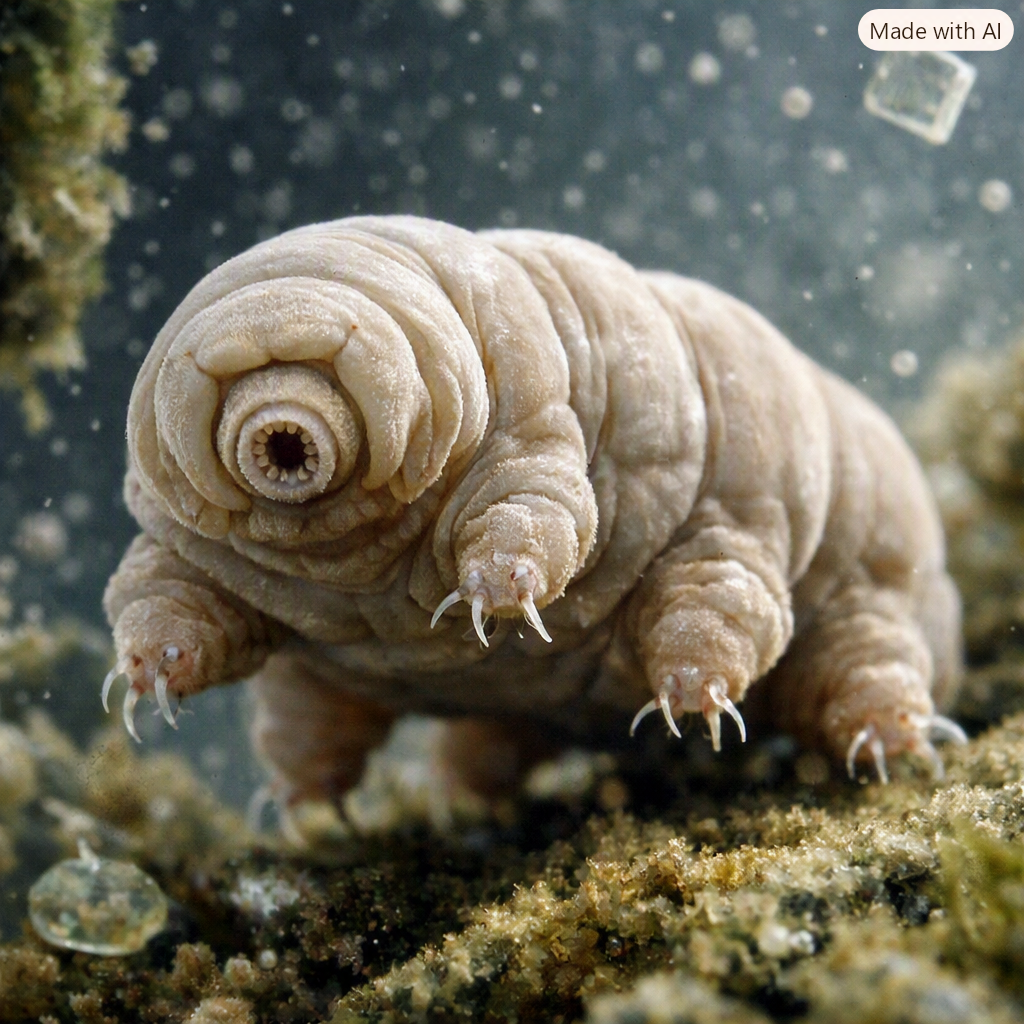
Tardigrade
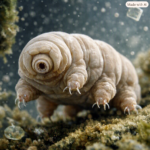
Welcome to the microscopic world of the tardigrade, affectionately known as the “water bear” or “moss piglet,” where the cutest creatures on Earth also happen to be the most indestructible. While these plump, eight-legged micro-animals might look like tiny, lumbering bears waddling through damp moss, they possess biological superpowers that defy the very limits of life as we know it. From surviving the freezing vacuum of outer space and enduring crushing deep-sea pressures to withstanding lethal doses of radiation and going years without a single drop of water, tardigrades are the ultimate survivors of the animal kingdom. Whether you’re a biology buff or just fascinated by nature’s most resilient oddities, buckle up as we dive into the incredible science, bizarre anatomy, and mind-boggling endurance of these microscopic marvels with our list of 25 interesting facts about the tardigrade.
Fact Number 1
Tardigrades are widely known by the endearing nicknames “water bears” and “moss piglets,” monikers that perfectly describe their unique physical appearance and preferred habitats. The name “water bear” was coined in 1773 by German zoologist Johann August Ephraim Goeze, who noted that their slow, lumbering, eight-legged gait closely resembled the walk of a miniature bear. Decades later, the term “moss piglet” became popular because these microscopic animals are most commonly found dwelling in the damp, miniature forests of mosses and lichens, where they waddle through water films like tiny, plump pigs foraging for food.
Fact Number 2
While they may resemble tiny bears, tardigrades exist on a microscopic scale, with most adult species measuring a mere 0.05 to 0.5 millimeters (0.002 to 0.02 inches) in length, making them roughly the size of a grain of dust or a speck of sand. Despite their minuscule average size, there is considerable variation across the phylum; the largest known species, such as Halobiotus crispae or Dactylobiotus, can grow up to 1.3 millimeters (0.051 inches). Even at their maximum size, they remain just barely visible to the naked human eye as tiny, translucent specks moving across a wet leaf.
Fact Number 3
Unlike insects, crustaceans, or arachnids, which possess segmented, jointed legs, tardigrades feature four pairs of short, plump, and completely unjointed legs that protrude from their barrel-shaped bodies. In many marine and some freshwater species, these legs are remarkably telescopic, allowing the animal to retract them fully into the body to protect them or extend them to navigate uneven terrain. Each leg typically ends in four to eight claws, though some species have modified these appendages into sticky toe pads to help them cling to slippery surfaces like underwater rocks or seaweed.
Fact Number 4
Tardigrades possess a remarkably simple respiratory system, entirely lacking the lungs, gills, or even a specialized respiratory pigment like hemoglobin found in more complex animals. Instead, they rely entirely on passive diffusion across their permeable outer cuticle and body cavity to absorb oxygen and expel carbon dioxide. This biological limitation is precisely why tardigrades are almost exclusively found in moist environments—such as damp soil, mosses, or aquatic ecosystems—because they require a film of water for gas exchange to occur efficiently.
Fact Number 5
Because tardigrades do not have a closed circulatory system with a heart, blood vessels, or arteries, they do not possess actual blood in the traditional sense. Their internal organs are instead bathed in a colorless, nutrient-rich fluid contained within a “haemocoel,” which is an open body cavity. This fluid, known as haemolymph, circulates passively as the tardigrade moves, transporting nutrients and waste products throughout the body without the need for a pumping heart.
Fact Number 6
Tardigrades are “eutelic,” a fascinating biological trait meaning that all adults of a given species are born with a fixed, genetically predetermined number of cells—often roughly around 1,000 to 40,000 cells depending on the specific species. Unlike humans and most other animals, which grow through cell division (hyperplasia), tardigrades grow by increasing the physical size of their existing cells (hypertrophy). This fixed cell count makes them incredibly valuable to developmental biologists, as researchers can map and track the exact lineage and function of individual cells throughout the animal’s entire life cycle.
Fact Number 7
To accommodate their unique growth process, tardigrades must periodically shed their outer exoskeleton, a process known as ecdysis or molting. Their protective outer layer, called a cuticle, is composed of sclerotised (hardened) proteins and chitin, but notably lacks the calcium carbonate that makes up the hard shells of insects and crustaceans. When the animal is ready to grow, it splits and crawls out of its old cuticle, leaving behind a perfect, ghost-like husk of its former self, including the old lining of its foregut and hindgut.
Fact Number 8
Despite their microscopic size, tardigrades possess a centralized nervous system that includes a distinct “brain” or cerebral ganglion located on the dorsal (top) side of their body. Nestled within this brain are two simple, pigment-cup eyespots that allow the tardigrade to distinguish between light and dark, helping them navigate toward favorable environments or away from harsh UV rays. Additionally, their head is adorned with sensitive bristles called cirri and hollow, antenna-like structures called clavae, which act as sophisticated chemoreceptors to “taste” and “smell” their microscopic surroundings.
Fact Number 9
Tardigrades are not passive filter feeders; they are active micro-predators and herbivores that utilize a pair of sharp, needle-like mouthparts called stylets to feed. Made of the mineral aragonite, these stylets are forcefully thrust out of the mouth to pierce the cell walls of plants, algae, or even small invertebrates like nematodes and rotifers. Once the prey is punctured, a highly muscular pharynx acts as a powerful pump, sucking the nutrient-rich cellular fluids out of the prey and into the tardigrade’s digestive tract.
Fact Number 10
The aragonite stylets used for feeding are not permanent fixtures; they are intricately linked to the tardigrade’s molting cycle. Every time a tardigrade sheds its outer cuticle, it also sheds the internal lining of its mouth and foregut. To ensure it can continue to eat after molting, the animal’s salivary glands secrete not only digestive enzymes but also the raw materials required to construct a completely brand-new set of replacement stylets from scratch.
Fact Number 11
When their environment dries up and water becomes scarce, terrestrial and freshwater tardigrades can enter a state of suspended animation known as cryptobiosis, specifically forming a “tun.” In this state, the animal retracts its legs, expels up to 97% of its body water, and curls into a tight, desiccated barrel shape. Its metabolic rate drops to less than 0.01% of normal, effectively pausing its biological clock and allowing it to survive conditions that would be instantly lethal to almost any other known form of life.
Fact Number 12
The tun state grants tardigrades a form of biological immortality regarding time, allowing them to survive without food or water for staggering lengths of time. While an active tardigrade might only live for a few months to a couple of years, documented cases have shown that tuns can remain dormant for a decade or more and still successfully “resurrect” within minutes of being introduced to a single drop of water. This incredible endurance allows them to survive prolonged droughts, seasonal freezes, and the complete disappearance of their local habitats.
Fact Number 13
In their desiccated tun state, tardigrades can withstand temperature extremes that would instantly destroy the cellular machinery of other organisms. They have been shown to survive being cooled to -272°C (-458°F)—just one degree above absolute zero, where molecular motion practically ceases—for several days. On the opposite end of the spectrum, they can endure brief exposures to blistering heat up to +149°C (300°F), a temperature that would normally boil water and denature the proteins of any living creature.
Fact Number 14
Tardigrades possess an astonishing tolerance for both extreme low pressure and extreme high pressure, surviving momentary shock pressures of up to 1.14 gigapascals (roughly 165,000 psi). To put this into perspective, the pressure at the bottom of the Mariana Trench, the deepest part of the world’s oceans, is about 1,000 times standard atmospheric pressure; tardigrades can survive pressures roughly six times greater than this. This means they could theoretically survive the immense crushing forces found deep within planetary mantles or the extreme vacuum of deep space.
Fact Number 15
Beyond static pressure, tardigrades are incredibly resilient to high-speed physical impacts, a trait that has profound implications for the theory of panspermia (the idea that life can travel between planets). Scientific studies have demonstrated that tuns can survive impacts at speeds of up to 900 meters per second (about 2,000 mph or 3,000 ft/s). This suggests that if a meteorite struck a mossy patch of Earth, ejecting tardigrades into space, they could potentially survive the violent launch and subsequent crash-landing on another celestial body, provided the shock pressure does not exceed their 1.14 GPa threshold.
Fact Number 16
The vacuum of space is typically fatal to animals because it causes bodily fluids to boil (ebullism) and leads to rapid asphyxiation and cellular destruction. However, because tardigrades in the tun state have already expelled almost all their internal water and suspended their need for oxygen, they treat the vacuum of space merely as an extension of a dry environment. They simply remain in their dormant state, completely unbothered by the total absence of atmospheric pressure, until they are brought back to a hospitable environment and rehydrated.
Fact Number 17
Tardigrades can survive doses of ionizing radiation—such as X-rays and gamma rays—that are hundreds to thousands of times higher than the lethal dose for a human being. While part of this resistance is due to their suspended metabolism in the tun state, active tardigrades also possess an innate, highly efficient ability to rapidly repair massive amounts of DNA damage. This allows them to thrive in highly radioactive environments, such as the cooling pools of nuclear reactors, where no other multicellular animal could survive.
Fact Number 18
In 2007, tardigrades made history as the first animals to survive direct exposure to the harsh environment of outer space during the European Space Agency’s FOTON-M3 mission. A batch of dehydrated tuns was placed on the outside of a satellite and exposed to the pure vacuum of space, as well as the full spectrum of lethal solar ultraviolet (UV) radiation, for 10 days. Upon returning to Earth and being rehydrated, a significant number of the tardigrades “woke up,” and some even went on to lay viable eggs, proving that life could potentially survive interplanetary transit.
Fact Number 19
Building on their success in 2007, tardigrades were sent to the International Space Station aboard the Space Shuttle Endeavour (STS-134) in 2011 to study their long-term endurance in microgravity. This mission allowed scientists to observe how the continuous exposure to cosmic radiation and weightlessness affected their reproduction, cellular functions, and gene expression. The results confirmed that tardigrades are exceptionally robust “model organisms” for astrobiology, providing crucial data on how multicellular life adapts to the rigors of spaceflight.
Fact Number 20
While many organisms that survive extreme drying (like yeast or certain nematodes) rely on producing high concentrations of the sugar trehalose to form a protective glass-like state, tardigrades produce very little trehalose. Instead, they rely on unique “Tardigrade-Specific Intrinsically Disordered Proteins” (TDPs). As the animal dries out, these specialized proteins fold into a solid, amorphous, glass-like matrix (a process called vitrification). This biological glass physically locks the cell’s internal structures in place, preventing membranes from collapsing and organelles from tearing apart during desiccation.
Fact Number 21
To protect their genetic code from the ravages of radiation, tardigrades possess a unique, highly specialized protein known as Dsup, short for “damage suppressor.” This protein physically binds to the nucleosomes (the packaging units of DNA) within the cell’s nucleus, wrapping around the genetic material like a protective shield. By doing so, Dsup effectively neutralizes highly reactive hydroxyl radicals—the destructive byproducts of radiation—preventing them from snapping the DNA strands and causing fatal mutations.
Fact Number 22
Evolutionary biology and genetic evidence suggest that tardigrades did not start out as microscopic creatures; rather, they are the result of “secondary miniaturization” from a much larger, ancient ancestor. Their lineage belongs to the Panarthropoda clade, and their ancestors are believed to have been large, marine, velvet-worm-like creatures called lobopodians, which may have resembled the mid-Cambrian fossil Aysheaia. Over hundreds of millions of years, they drastically shrank in size to exploit the vast, untapped ecological niches found in microscopic environments, such as the spaces between grains of sand or the leaves of moss.
Fact Number 23
Genomic sequencing has revealed that approximately 1.6% of the tardigrade genome consists of foreign DNA acquired through “horizontal gene transfer” from other species, primarily bacteria, fungi, and Archaea. While this percentage is not as high as some microscopic rotifers, it is unusually high for complex animals. Scientists hypothesize that the extreme stress of repeatedly entering and exiting the tun state causes breaks in the tardigrade’s DNA; when the animal repairs these breaks upon rehydration, it occasionally incorporates environmental genetic material from the surrounding microbes into its own genome.
Fact Number 24
Certain species of tardigrades exhibit a remarkable phenomenon known as cyclomorphosis, where they undergo radical, seasonal transformations of their physical bodies to survive changing environmental conditions. The marine species Halobiotus crispae is a prime example: it spends the summer in an active “summer morph” adapted for feeding and reproducing. As winter approaches, it transforms into a hardened, hibernating “winter morph” (pseudosimplex) that is highly resistant to freezing ocean temperatures and fluctuating salinity, only reverting to its active form when the waters warm in the spring.
Fact Number 25
The unique survival mechanisms of tardigrades are currently the subject of intense biomedical research, with scientists hoping to co-opt their “superpowers” for human benefit. Researchers are exploring ways to introduce the Dsup protein into human cells to protect healthy tissue during aggressive radiation therapies for cancer. Furthermore, the vitrification proteins that allow tardigrades to dry out and survive could revolutionize the pharmaceutical and medical industries, potentially allowing vaccines, blood products, and even whole organs to be safely dehydrated, stored at room temperature, and rehydrated on demand without the need for costly and fragile cold-chain refrigeration.
FAQs about Tardigrades
Answer: No, tardigrades are not immortal, though their ability to pause their biological clock often leads to this misconception. When a tardigrade is in its active, hydrated state, its lifespan is actually quite short, typically ranging from 3 to 30 months depending on the species. However, when their environment dries up, they enter a state of suspended animation called the “tun” state (cryptobiosis). In this dehydrated form, their metabolism drops to 0.01% of normal, effectively pausing the aging process. While they can survive in this state for decades (some anecdotal reports suggest up to 120 years, though 10 to 30 years is scientifically verified), they are not immortal. Eventually, even in the tun state, they will succumb to accumulated background radiation or cellular degradation if not rehydrated.
Answer: Tardigrades are extremotolerant, meaning they can survive extreme conditions, but they are not extremophiles, meaning they do not thrive or reproduce in those extremes. In their active, hydrated state, tardigrades are actually quite fragile. They can be easily killed by boiling water, prolonged exposure to high heat, or physical squishing. Furthermore, recent scientific studies have revealed that tardigrades are surprisingly vulnerable to environmental changes like ocean acidification and pollution; even slight drops in pH levels can severely impact their reproduction and survival rates. Finally, while they can survive high doses of radiation, continuous exposure to unshielded, full-spectrum ultraviolet (UV) light will eventually destroy their DNA and kill them, even in the tun state.
Answer: Absolutely not. Tardigrades are completely harmless to humans, pets, and even most plants. They are microscopic (usually less than 1 millimeter long) and lack the physical mouthparts required to bite or pierce human skin. Their diet consists strictly of the fluids of plant cells, algae, bacteria, or even smaller microscopic organisms. You likely consume or inhale them accidentally from time to time via dust or unwashed vegetables, but they simply pass through your system without causing any harm. They carry no known diseases and pose zero threat to human health.
Answer: In 2019, the Israeli Beresheet lander crashed onto the Moon, carrying a payload that included thousands of dehydrated tardigrades. Because tardigrades can survive the vacuum of space and extreme cold, it is highly likely that at least some of them survived the initial journey. However, whether they survived the impact of the crash is highly debated. Studies show tardigrades can survive impacts up to 900 meters per second; the Beresheet crash was estimated to be right around or slightly above this threshold, meaning the shockwave likely crushed many of them. If any did survive, they are not “living” on the Moon. They are sitting in a frozen, dehydrated tun state in a lunar crater. Without liquid water, oxygen, and a food source, they cannot wake up, move, or reproduce. They will remain in suspended animation indefinitely unless retrieved by a future space mission.
Answer: Yes, despite their superpowers, tardigrades are a vital part of the micro-food web and are eaten regularly. Their famous survival skills (like withstanding extreme heat or radiation) only apply when they are dried up in the tun state. When they are active, plump, and crawling through a drop of water in a patch of moss, they are slow, squishy, and defenseless. They are hunted and eaten by a variety of microscopic and macroscopic predators, including nematodes (parasitic worms), amoebas, mites, springtails, small spiders, and even other, larger species of tardigrades (cannibalism is quite common in the micro-world!).
Answer: Tardigrades have diverse diets depending on the species, generally falling into three categories. Herbivores (Phytophagous): These tardigrades use their sharp, mineralized stylets to pierce the cell walls of mosses, algae, and lichens, sucking out the nutrient-rich fluids. Detritivores (Bacteriophagous): These species feed on decaying organic matter, bacteria, and microscopic waste found in soil and leaf litter. Carnivores (Predatory): These are the “apex predators” of the mossy jungle. They hunt smaller micro-animals like rotifers, nematodes, and even smaller tardigrades, piercing their prey with their stylets and literally sucking out their internal organs and fluids.
Answer: Finding tardigrades is a fun and easy DIY biology project! Because they live in moss and lichen, you can easily collect them from your backyard, local park, or even the roof of your house.
Collect: Take a small handful of moss or lichen from a tree branch, rock, or brick wall.
Soak: Place the moss in a small dish or petri dish and cover it with distilled water or clean rainwater (avoid tap water, as the chlorine can harm them). Let it soak for 12 to 24 hours.
Squeeze: Remove the moss and squeeze the excess water back into the dish. Tardigrades will wash out of the moss and settle at the bottom.
Observe: Use a magnifying glass, a macro-lens on your smartphone, or a low-power microscope to scan the bottom of the dish. Look for tiny, translucent, eight-legged creatures lumbering around the debris like miniature bears!