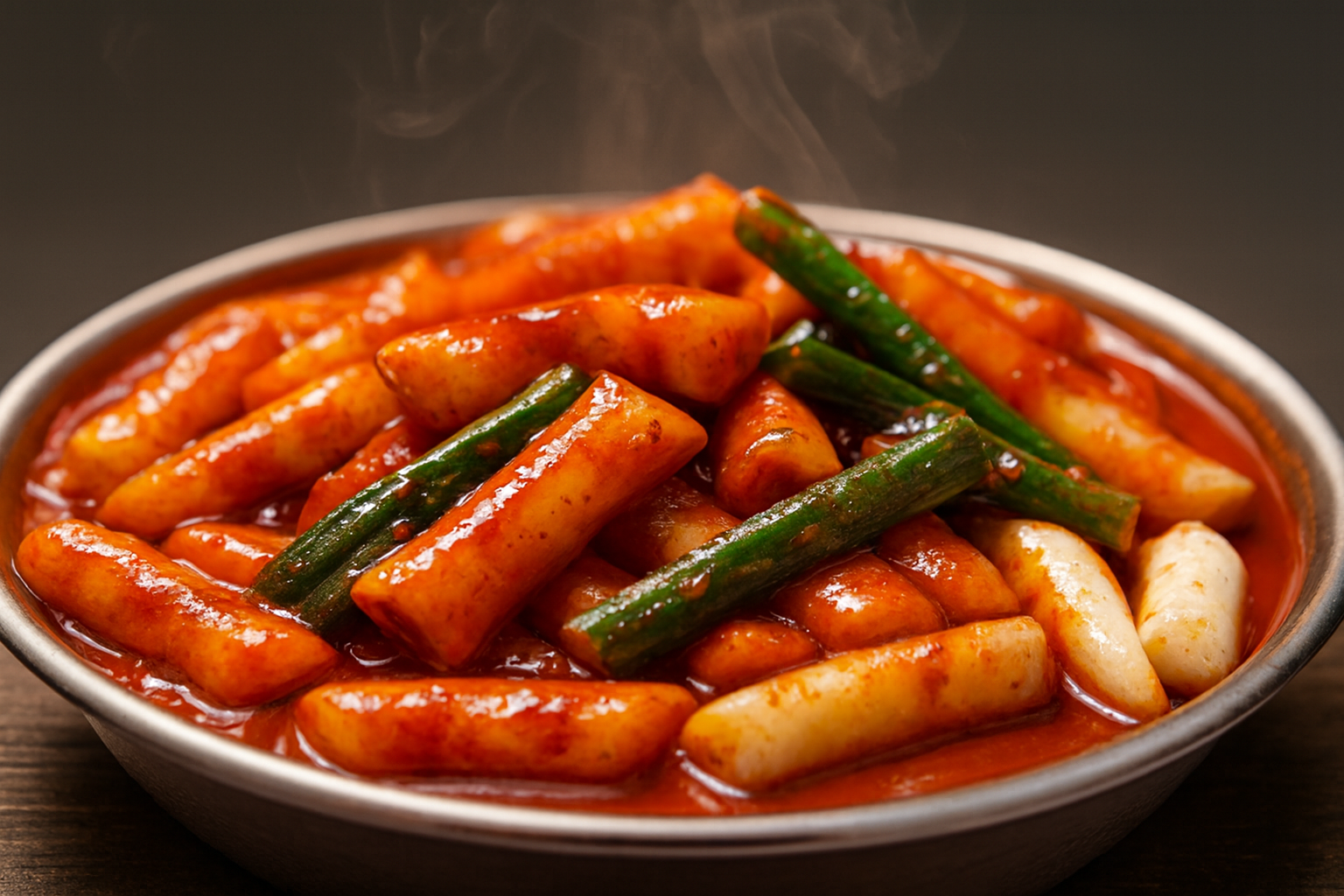
Tteokbokki
Tteokbokki, Korea’s beloved stir-fried rice cake dish, is more than just a spicy street food—it’s a culinary icon with a fascinating history that stretches from royal courts to bustling markets and even international stadiums. Known for its chewy rice cakes bathed in fiery gochujang sauce, tteokbokki has evolved into countless variations, blending tradition with modern creativity and global influences. In this post, we’ll uncover 25 intriguing facts that reveal how this humble comfort food became a cultural symbol, a source of innovation, and a worldwide favorite.
1. Name Meaning
The name tteokbokki comes from two Korean words: tteok (rice cake) and bokki (stir-fried). This straightforward naming convention reflects the dish’s simplicity and its reliance on rice cakes as the central ingredient. In Korean cuisine, rice cakes are a versatile staple, used in both savory and sweet dishes, and the act of stir-frying them with sauces and seasonings transforms them into a hearty, flavorful meal. The name itself captures the essence of Korean food culture—direct, descriptive, and deeply tied to staple grains.
2. Garae-tteok
The rice cakes used in tteokbokki are called garae-tteok, which are long, cylindrical, and chewy. Made from glutinous rice flour, they are steamed and pounded to achieve their dense texture. Garae-tteok is not only used in tteokbokki but also in tteokguk (rice cake soup), traditionally eaten during Lunar New Year. This dual role highlights how rice cakes are woven into both everyday meals and ceremonial traditions, symbolizing longevity and prosperity.
3. Gochujang Base
The modern, spicy version of tteokbokki relies on gochujang, Korea’s famous fermented chili paste. Gochujang is made from chili powder, glutinous rice, fermented soybeans, and salt, creating a complex flavor that is simultaneously spicy, sweet, and savory. Its inclusion in tteokbokki reflects the Korean palate’s love for bold, layered flavors and the cultural importance of fermentation in Korean cuisine.
4. Gungjung-tteokbokki
Before the spicy version became popular, gungjung-tteokbokki was served in royal courts. This soy sauce–based dish was savory rather than fiery, often including beef, vegetables, and nuts. It was considered refined and elegant, showcasing the sophistication of palace cuisine. The existence of gungjung-tteokbokki demonstrates how tteokbokki evolved from an elite dish into a beloved street food accessible to all.
5. Historical Record
The earliest known recipe for tteokbokki appears in the 19th-century cookbook Siuijeonseo. This documentation is significant because it shows that rice cake dishes were already established in Korean culinary tradition long before the modern spicy version emerged. Historical cookbooks like Siuijeonseo provide invaluable insight into how Korean food evolved and adapted over centuries.
6. Royal Ingredients
Royal court tteokbokki was luxurious, featuring sirloin, sesame oil, soy sauce, scallions, pine nuts, and sesame seeds. These ingredients reflected wealth and refinement, contrasting with the simpler versions enjoyed by commoners. The royal recipe highlights how rice cakes were elevated into prestigious dishes, symbolizing abundance and culinary artistry.
7. Modern Invention
The spicy version of tteokbokki was invented in 1953 by Ma Bok-rim, who accidentally dropped rice cakes into jajangmyeon (black bean noodles). This accident created a new flavor profile that quickly spread across Korea. It’s a classic example of culinary innovation born from chance, showing how experimentation and improvisation can lead to iconic dishes.
8. Sindang District
Seoul’s Sindang district became famous for its tteokbokki restaurants, turning the dish into a local specialty. Today, Sindang-dong is a destination for food lovers, with entire streets dedicated to variations of tteokbokki. This regional identity underscores how food can shape neighborhood culture and tourism.
9. Street Food Status
Tteokbokki is considered Korea’s quintessential street food, sold at bunsikjip (snack bars) and pojangmacha (street stalls). Its affordability and bold flavor make it accessible to all social classes. This democratization of a once-royal dish reflects Korea’s dynamic food culture, where tradition and modernity coexist.
10. Jeukseok-tteokbokki
Some restaurants serve jeukseok-tteokbokki, a hot-pot style version cooked at the table. Diners can add ingredients like noodles, dumplings, or seafood, making it interactive and customizable. This communal style of eating reflects Korea’s emphasis on shared meals and social dining.
11. Classic Additions
Fish cakes (eomuk), boiled eggs, and scallions are traditional additions to tteokbokki. These ingredients enhance flavor and texture, while also making the dish more filling. Fish cakes, in particular, are a beloved Korean snack that pair naturally with rice cakes, adding protein and umami.
12. Rabokki
Rabokki is a fusion of tteokbokki and instant ramen noodles. It’s especially popular among students for its affordability and heartiness. Rabokki represents Korea’s creativity in combining traditional and modern food trends, blending the chewy rice cakes with the slurpable comfort of ramen.
13. Jjolbokki
Jjolbokki swaps rice cakes for chewy wheat noodles, offering a different texture. This variation appeals to noodle lovers while retaining the spicy sauce base. It shows how adaptable the dish is to different preferences and highlights Korea’s inventive approach to food.
14. Haemul-tteokbokki
Seafood-based haemul-tteokbokki adds shrimp, squid, or mussels to the dish. The briny flavors complement the spicy sauce, creating a richer taste. This version is popular in coastal regions, reflecting Korea’s reliance on seafood and its integration into everyday meals.
15. Galbi-tteokbokki
Galbi-tteokbokki incorporates short ribs, blending the richness of beef with chewy rice cakes. This hearty version is often enjoyed as a meal rather than a snack. It highlights how tteokbokki can be elevated into a main dish, bridging the gap between casual street food and full-course dining.
16. Soup-style Gungmul-tteokbokki
Gungmul-tteokbokki is a soup-style variation made with anchovy-kelp stock. The broth adds depth and balances the spiciness of the sauce. This version is comforting, especially in colder months, and reflects Korea’s tradition of hearty, warming stews.
17. Oil-fried Gireum-tteokbokki
Instead of simmering in sauce, gireum-tteokbokki is stir-fried with soy sauce, sugar, and sesame oil. It’s less spicy but more aromatic, appealing to those who prefer milder flavors. This variation shows the versatility of rice cakes and the adaptability of Korean cooking techniques.
18. Tongin Market Specialty
Seoul’s Tongin Market is famous for its gireum-tteokbokki. Visitors can buy ingredients with traditional coins and cook their own version. This interactive experience connects food with cultural tourism, making tteokbokki not just a dish but an activity.
19. Rose Tteokbokki
Inspired by Italian rose pasta, rose tteokbokki blends cream sauce with the spicy base. The result is a milder, creamy dish that appeals to younger diners and those less tolerant of spice. It’s a prime example of global fusion cuisine, showing how Korean food adapts to international influences.
20. Mala Tteokbokki
Mala tteokbokki incorporates Chinese malatang spices, known for their numbing heat. This fusion reflects Korea’s openness to regional influences and the popularity of Sichuan flavors. It’s a bold twist on the classic dish, appealing to adventurous eaters.
21. Cheese Tteokbokki
Cheese-topped tteokbokki has become a sensation, with mozzarella or cheddar melting into the sauce. The creamy richness balances the spice, making it addictive. This trend reflects Korea’s love for cheese in fusion dishes and its ability to reinvent traditional foods.
22. Wheat Tteok
In the past, tteokbokki was often made with wheat-based rice cakes due to economic hardship. These cakes were cheaper but less chewy than rice-based ones. This adaptation shows how food evolves with social conditions, reflecting resilience and resourcefulness.
23. NFL Stadium Debut
Tteokbokki made its U.S. debut at the Houston Texans’ NFL stadium, marking its entry into mainstream American food culture. Serving it at such a venue highlights its growing global appeal and the increasing curiosity about Korean cuisine abroad.
24. North Korean Introduction
In 2017, tteokbokki was introduced to North Korea, where it quickly gained popularity. Its acceptance shows how food can transcend political divides, even in a divided peninsula. Tteokbokki became a symbol of cultural exchange despite tensions.
25. North Korean Ban
By 2024, North Korea banned tteokbokki, labeling it as South Korean in origin. This ban illustrates how food can become entangled in cultural and political identity, beyond its culinary value. It highlights the power of cuisine as a marker of national pride and division.
FAQs about Tteokbokki
❓ What is tteokbokki?
Tteokbokki is a popular Korean dish made from chewy rice cakes (tteok) stir-fried in a flavorful sauce. The most common version uses gochujang (fermented chili paste), giving it a spicy, sweet, and savory taste. It’s often served with fish cakes, boiled eggs, and scallions, and is considered one of Korea’s most iconic street foods.
❓ Is tteokbokki always spicy?
No. While the gochujang-based version is the most famous, there’s also gungjung-tteokbokki, a soy sauce–based variety that originated in royal courts. This version is savory rather than spicy and often includes beef, vegetables, and nuts. Modern variations also include cream-based “rose tteokbokki” and cheese-topped versions for those who prefer milder flavors.
❓ What are the main ingredients in tteokbokki?
The core ingredient is garae-tteok, cylindrical rice cakes made from glutinous rice flour. The sauce is typically made with gochujang, sugar, garlic, and soy sauce. Common add-ins include fish cakes (eomuk), boiled eggs, scallions, and sometimes noodles (rabokki). These additions make the dish more filling and flavorful.
❓ How did tteokbokki originate?
The earliest record of tteokbokki appears in the 19th-century cookbook Siuijeonseo. The soy sauce–based royal version was served in palaces, while the spicy version was invented in 1953 by Ma Bok-rim, who accidentally dropped rice cakes into jajangmyeon (black bean noodles). This accident gave birth to the fiery street food we know today.
❓ Where can you find tteokbokki in Korea?
Tteokbokki is widely available at pojangmacha (street stalls) and bunsikjip (snack bars). Seoul’s Sindang district is especially famous for its tteokbokki restaurants, where diners can enjoy hot-pot style jeukseok-tteokbokki, cooked right at the table. It’s also a staple in school cafeterias and convenience stores, making it accessible to all ages.
❓ Are there international versions of tteokbokki?
Yes. Similar stir-fried rice cake dishes exist in other cuisines, such as Shanghai’s chao niangao. Tteokbokki itself has spread globally, appearing in Korean restaurants abroad and even being sold at U.S. venues like NFL stadiums. Fusion versions, like mala tteokbokki (with Sichuan spices) and rose tteokbokki (with cream sauce), show its adaptability to international tastes.
❓ Why is tteokbokki culturally significant?
Beyond being a comfort food, tteokbokki symbolizes Korea’s culinary evolution—from royal palace cuisine to affordable street food. It has also appeared in literature, such as Baek Se-hee’s memoir “I Want to Die but I Want to Eat Tteokbokki”, where it represents comfort and desire. Its journey reflects Korea’s blending of tradition, innovation, and cultural identity.