Not all vanilla is created equal.
When we hear the word “vanilla,” we often think of something plain, basic, or boring. But the truth behind the world’s most popular flavor is anything but ordinary. Far from being a simple, everyday extract, real vanilla is the labor-intensive, hand-pollinated seed pod of a tropical orchid, making it the second most expensive spice on the planet right behind saffron. From its sacred origins with the Aztecs to the incredible story of the 12-year-old enslaved boy who unlocked its global cultivation, the history of this beloved ingredient is rich, complex, and wildly fascinating. If you thought you knew everything about this classic flavor, think again. Dive in and discover the surprising secrets behind the world’s favorite scent and taste with these 25 interesting facts about vanilla!
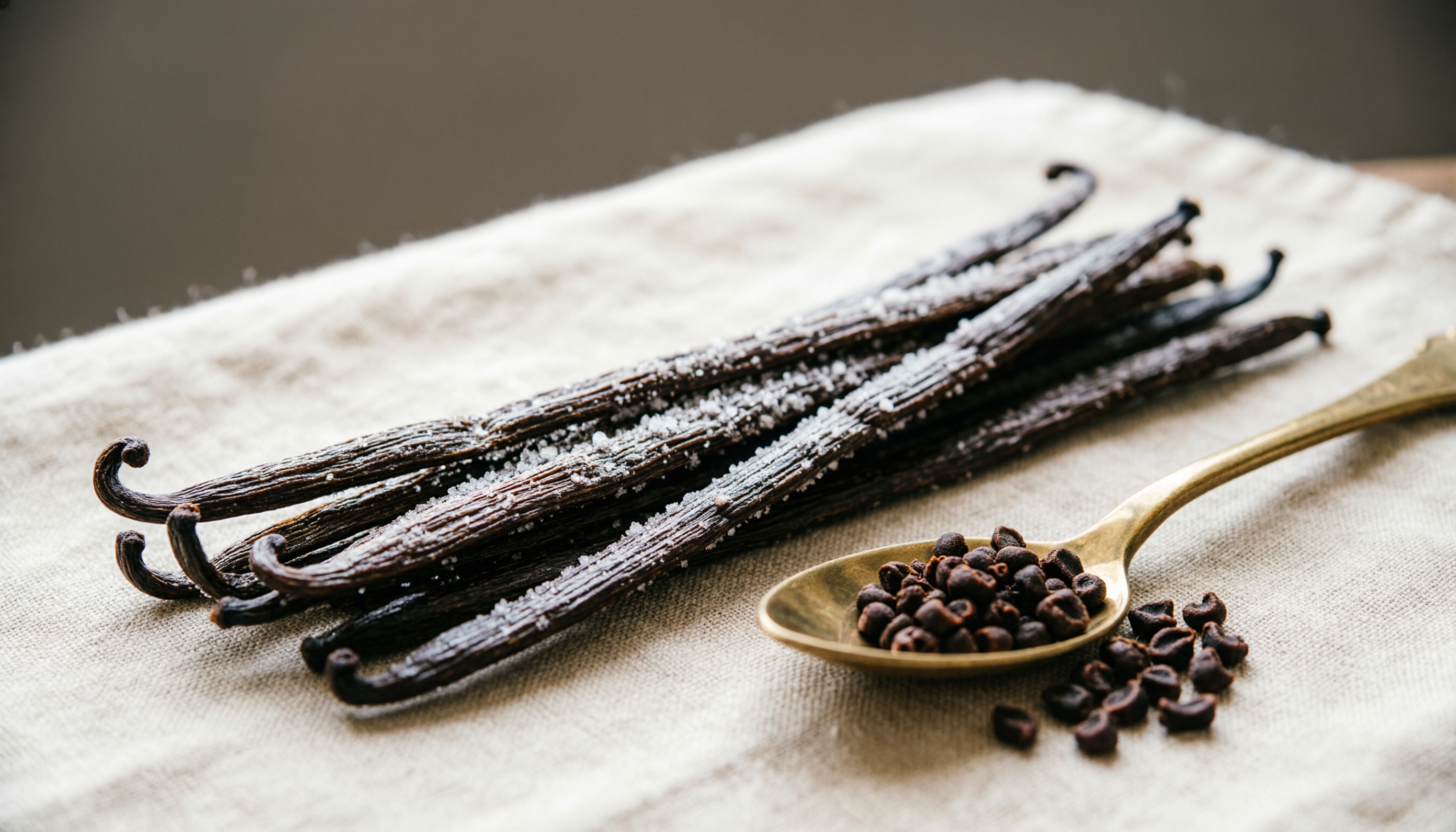
Fact number 1: Vanilla is not a root, bark, or seed like many other common culinary spices; rather, it is a highly prized spice derived directly from the seed pods of specific orchids belonging to the genus Vanilla. Unlike most orchids which are grown strictly for their ephemeral and visually stunning blooms, the plants in this specific genus are cultivated exclusively for their fruit, which undergoes a complex curing process to develop the world’s most beloved flavor profile.
Fact number 2: The vast majority of the global commercial vanilla supply is obtained from the seed pods of the flat-leaved Mexican and Central American vanilla orchid, scientifically classified as V. planifolia. This specific species is favored by commercial growers because it produces the longest, most aromatic, and most highly valued seed pods compared to other variations, making it the undisputed backbone of the international vanilla trade.
Fact number 3: The vanilla orchid is fundamentally not autogamous, meaning it is entirely incapable of self-pollinating to produce fruit. In its natural, undisturbed habitat in the Americas, the plant relies exclusively on specific local species of melipona bees to pollinate its delicate flowers, a highly specialized ecological relationship that historically restricted the plant’s ability to reproduce and spread beyond its native geographic range.
Fact number 4: In 1837, the Belgian botanist Charles François Antoine Morren made the crucial scientific discovery that manual pollination was absolutely required for the vanilla orchid to produce its valuable seed pods. He successfully pioneered the very first artificial method for pollinating the flowers, but his technique was incredibly tedious, highly expensive, and ultimately unworkable for large-scale commercial agricultural use.
Fact number 5: The breakthrough that revolutionized the global vanilla industry occurred in 1841, when a 12-year-old enslaved child named Edmond Albius, living on the French island of Réunion, discovered a remarkably simple and highly efficient practical method for hand-pollinating the vanilla plant. Using a small stick and a deft flick of his thumb, Albius figured out how to lift the delicate rostellum separating the pollen from the stigma, a technique that took only a fraction of a second per flower.
Fact number 6: Edmond Albius’s genius hand-pollination breakthrough is the exact historical catalyst that finally allowed the vanilla orchid to be successfully cultivated on a massive scale globally outside of its native Mesoamerican habitat. Because his method was so easy to learn and execute, it enabled French colonists to establish vast, highly profitable vanilla plantations across their tropical territories, completely transforming the spice from a rare regional curiosity into a globally available luxury commodity.
Fact number 7: While there are over 100 species of vanilla orchids, there are only three major species that are actively grown and harvested for commercial vanilla production globally today. These three distinct species are V. planifolia, which dominates the Indian Ocean and global market; V. × tahitensis, which is native to the South Pacific; and V. pompona, which is found across various parts of the Americas.
Fact number 8: The most common and commercially dominant species, V. planifolia, is universally known in the culinary and baking world by two primary names: “Bourbon vanilla” or “Madagascar vanilla.” The term “Bourbon” specifically refers to the historic Île Bourbon, now known as Réunion, where the species was first successfully cultivated on a massive scale using Albius’s pollination method, though today Madagascar is the primary producer of this specific variety.
Fact number 9: Measured strictly by weight, pure vanilla extract and cured vanilla beans hold the title of the second-most expensive spice in the entire world, beaten only by the incredibly rare and labor-intensive saffron. The astronomical price of real vanilla is driven by a perfect storm of high global consumer demand, the sheer difficulty of cultivating the orchids, and the intense, months-long manual labor required to cure the beans properly.
Fact number 10: The primary reason vanilla commands such a massive premium in the global spice market is that growing, harvesting, and processing the vanilla seed pods is an extraordinarily labor-intensive process that cannot be mechanized. Every single flower must be hand-pollinated within a narrow 12-hour window, every pod must be hand-picked at the exact right moment of ripeness, and the subsequent curing process requires daily manual turning and massaging of the beans for several months.
Fact number 11: Before it was domesticated and spread across the globe by European colonists, Vanilla planifolia grew exclusively wild in a very specific geographic corridor, thriving naturally around the Gulf of Mexico and stretching down the Pacific coast all the way to Ecuador, as well as throughout various islands in the Caribbean. This native range provided the exact hot, humid, and shaded tropical conditions the climbing vine required to survive and flourish for millennia.
Fact number 12: The Totonac people, an indigenous civilization who live along the eastern coast of Mexico in the present-day state of Veracruz, were among the very first humans to successfully domesticate the vanilla orchid. Historical and archaeological evidence indicates that the Totonacs were actively cultivating vanilla on their farms and integrating it deeply into their culture since at least the year 1185, long before the arrival of Europeans in the Americas.
Fact number 13: The early Totonac people utilized the precious vanilla pods for a wide variety of purposes that extended far beyond simply flavoring their food and beverages. They highly valued the spice for its intoxicating fragrance, using it to scent their sacred temples, and they also incorporated the pods into their spiritual practices by using them as powerful good-luck charms inside protective amulets.
Fact number 14: While the Totonac people are widely celebrated and historically credited with domesticating the plant, anthropologists and historians heavily speculate that the ancient Olmec civilization, who inhabited the exact same wild vanilla regions thousands of years prior, were actually the very first humans to discover and use wild vanilla in their cuisine. The Olmecs, often considered the mother culture of Mesoamerica, likely established the initial cultural precedent for flavoring cacao and other foods with the wild orchid’s pods.
Fact number 15: The geopolitical landscape of the region shifted dramatically in 1427 when the expanding Aztec Empire invaded the Totonac people, conquered their territory, and quickly developed a deep, insatiable taste for the highly aromatic vanilla pods. Following this conquest, the Aztecs subjugated the Totonacs and began demanding heavy annual tributes of the precious spice, forcing the local farmers to surrender a massive portion of their harvest to the Aztec elite.
Fact number 16: The Aztecs famously and meticulously mixed the highly prized vanilla pods with crushed cocoa beans to create a rich, frothy, and highly revered ceremonial drink called “xocolatl.” This bitter, spiced, and heavily aromatic beverage was consumed exclusively by royalty, nobility, and warriors, and it served as the direct historical and culinary inspiration for the sweet, modern-day hot chocolate that is consumed by millions of people around the world today.
Fact number 17: The Aztecs originally named the harvested vanilla fruit tlilxochitl, a Nahuatl word that was later incorrectly and somewhat confusingly translated into English as the “black flower.” In reality, the translation is highly inaccurate because the plant produces a yellowish-green orchid bloom; the term much more accurately translates to “black pod,” a reference to the fact that the mature, harvested fruit shrivels, ferments, and turns completely dark black during the extensive curing process.
Fact number 18: Until the mid-19th century, the Republic of Mexico maintained its status as the undisputed chief producer and primary global exporter of vanilla in the world. During this era of absolute dominance, the specific town of Papantla, located in the state of Veracruz, served as the massive, bustling epicenter of the global vanilla trade, supplying the vast majority of the spice consumed by the elite classes in Europe and beyond.
Fact number 19: In 1819, ambitious French entrepreneurs successfully managed to smuggle and ship live vanilla fruits and cuttings out of Mexico, transporting them to the tropical islands of Réunion and Mauritius in the Indian Ocean. Their explicit goal was to establish new, highly profitable plantations in these French territories, an endeavor that ultimately succeeded beyond their wildest dreams only after Edmond Albius solved the critical pollination problem decades later.
Fact number 20: Thanks directly to the widespread adoption of Edmond Albius’s revolutionary hand-pollination method, the Indian Ocean islands experienced an explosive agricultural boom; by 1898, Madagascar, Réunion, and the Comoros Islands were collectively producing an astonishing 200 metric tons of cured vanilla beans. This massive output represented roughly 80% of the entire global supply of vanilla at the time, effectively shifting the center of the vanilla universe away from Mexico and permanently establishing Madagascar as the new king of the spice.
Fact number 21: Despite the massive global consumer demand and the premium prices paid for natural vanilla extract, an estimated 95% of all “vanilla” flavored products currently sold on the commercial market are entirely fake. These products are artificially flavored with synthetic vanillin, a chemical compound that is cheaply derived from wood pulp lignin, petrochemicals, or rice bran, rather than being extracted from the actual, laboriously cured vanilla seed pods.
Fact number 22: The vanilla orchid is incredibly finicky regarding its environment and grows best exclusively in a hot, highly humid tropical climate situated anywhere from sea level up to an elevation of 1,500 meters. However, the most successful commercial growing, highest yields, and best quality processing consistently occur in regions located strictly within 10 to 20 degrees of the equator, where the temperature and rainfall patterns remain perfectly stable year-round.
Fact number 23: In the recent harvest year of 2023, the total world production of raw, uncured vanilla was recorded at 7,433 tonnes, with Madagascar leading the global pack by a massive margin by supplying 42% of the total output. Indonesia followed as the distant second-largest producer, contributing 25% of the global supply, while the remaining third of the market is divided among a handful of smaller producers like Mexico, Uganda, and Papua New Guinea.
Fact number 24: Vanilla is universally and widely regarded as the absolute most popular aroma and flavor profile in the entire world, transcending cultural and geographic boundaries. It is utilized extensively across a staggering array of industries, serving as the foundational flavor for countless foods and beverages, while also being a primary scent ingredient in the manufacturing of cosmetics, perfumes, pharmaceuticals, and the rapidly growing aromatherapy market.
Fact number 25: When analyzing the specific consumption habits of the United States, market research from 2004 revealed that around half of all the vanilla flavor consumed in the country was eaten exclusively in the form of ice cream. This staggering statistic perfectly cements vanilla’s undisputed status as the absolute king of the freezer aisle, proving that despite the introduction of thousands of new flavors over the decades, the classic, creamy vanilla bean remains the undisputed favorite of the American public.
Frequently Asked Questions about Vanilla
Pure vanilla extract is made by soaking vanilla beans in water and ethyl alcohol. It tends to have a stronger, more authentic vanilla flavor than vanilla essence. Vanilla essence is typically synthetic and does not contain real vanilla beans, whereas vanilla extract must contain real vanilla pods soaked in alcohol and water. Regulatory standards mandate that products labeled as “pure vanilla extract” must meet specific criteria regarding alcohol content and vanilla bean concentration.
Vanilla bean paste is a viscous, sweet ingredient that combines the best qualities of pure vanilla extract and whole vanilla pods. While both extract and vanilla flavor contain real vanilla beans, vanilla extract must contain a specific unit weight of vanilla beans per regulations. Vanilla bean paste offers visible vanilla seeds and concentrated flavor in one convenient product, making it ideal for recipes where you want the visual appeal of vanilla specks.
The main varieties include Madagascar Bourbon (also called Malagasy), Mexican, Tahitian, Indonesian, and Ugandan vanilla beans. Regulatory bodies have approved specific species for consumption, primarily Vanilla Tahitensis and Vanilla Planifolia. Each type has distinct characteristics:
Madagascar Bourbon: Classic, rich vanilla flavor; the most commonly used variety
Mexican: Warm, spicy notes with a smooth finish
Tahitian: Floral and fruity with lower vanillin content, offering a more delicate aroma
Indonesian: Woody, smoky with fruit and fig flavors
Ugandan: Unique flavor profile from East Africa with bold characteristics
Proper storage depends on the form:
Vanilla beans: Store in airtight containers away from light and heat to prevent drying out or molding
Vanilla extract: Keep in a cool, dark place; it has an indefinite shelf life when properly stored
Vanilla paste: Refrigerate after opening for optimal freshness and to maintain consistency
Pure vanilla extract has an essentially unlimited shelf life when stored properly. The alcohol acts as a preservative, preventing spoilage and maintaining flavor integrity over time. Vanilla beans maintain quality for 6-12 months when stored correctly, while vanilla paste typically lasts 1-2 years refrigerated.
Yes, vanilla can be used in savory dishes. It works well in sauces, marinades, and even some meat preparations where its complex flavor profile enhances other ingredients. Vanilla pairs particularly well with seafood, pork, and root vegetables, adding depth without overwhelming the dish.
Vanilla offers several potential health benefits:
Rich in antioxidants: Helps prevent breakdown of cells and tissues
Anti-inflammatory properties: May reduce inflammation in the body
Brain health: Studies show vanilla flavor can promote mental clarity and improve cognitive performance
Mood enhancement: May help reduce anxiety and stress through its calming aroma
Antibacterial properties: Can help fight breakouts and reduce acne
Digestive aid: Traditionally used to alleviate gastrointestinal irritations and intestinal gas
Pure vanilla extract contains minimal natural sugars from the beans themselves. One teaspoon contains approximately 531 milligrams of carbohydrates, all from natural sources. However, vanilla paste and imitation vanilla products may contain added sugars, so it’s important to check labels if you’re monitoring sugar intake.
The most efficient way to extract flavor from vanilla beans is to add them to something warm, which helps disperse the seeds and oils. Split the bean lengthwise, scrape out the seeds, and add both seeds and pod to your recipe. The pod can be rinsed, dried, and reused multiple times or placed in sugar to make vanilla sugar, maximizing your investment.
Adding vanilla extract at the end of the baking process can make the vanilla flavor more pronounced, as heat can cause some volatile compounds to evaporate. For baked goods like cookies, cakes, brownies, and quick breads, vanilla enhances other flavors rather than dominating them. It can also be added to frostings, icings, and whipped cream for subtle sweetness and aroma.
Single-fold and double-fold refer to the concentration of vanilla beans used in the extraction process. Double-fold extract contains twice the amount of vanilla beans per gallon of liquid compared to single-fold, resulting in a more intense flavor. This affects both potency and price, with double fold being more expensive but requiring less volume in recipes.
Per teaspoon, vanilla extract contains approximately:
Calories: 12
Protein: 3 milligrams
Fat: 3 milligrams
Carbohydrates: 531 milligrams
Sugar: 531 milligrams
While not nutritionally significant in small amounts, vanilla does provide trace minerals and beneficial plant compounds that contribute to overall health when consumed regularly.